


 Play store

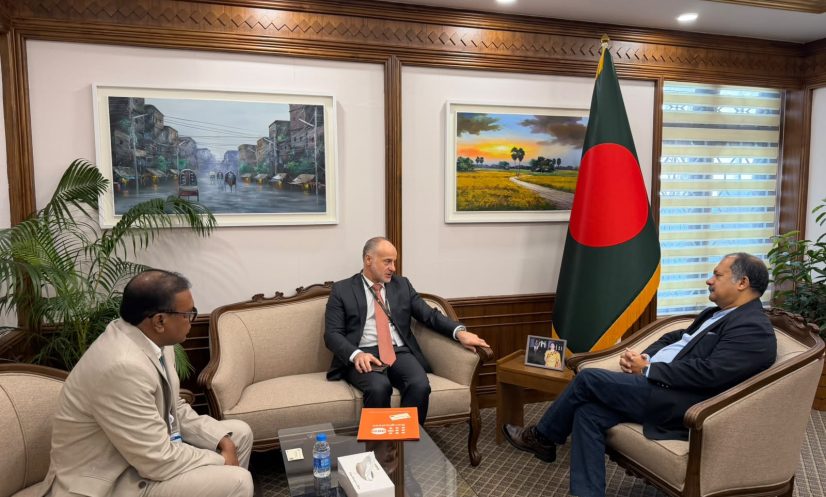
Bangladesh can play a significant role not only in its own development but also in global progress by fully harnessing its demographic dividend through forward-looking policies, effective planning and skills development, Prime Minister’s Political Adviser (with ministerial rank) Zahir Uddin Swapon has said.
He described Bangladesh as a unique model in terms of its demographic potential, saying that the country could make an important contribution to the global development agenda if it adopted appropriate policies and built the necessary institutional and human capacities to utilise its demographic opportunities.
He made the remarks on Tuesday morning during a courtesy meeting with a delegation from the United Nations Population Fund (UNFPA) Bangladesh at the Prime Minister’s Office.
The delegation comprised UNFPA Bangladesh Deputy Representative Garrick Haperetian and Chief of Demographic Data and Intelligence M Shahidul Islam.
During the meeting, they held detailed discussions on Swapon’s upcoming visit to the United States and his scheduled engagements at the United Nations headquarters in New York.
The discussions focused on how Bangladesh could maximise the benefits of its demographic dividend by taking into account the country’s overall demographic trends, development priorities and future challenges.
Emphasis was also placed on strengthening the capacity of members of parliament and government officials to understand demographic changes, formulate appropriate policies and translate demographic opportunities into sustainable development outcomes.
Swapon observed that population was a sector whose effects were often felt over many years, making long-term planning and a forward-looking understanding of demographic transitions essential for building a prosperous and developed Bangladesh.
He said the ability to assess present demographic realities and anticipate future changes would be a key determinant of the country’s development trajectory.
The political adviser also noted that Bangladesh’s knowledge and experience in managing demographic challenges could enrich global discussions on population diversity and contribute to addressing emerging challenges around the world.
Referring to the Rohingya crisis, he said Bangladesh’s experience in dealing with the humanitarian situation, the progress made in managing the crisis and the lessons learned could offer valuable insights for future global development initiatives.
He stressed that Bangladesh’s experience in addressing complex population-related challenges should be considered an important contribution to international development discussions.
Swapon said he would participate in discussions at the UN headquarters during his forthcoming visit to the United States on behalf of the Bangladesh Parliament Secretariat. He would also highlight opportunities for cooperation with UNFPA to enhance the professional and institutional capacities of officials at different levels in Bangladesh.
He expressed the hope that UNFPA would play a more active role in supporting Bangladesh’s development initiatives, particularly those aimed at improving institutional capacity, strengthening demographic intelligence and developing the skills needed to make the best use of the country’s demographic dividend.
The meeting comes at a time when effective utilisation of the demographic dividend is increasingly important for Bangladesh as it seeks to transform its large working-age population into a driver of economic growth, productivity and sustainable development.
Harnessing this opportunity will require coordinated efforts to improve education and technical skills, expand decent employment opportunities, strengthen healthcare and build the capacity of policymakers and public institutions to respond to changing demographic realities.