


 Play store

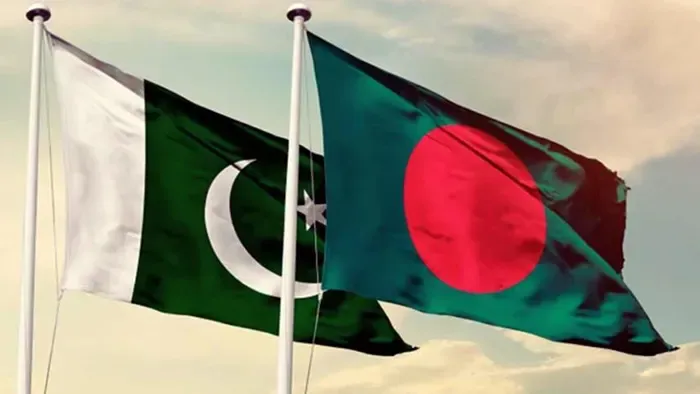
Since Bangladesh emerged as an independent state in 1971, Pakistan-Bangladesh relations have experienced periods of both cooperation and diplomatic tension. However, changing regional dynamics, economic interests, and evolving geopolitical alignments in South Asia are creating new opportunities for both countries to reassess their bilateral relationship.
Recent developments suggest that Pakistan-Bangladesh ties are entering a phase of strategic realignment. This shift could pave the way for closer bilateral cooperation and greater regional engagement, particularly in trade, diplomacy, connectivity, defence, education, and climate cooperation.
For decades, Bangladesh maintained close relations with India, particularly during the tenure of former Prime Minister Sheikh Hasina. Following the political upheaval of August 2024, however, Bangladesh began pursuing a more diversified foreign policy. The interim government led by Dr Muhammad Yunus was subsequently replaced following the 2026 general election, and Prime Minister Tarique Rahman now leads the government. His administration has adopted a pragmatic and multidirectional foreign policy, including a renewed effort to recalibrate Bangladesh’s relations with Pakistan as part of a broader regional diplomatic strategy.
High-level diplomatic engagement between Dhaka and Islamabad resumed in 2025. Pakistan’s Foreign Minister Ishaq Dar visited Dhaka after a 13-year gap, and the two sides discussed trade normalization, visa facilitation, cultural exchanges, and institutional cooperation. On 24 August 2025, the two countries signed six memorandums of understanding in Dhaka aimed at strengthening cooperation across several sectors.
As part of efforts to expand trade and investment, Pakistan and Bangladesh also agreed in August 2025 to revive their long-dormant Joint Economic Commission (JEC), whose last meeting had been held in 2005. Trade has therefore emerged as one of the most practical areas for expanding bilateral cooperation and as an important indicator of the changing relationship.
Connectivity is another significant area of opportunity. The successful launch of direct commercial maritime connectivity between Karachi and Chattogram in 2024 demonstrated that direct shipping can reduce transportation time by more than 50 percent. Previously, much of the trade between the two ports depended on transshipment through Colombo, where containers had to be unloaded and transferred to another vessel before reaching their destination. The direct route eliminates such intermediate transfers and has reportedly reduced transit time to around 11 days. This could improve commercial efficiency, lower transportation costs, and strengthen economic links between Pakistan and Bangladesh.
The maritime route could also complement logistics corridors associated with China’s Belt and Road Initiative (BRI). Greater connectivity between Gwadar and Chattogram could potentially create new links between South Asia, Southeast Asia, and the Middle East, providing access to markets with a combined value estimated at around $3.5 trillion.
Defence cooperation is also gaining momentum. Bangladesh participated in Pakistan’s multinational maritime exercise Aman-2025 in February 2025, having previously taken part in the Aman series in 2007, 2009, and 2013. Bangladesh also participated as an observer in the Pakistan Air Force’s Indus Shield 2024 air exercise. Such engagement indicates that defence relations, while still limited, are gradually becoming another channel of institutional contact.
Educational exchanges represent another promising area. More than 400 Bangladeshi students are currently studying in Pakistan under scholarships supported by the Organization of Islamic Cooperation (OIC) and the COMSTECH programme. The Pakistan-Bangladesh Knowledge Corridor, launched in 2025 with an initiative valued at $500 million, could provide 500 scholarships over five years. The programme is intended to deepen academic ties and create stronger long-term connections between the two societies.
Climate cooperation deserves greater attention as well. Both Pakistan and Bangladesh are highly vulnerable to climate change and face major floods every three to four years, causing significant loss of life and economic damage. Between 2010 and 2024, annual climate-related losses in Pakistan reached approximately $3.2 billion, while Bangladesh suffered estimated losses of around $2.8 billion during the same period. Given their shared vulnerabilities, climate adaptation, disaster management, water management, and climate financing could become important areas for practical bilateral cooperation.
The strategic realignment in Pakistan-Bangladesh relations is being driven by broader regional and global geopolitical changes. Following Bangladesh’s political transition, Dhaka has increased engagement with Islamabad while pursuing a more diversified foreign policy. The geopolitical implications extend beyond bilateral relations and could influence the wider balance of power in South Asia.
For India, closer Pakistan-Bangladesh relations could reduce some of New Delhi’s previously dominant influence in Dhaka and create new strategic uncertainties along India’s eastern frontier. At the same time, growing Chinese engagement with both Pakistan and Bangladesh could expand the reach of BRI-linked connectivity networks and strengthen China’s regional presence in South Asia.
For the United States, Bangladesh remains an important Indo-Pacific partner. At the same time, Dhaka is seeking to maintain strong relations with Washington while expanding engagement with Beijing and Islamabad. This suggests a strategy of balancing or “hedging” rather than aligning exclusively with any single major power. Such an approach could contribute to a broader transformation of South Asia’s geopolitical landscape.
Despite the new momentum, historical legacies and unresolved social and political issues continue to influence public perceptions and bilateral sensitivities. One such issue is the presence of a large Bengali community in Pakistan, estimated at approximately 1.6 to 2 million people. Similarly, the unresolved status of Urdu-speaking Biharis in Bangladesh—often referred to as “stranded Pakistanis”—remains a sensitive issue. Their population in Bangladesh is estimated at roughly 300,000 to 500,000.
Therefore, the future-oriented strategic realignment should prioritize economic cooperation, connectivity, and people-to-people exchanges. By separating historical disputes from contemporary strategic interests, the two countries could build a more functional partnership based on regional interdependence rather than past grievances.
At the same time, historical sensitivities must be addressed through academic and research-based dialogue. Both countries should work toward acknowledging shared experiences of suffering and humanitarian loss while avoiding one-sided narratives, unilateral blame, or unrealistic expectations.
Pakistan and Bangladesh are unlikely to erase the historical complexities that have shaped their relationship. However, they can choose to manage those differences while expanding cooperation in areas of mutual interest. If sustained, the current diplomatic opening could transform bilateral ties from a relationship dominated by historical disputes into one increasingly shaped by trade, connectivity, education, security cooperation, and shared regional interests. Source The Nation.