


 Play store

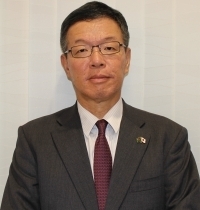
Japanese Ambassador to Bangladesh Saida Shinichi has said the February election has brought greater policy stability to Bangladesh, while describing the new government’s economic policies, particularly its focus on attracting foreign direct investment (FDI), as encouraging.
He made the remarks as the chief guest at the 21st annual general meeting (AGM) of the Japan-Bangladesh Chamber of Commerce and Industry (JBCCI) at Hotel Lakeshore in Dhaka on Sunday.
“The February election was successful and peaceful, and this makes a difference and brings new stability to the policies of this country,” Saida said.
He said the new government’s economic policies appeared “really remarkable”, particularly its efforts to attract FDI.
“Japan, as your faithful and dedicated development partner since your independence, is also determined to be a best business partner as well,” the ambassador said.
Referring to the Japan-Bangladesh Economic Partnership Agreement (EPA), signed in February with support from JBCCI, Saida said the agreement was a testament to the strengthening economic relationship between the two countries.
“The Economic Partnership Agreement, which was signed in February with JBCCI support, testifies to it. I’m sure so many items are in Japanese companies’ investment pipelines, which will be realised in due course,” he said.
He also said high-level exchanges between Bangladesh and Japan could provide an opportunity to significantly deepen the strategic partnership, particularly bilateral business ties.
The Japanese envoy suggested that Bangladesh focus on industrial diversification to create employment opportunities for young people as part of its nation-building efforts.
“You are now heading towards the diversification of industry to create millions of workplaces for youngsters. This is a part of new nation building, and in order to do that, you should target upstream industries, and you should remove red tape and unnecessary border measures and other hurdles,” he said.
He also stressed the importance of establishing an appropriate relationship between business and politics to ensure sustainable economic development.
“It is clear that the system so far, where a huge amount of capital is brought abroad by the transition, is not sustainable. Like all the nations, including Japan, experienced in the past, you are facing a big fog on the road,” he said.
Meanwhile, newly elected JBCCI President Kazuiki Kataoka thanked the outgoing leadership for its contribution to the chamber.
Kataoka, who is also country representative and director of the JETRO Bangladesh Office, said he had been involved in JBCCI activities as joint secretary-general since arriving in Bangladesh in June 2025.
He expressed appreciation to outgoing President Tareq Rafi Bhuiyan (Jun), outgoing Secretary General Maria Howlader and other board members for their leadership, dedication and efforts in organising activities and running the chamber.
He also thanked JBCCI members, particularly Bangladeshi companies doing business with Japanese firms and those interested in Japanese business and investment in Bangladesh.
Kataoka said he would focus on two key priorities during his tenure.
“The first one is to further highlight the contributions that Japan and Japanese companies have made to Bangladesh over many years. Through trade, investment, infrastructure development and various business activities, Japanese companies have played an important role in supporting Bangladesh’s economic growth and development,” he said.
He said he would work to ensure that these contributions received wider recognition across Bangladesh.
His second priority, he said, would be to make greater use of the expertise and experience within JBCCI’s membership through seminars, knowledge-sharing sessions and other activities.
“While collaboration with external organisations remains important, we already possess a wealth of knowledge and experience within JBCCI itself, represented by professionals from nearly 400 member companies,” he said.
Kataoka said greater opportunities for members to share expertise and engage with one another would help energise JBCCI’s activities, strengthen networking and enhance the value and visibility of the organisation.
“We are one of the leading bilateral chambers of commerce in Bangladesh, and our reputation is shaped not only by our achievements but also by our conduct,” he said, urging members to maintain the professional standards expected of the chamber.
“Together, let us ensure that JBCCI continues to play a meaningful role in strengthening the economic relationship between Japan and Bangladesh,” he added.