Play store

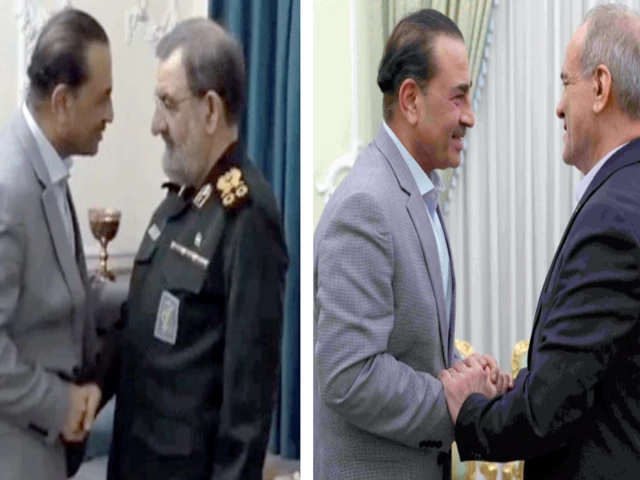
The Pakistan-Iran border was reopened on Tuesday as Chief of Defence Forces and Army Chief Field Marshal Syed Asim Munir held a series of high-level talks in Tehran at the time when Houthi attacks on Saudi Arabia added a new and potentially difficult dimension to Islamabad’s regional balancing act.
Field Marshal Asim Munir, accompanied by Interior Minister Mohsin Naqvi, met Iranian President Masoud Pezeshkian, Parliament Speaker Mohammad Bagher Ghalibaf, Foreign Minister Abbas Araghchi and General Mohsen Rezaei, representative of Iran’s Supreme Leader and Secretary of the Supreme National Security Council, during his fifth visit to Iran in recent months.
Unlike his previous trips, which were largely driven by Pakistan’s efforts to defuse tensions between Iran and the United States, the latest visit came against the backdrop of repeated attacks by Yemen’s Iran-aligned Houthis on Saudi energy, airport and other infrastructure.
The development presents a delicate challenge for Islamabad. Pakistan has pledged to defend Saudi Arabia under the Makkah Joint Defence Agreement, while at the same time maintaining close engagement with Tehran and attempting to revive stalled Iran-US diplomacy.
There was no official statement from the Pakistani side until the filing of this report. However, an official familiar with the visit told The Express Tribune that the talks went “very well”, without sharing specifics. The official also confirmed that the Pakistan-Iran border had reopened.
Iranian readouts also quoted Field Marshal Asim Munir as saying that issues concerning the border had been resolved. “The issues concerning the Iran-Pakistan border have been resolved, and the border has been reopened as of this morning,” the CDF was quoted as saying during a meeting with General Rezaei.
In a separate meeting with Ghalibaf, the army chief described the recent border problems as “temporary and technical” and said crossings between the two countries had reopened.
The reopening is significant for bilateral trade and movement of people, particularly for communities living along the lengthy Pakistan-Iran frontier. But the wider focus of the field marshal’s visit appeared to be the continuing diplomatic effort to find a way out of the Iran-US confrontation.
The Iranian readouts suggested that Tehran used the visit to communicate its position on any future engagement with Washington. Rezaei told the army chief that Iran would not allow its enriched nuclear material to be taken out of the country. Source: Express Tribune.