Play store

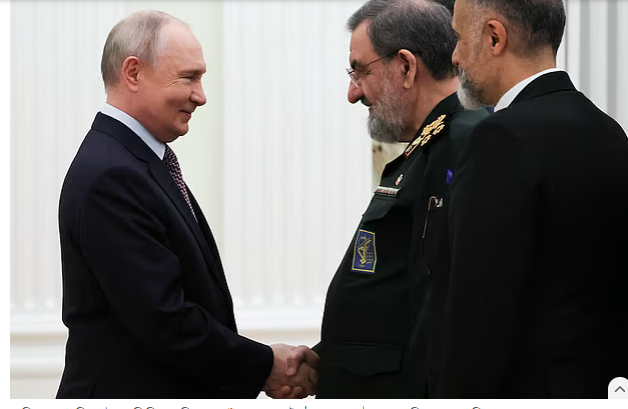
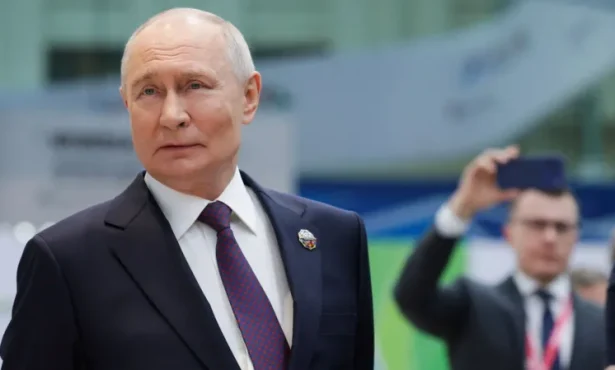
Russian President Vladimir Putin has met with Mohsen Rezaei, head of Iran’s Supreme National Security Council, in Moscow, where they discussed regional security and Russia’s support for ending the ongoing US-Israeli war against Iran.
The meeting took place on Thursday.
According to Iranian state broadcaster Press TV, Rezaei handed Putin a letter from Iran’s Supreme Leader Mojtaba Khamenei during the meeting.
After the meeting, Rezaei said they discussed important regional issues, including the post-war situation and regional security arrangements.
Energy cooperation also featured prominently in the talks, including a proposed gas pipeline from Russia to Iran. The project could help address Iran’s gas shortage while creating opportunities for Russia to export gas to Iran’s neighbouring countries.
Rezaei said Khamenei had instructed him to deliver the message to Putin as soon as possible. His visit to Moscow had been planned about a month earlier but was postponed due to what he described as “daily discussions on the region’s military situation”.
However, Rezaei did not disclose the contents of Khamenei’s letter.
In a written statement on Wednesday, Khamenei said Iran should show not the slightest willingness to surrender to the United States. He also called for strengthening the country further to achieve maximum defensive capabilities.
### Seven conditions
While Rezaei was meeting Putin, Qatar was stepping up diplomatic efforts to end the war against Iran. Concerns have also emerged that the United States could launch fresh attacks on Iran following the US midterm elections.
In Tuesday’s elections, President Donald Trump’s Republican Party lost control of both chambers of Congress — the House of Representatives and the Senate.
Rising prices of essential goods due to the war against Iran have fuelled widespread discontent across the United States. Many believe the conflict with Iran is responsible for the increase in commodity prices.
Several issues are central to diplomatic efforts to end the war. These include the future status of the strategically important Strait of Hormuz, the US blockade of Iranian ports and sanctions imposed on Tehran. Resuming negotiations over Iran’s nuclear programme is also a key issue.
On Thursday, Rezaei said Tehran would not hold talks with Washington on reopening the Strait of Hormuz or ending the war until the United States accepted its seven demands.
“We have given the United States seven conditions regarding diplomacy. Until they accept these, we will neither reopen the Strait of Hormuz nor sit for negotiations,” Rezaei said.
Rezaei added that Putin had assured him that Russia was fully prepared to help end the war.
During a meeting with Iranian President Masoud Pezeshkian last month, Putin had also said Russia would do everything within its capabilities to achieve that goal.
Regional arrangements
Rezaei also briefed Putin on a meeting held in Tehran in late October involving Iran, Saudi Arabia, Turkey and Pakistan. He said the Russian president welcomed the meeting.
“We agree with our Chinese friends on establishing regional arrangements to ensure regional security. Outside powers should not interfere in this process,” Rezaei said.
Russia’s state news agency TASS reported that the meeting took place at the Senate Palace in Moscow. However, the Kremlin did not immediately issue any statement on the talks.
Meanwhile, Iranian Foreign Minister Abbas Araghchi held telephone conversations with his counterparts in Kuwait, Saudi Arabia, Oman, Qatar, Turkey and Jordan.
According to Iranian state media, the discussions focused on the regional situation and ongoing diplomatic efforts to establish peace.
Iran and Russia, both under Western sanctions, have strengthened their diplomatic and military ties in recent years.
In January 2025, the two countries signed a comprehensive strategic partnership treaty covering cooperation in trade, military affairs, science, culture and education, among other areas. The treaty came into force in October of the same year. However, it does not include a mutual defence clause.
Last Saturday, Iranian Army spokesperson Mohammad Akraminia said Tehran expects to receive Su-35 fighter jets purchased from Russia. He expressed hope that the aircraft would be delivered after the war ends.