


 Play store

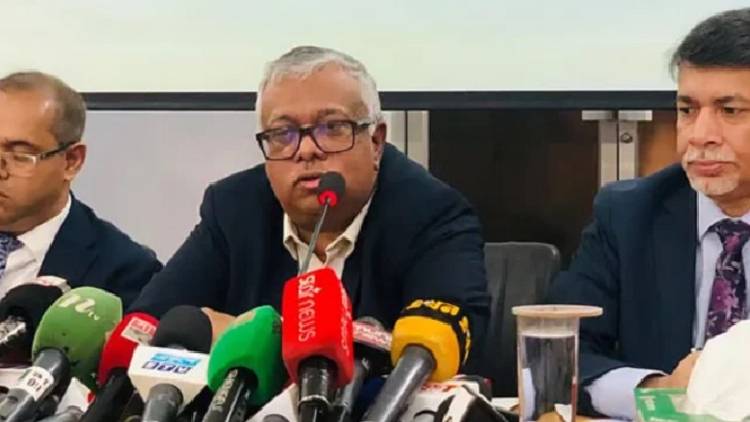
Bangladesh’s newly appointed High Commissioner to India, Asad Alam Siam, will formally assume office at the Bangladesh High Commission in New Delhi on December 1, according to a source at the Ministry of Foreign Affairs.
Siam is scheduled to leave Dhaka for New Delhi on November 27, ahead of formally taking charge of the diplomatic mission.
His appointment was delayed following the death of his father, Md Nurul Alam, a former dean of the Faculty of Education at the University of Chittagong, on October 31.
Priti Rahman is currently serving as Chargé d’Affaires at the Bangladesh High Commission in New Delhi.
Bangladesh initially proposed Siam’s name to India’s Ministry of External Affairs on July 13 for appointment as the country’s next high commissioner to New Delhi.
India formally approved his appointment on September 22.
A career diplomat, Siam joined the Bangladesh Foreign Service in 1995. He holds a postgraduate degree from Bangladesh University of Engineering and Technology (BUET) and an MBA from the Maastricht School of Management in the Netherlands.
During his diplomatic career, he served as Bangladesh’s first consul general in Milan, Italy, and as ambassador to the United States, the Philippines, Palau, Austria, Hungary, Slovenia and Slovakia.
He also served as Bangladesh’s Permanent Representative to the United Nations Office in Vienna and the OPEC Fund, as well as Alternate Permanent Representative to the United Nations Economic and Social Commission for Asia and the Pacific (UNESCAP) in Bangkok.
At home, Siam held several key positions at the Ministry of Foreign Affairs, including Rector of the Foreign Service Academy.
He also served as director in the offices of the foreign minister and foreign secretary.
In June 2025, he was appointed foreign secretary by the then interim government.
His new assignment in New Delhi comes at a crucial time for Bangladesh-India relations, which have experienced diplomatic strains in recent years.
His extensive diplomatic experience is expected to play an important role in managing bilateral engagement between the two neighbouring countries.