


 Play store

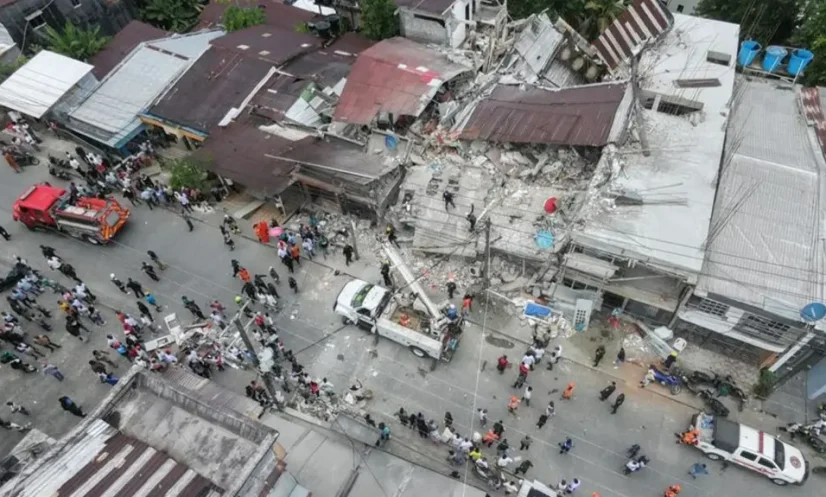
At least 111 people have been killed and 87 injured after a powerful 7.4-magnitude earthquake struck western Colombia on Monday, triggering building collapses, damaging infrastructure and disrupting air services across several cities.
The earthquake struck at 7:34am local time (12:34 GMT), with its epicentre about 5km east of San José del Palmar in the Chocó department, according to the US Geological Survey. The quake occurred at a depth of about 107km.
The powerful tremor was felt across much of Colombia and in neighbouring countries, including Ecuador, Panama and Venezuela. The USGS said around 1.5 million people experienced very strong shaking, with the potential to damage vulnerable masonry structures.
The disaster prompted the Colombian government to declare a national emergency as rescue teams searched collapsed and damaged buildings for survivors.
President Abelardo de la Espriella travelled to Bogotá to coordinate the government response from the National Crisis Room, pledging that authorities would do everything necessary to assist affected communities.
Pereira, one of the hardest-hit cities, reported dozens of deaths and extensive structural damage. More than 60 buildings were reported to have collapsed or suffered serious damage, including a four-storey residential building.
Emergency workers in Cali also searched through rubble after several structures collapsed. Hospitals in some affected areas came under pressure as injured people were brought in for treatment.
Authorities warned residents to remain cautious because damaged structures could collapse and aftershocks could create additional hazards.
The earthquake caused significant disruption in the coffee-growing region, including Manizales. Residents reported violent shaking that sent glass and debris falling from buildings. The historic Metropolitan Basilica Cathedral in the city also sustained visible damage.
The earthquake also affected transport infrastructure. Airports in Pereira, Manizales, Armenia, Cartago and Buenaventura were closed to normal passenger operations while authorities assessed damage, with facilities being used for government and medical flights.
The disruption added to the logistical challenges facing emergency teams trying to reach affected communities.
Residents described scenes of panic as the ground began shaking shortly after sunrise.
In Cali, tourist Dan Cutler said he ran into the street in his pyjamas after the power went out and pieces of plaster began falling from walls.
In Manizales, witness Angélica Ávila described seeing clouds of dust rise from buildings and bricks fall into the streets.
Authorities have urged people to stay away from damaged buildings and follow instructions from emergency services as rescue and assessment operations continue.
Vice-President José Manuel Restrepo Abondano said government agencies were working continuously to deliver assistance to affected families.
International support has also begun to emerge. The European Union is using its Copernicus satellite system to help assess damage and support emergency operations.
Several countries, including France, Spain, Italy and Ukraine, have expressed solidarity with Colombia.
Neighbouring Ecuador has offered specialised rescuers and search dogs, while El Salvador has placed medical personnel and supplies on standby.
Colombian singer Shakira also called for national unity and solidarity, saying Colombians have shown that they can come together during times of crisis.
The immediate priority remains locating survivors, treating the injured and assessing damage to homes, roads, public buildings and other critical infrastructure.
With rescue operations still under way, authorities have warned that the full scale of the disaster may become clearer only after emergency teams complete their assessments. Source: BBC