Play store

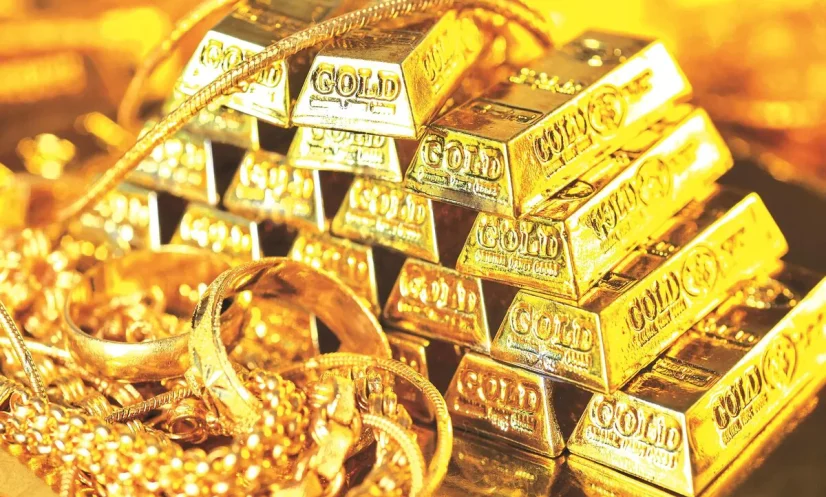
Gold prices edged higher in international markets on Monday after crude oil prices declined sharply amid signs of easing geopolitical tensions in the Middle East and renewed prospects for diplomatic talks between Washington and Tehran.
At the start of trading, spot gold rose 0.4% to $4,055.76 per ounce, while U.S. gold futures gained 0.9% to $4,054 per ounce.
The U.S. dollar also weakened following Japanese government intervention to strengthen the yen, making gold more affordable for international buyers and boosting demand.
According to Tim Waterer, Chief Market Analyst at Australian financial services firm KCM Trade, gold began the week on a stronger note.
However, gains remain limited due to continued uncertainty in the Middle East and volatility in the oil market.
Analysts said the gold market remains cautious as the U.S. Federal Reserve is expected to maintain a hawkish stance on interest rates to keep inflation under control.
Higher interest rates typically reduce the appeal of non-yielding assets such as gold.
Investors are also awaiting a series of key U.S. labour market reports this week, including job openings data, the ADP employment report, weekly jobless claims, and the non-farm payrolls report. These releases are expected to provide further direction for gold prices.
Waterer said gold could extend its gains if oil prices remain subdued, the dollar continues to weaken, or the Federal Reserve signals a more accommodative policy stance.
However, renewed tensions in the Middle East or stronger-than-expected U.S. employment data could limit the precious metal’s upward momentum.
Other precious metals also advanced on Monday. Spot silver rose 0.9% to $58.13 per ounce, platinum gained 0.5% to $1,649.35 per ounce, and palladium climbed 1.7% to $1,294.92 per ounce.