Play store

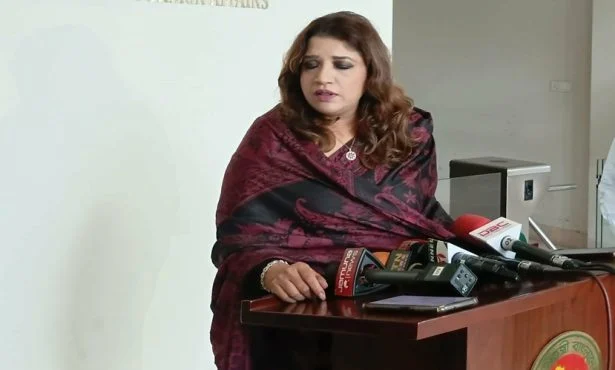
Ensuring social protection and workers’ welfare is essential for the sustainable growth of Bangladesh’s garment industry, said BGMEA Director Nafis-Ud-Daula.
Addressing a workshop, he said initiatives under the Central Fund are playing an important role in supporting workers facing crises. He stressed the need for continued coordination among the government, Bangladesh Garment Manufacturers and Exporters Association (BGMEA) and development partners to strengthen the industry’s resilience, workers’ skills and institutional capacity.
An orientation workshop on the Unemployed Workers Protection Programme (UWPP) and Labour Information Management System (LIMS) was held today at the BGMEA Complex in Uttara to strengthen social protection for workers in the readymade garment (RMG) sector.
The Bangladesh Garment Manufacturers and Exporters Association, in collaboration with the European Union-funded TA-SPBS project, organised the day-long workshop for management and human resources officials from member factories, according to a press release.
The workshop focused on the implementation of the UWPP, beneficiary eligibility, registration requirements and the use of a digitalised labour information management system.
BGMEA Director Nafis-Ud-Daula and Chairman of its Standing Committee on Skill Development Programme (SDP) Zaved Hossain Bhuiyan attended the programme.
Among government officials and development partners present were Ministry of Labour and Employment Joint Secretary and Central Fund Director Tahmina Begum, Department of Inspection for Factories and Establishments (DIFE) Assistant Inspector General Al Amin, GIZ Adviser Mahbubul and EU-funded TA-SPBS Project Manager Valentina. Representatives from more than 50 member factories also participated.
In his welcome speech, Zaved Hossain Bhuiyan stressed stronger institutional coordination among factories and timely assistance for workers during periods of unemployment or crisis.
Valentina called for coordinated efforts among industry stakeholders, the government and development partners to strengthen the social safety net for workers. She said a sustainable institutional framework is needed to protect the rights and welfare of workers facing temporary economic hardship, assuring that the European Union would continue supporting the long-term social protection of RMG workers.
Tahmina Begum presented an overview of the benefits and implementation progress of the UWPP.
The UWPP is an updated version of a social protection initiative introduced during the COVID-19 pandemic in 2020. Operated under the Central Fund of the Ministry of Labour and Employment, the programme provides Tk 5,000 in monthly cash assistance for up to three months through the government-to-person (G2P) digital payment system to workers who become temporarily unemployed due to factory closures, accidents or maternity leave.
The workshop also featured technical sessions and an open discussion. Representatives of the TA-SPBS project explained the application process and procedures for receiving UWPP benefits.
DIFE Assistant Inspector General Al Amin highlighted the importance of digitalised labour information management and its practical application. Participants were urged to ensure the accuracy of payroll and National Identification (NID) information so that eligible workers are not denied benefits because of errors in their records.
The workshop concluded with closing remarks by GIZ Adviser Mahbubul. BGMEA’s SDP Section-in-Charge and Deputy Secretary Shayla Akter Nova moderated the programme.
The organisers expressed hope that the joint initiative by BGMEA, the government and international organisations would help create a safer, balanced and more sustainable working environment in Bangladesh’s garment sector.