


 Play store

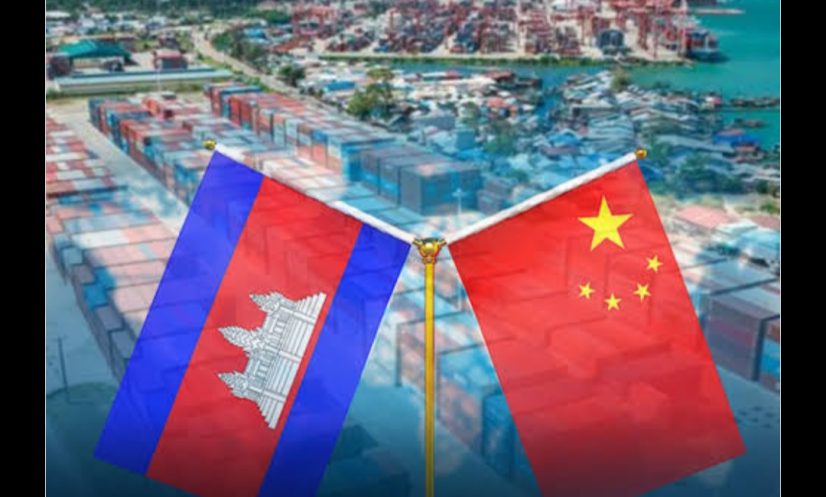
China, the world’s second-largest economy and one of the largest import markets, has become a key destination for exports from neighbouring Southeast Asian countries.
Over the past decade, Vietnam and Cambodia have significantly expanded their share of the Chinese market through export-oriented industrial policies, regional trade agreements, strong diplomatic ties and growing Chinese investment.
Vietnam is a Rising Manufacturing Hub
Vietnam has established itself as one of China’s leading trading partners in Southeast Asia, driven by decades of economic reform, export-led growth and sustained inflows of foreign direct investment (FDI).
Chinese and multinational companies have invested heavily in Vietnam’s manufacturing sector, particularly in electronics, textiles, machinery and industrial equipment.
Modern industrial parks, an increasingly skilled workforce and improved transport infrastructure have enabled Vietnam to integrate deeply into regional and global supply chains.
The country’s participation in the Regional Comprehensive Economic Partnership (RCEP) and the ASEAN–China Free Trade Area (ACFTA) has further strengthened its competitiveness by lowering tariffs, simplifying customs procedures and expanding market access.
As a result, Vietnam has increased exports of electronics, machinery, seafood, agricultural products and processed foods to China.
Significant investment in ports, highways and cross-border logistics has also enhanced connectivity with southern China, reducing transport costs and improving supply chain efficiency.
Cambodia has adopted a complementary development strategy by positioning itself as a competitive manufacturing base for labour-intensive industries, including garments, footwear, travel goods, furniture and light manufacturing.
Chinese investment has played a central role in Cambodia’s industrial transformation, financing factories, special economic zones, transport infrastructure, ports and energy projects.
These investments have strengthened the country’s export capacity and improved access to Chinese consumers.
The Cambodia–China Free Trade Agreement (CCFTA) has further boosted exports by providing preferential access for agricultural products such as rice, bananas, cassava, mangoes and pepper, while encouraging greater Chinese investment in manufacturing and logistics.
Regional Integration Driving Growth
Regional economic integration has been another key factor behind the success of both countries.
Through ASEAN-led trade frameworks and improved cross-border connectivity, Vietnam and Cambodia have become increasingly integrated into China’s manufacturing ecosystem.
Many multinational companies now follow a “China + Vietnam + Cambodia” production strategy.
High-value components are often produced in China, assembled in Vietnam and complemented by labour-intensive production in Cambodia, allowing businesses to reduce costs while maintaining resilient regional supply chains.
Factors Behind Their Success
Several factors have enabled Vietnam and Cambodia to strengthen their position in the Chinese market:
Strategic geographic proximity to China.
Participation in regional and bilateral free trade agreements.
Competitive labour costs and business-friendly investment policies.
Strong inflows of Chinese foreign direct investment.
Continuous investment in infrastructure, logistics and industrial zones.
Government support for export-oriented industrialisation.
Diversification from agricultural exports to higher-value manufacturing.
Lessons for Bangladesh and Other Developing Economies
The experiences of Vietnam and Cambodia offer important lessons for developing economies seeking to expand exports and attract investment.
Stable economic policies, efficient ports, modern infrastructure, skilled human resources, simplified business regulations and stronger regional trade integration can significantly improve export competitiveness.
As global manufacturers continue to diversify supply chains, countries that enhance productivity, improve the investment climate and strengthen regional connectivity will be better positioned to capture a larger share of international trade.
Vietnam and Cambodia have successfully expanded their footprint in the Chinese market through strategic economic reforms, favourable trade agreements, infrastructure development and close economic cooperation with China.
While Vietnam has emerged as a regional manufacturing powerhouse, Cambodia has capitalised on its cost competitiveness and growing industrial base.
Their success demonstrates that long-term policy consistency, investment in infrastructure and deeper regional integration can transform emerging economies into major players in Asia’s evolving trade landscape.