Play store

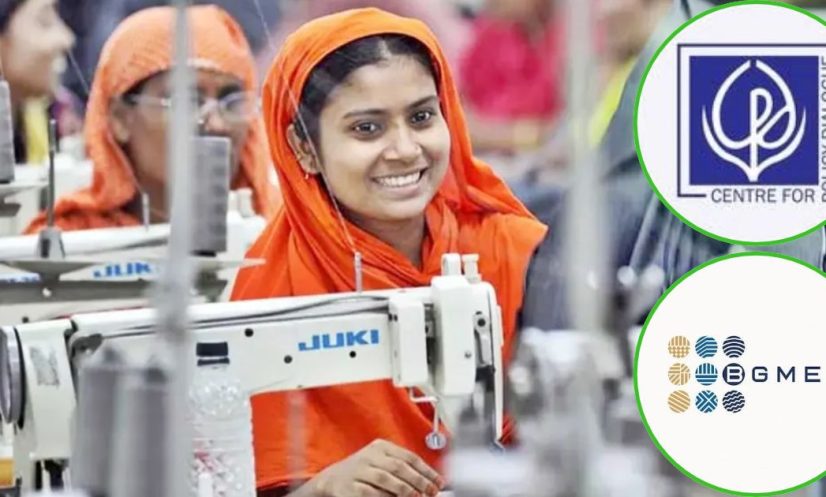
The Bangladesh Garment Manufacturers and Exporters Association (BGMEA) has raised objections to several data points and calculation methods used by the Centre for Policy Dialogue (CPD) in its proposed minimum wage for garment workers, alleging inconsistencies and double counting of housing expenses.
In a letter sent to CPD Executive Director Dr Nazneen Ahmed on Friday, BGMEA President Mahmud Hasan Khan outlined the industry’s concerns over the proposal presented by the research organisation on November 18.
While welcoming CPD’s continued involvement in minimum wage discussions, including its role in the 2013, 2018 and 2023 wage-setting processes, BGMEA identified three major areas of concern.
Questions over family size
BGMEA questioned CPD’s use of median figures from five studies to determine an average worker household size of four members and 1.58 income earners.
The association argued that the mean, rather than the median, would have been more appropriate to reflect the findings of all five studies.
It also pointed out that CPD’s own 2023 survey found an average household size of 3.7 members and two income earners. BGMEA questioned why the latest proposal indicated an increase in family size and a decline in income earners over three years.
Citing Bangladesh Bureau of Statistics (BBS) data, BGMEA said the national average household size declined from 4.66 in 2004 to 3.96 in 2023, making the projected increase in garment workers’ household size difficult to explain.
Concerns over poverty-line calculation
BGMEA alleged that CPD used only the upper poverty line for urban Dhaka to calculate wages for the entire industry.
The association argued that the average of urban and rural Dhaka poverty lines should have been considered instead. It recommended calculating a regionally weighted average based on factory concentration and export volume.
According to BGMEA, factories in urban Dhaka accounted for only 9% of the country’s total garment exports in the 2025-26 fiscal year, while the remaining 91% came from other areas.
Allegation of double counting housing costs
BGMEA also questioned CPD’s calculation of non-food expenditure using the Engel method, which estimates such expenses at 0.8667 times food expenditure, followed by an additional Tk10,000 for housing.
The association said housing expenses are already included in the non-food expenditure component of the Household Income and Expenditure Survey (HIES) 2022. Adding them separately therefore amounts to double counting, it argued.
BGMEA called on CPD to clarify its calculation method.
Other issues raised
The association said CPD adjusted the December 2023 minimum wage of Tk12,500 for inflation but did not account for subsequent annual increments or the 9% interim increase introduced in 2024.
It also noted that the proposal focused only on entry-level workers without adequately assessing wages for other grades proposed by workers’ representatives.
BGMEA further criticised the lack of sufficient discussion on the industry’s average wage bill, wage comparisons with India and Pakistan, energy costs, interest rates, logistical constraints and rising production expenses.
Industry under pressure
According to BGMEA, production costs have increased by 25-30% over the past three years, while export prices have declined by 2.6%, citing National Board of Revenue (NBR) data.
Bank interest rates have reached 12-16%, while export incentives have been reduced by nearly 70%. During the same period, 287 factories have closed, the association said.
BGMEA also said Bangladesh recorded the highest minimum wage growth among competing countries between 2016 and 2026, at 136%, compared with 59% in India, 54% in Vietnam and 50% in Cambodia.
It cited gas and electricity shortages, declining investment, policy uncertainty, preparations for graduation from the least developed country (LDC) status and additional US tariffs of 10-20% as further challenges for the sector.
The association also noted that India and Vietnam have signed free trade agreements with the European Union, while Bangladesh could face the loss of preferential market access in Europe following its LDC graduation.
In the letter, BGMEA sought CPD’s response to its observations and expressed interest in working together to develop a rational, transparent and evidence-based minimum wage-setting framework.
CPD’s proposed minimum wage
On November 18, CPD recommended that the monthly minimum wage for garment workers be set between Tk18,578 and Tk24,204.
The research organisation estimated that a worker in Dhaka would need at least Tk24,204 to cover food, essential expenses and housing costs while making modest savings.
Its calculation was based on a four-member household with 1.58 earning members.
Bangladesh’s current minimum wage for garment workers is Tk12,500. CPD said inflation-adjusted purchasing power would require Tk16,351 to buy the same goods and services today, without improving workers’ actual living standards.
It further estimated that a minimum monthly wage of Tk18,578 would be necessary to keep a four-member household above the upper poverty line.