Play store

The United States has expressed interest in helping Bangladesh develop a modern cold chain and refrigerated transport system to improve the storage, transportation and export of agricultural products.
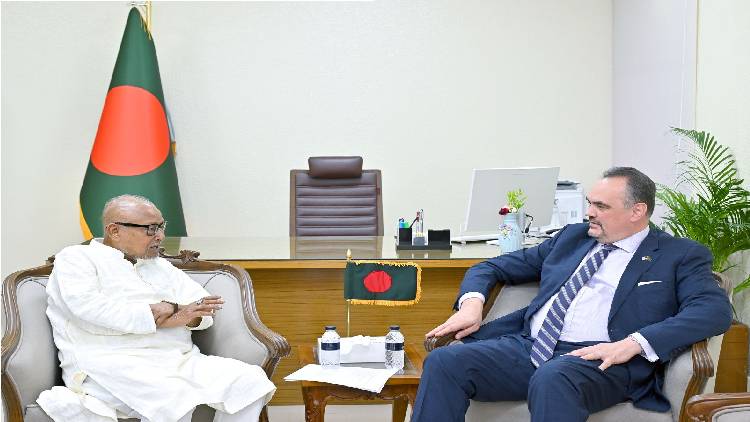
US Ambassador to Bangladesh Brent T. Christensen made the offer during a meeting with Political Adviser to the Prime Minister and Adviser to the Ministry of Agriculture Nazrul Islam Khan at the Prime Minister’s Office on Tuesday.
The ambassador said an efficient cold chain infrastructure is essential for preserving the quality of agricultural products after harvest and enhancing Bangladesh’s export competitiveness. He added that the United States is ready to provide technical expertise and capacity-building support in this area.
The meeting covered a wide range of bilateral issues, including agriculture, trade, labour, education, health, energy and the Rohingya crisis.
Nazrul Islam Khan said Bangladesh and the United States have enjoyed friendly relations since Bangladesh’s independence and noted there is significant scope to expand cooperation in agriculture, food security, technology and employment generation.
The adviser said modernising agriculture through advanced technology and improved productivity is vital to ensuring food security for the country’s large population.
He also highlighted the government’s efforts to increase rural incomes and employment, including the Prime Minister’s Agriculture Card programme and initiatives to promote region-specific agricultural products.
The two sides also discussed expanding the use of renewable energy, particularly solar power, in remote and char areas to support irrigation, agricultural production, food preservation and local employment.
The ambassador and the adviser also discussed the potential for exporting Bangladeshi agricultural products, particularly mangoes, to the US market.
Christensen stressed that improving cold chain facilities and refrigerated transportation would be key to boosting export competitiveness.
The meeting also addressed delays and administrative complexities affecting US imports at Bangladeshi ports.
Nazrul said the government is working to simplify trade procedures, improve port efficiency and remove unnecessary barriers to imports and exports.
On labour issues, Christensen welcomed the passage of the Bangladesh Labour (Amendment) Bill, 2026, saying it would strengthen workers’ rights and bring Bangladesh’s labour laws closer to international standards.
Nazrul reaffirmed the government’s commitment to protecting workers’ rights while maintaining industrial productivity and an investment-friendly business environment.
The Rohingya crisis also featured in the discussions, with both sides stressing the need for stronger regional and international cooperation to achieve a safe, dignified and sustainable solution.
They also exchanged views on higher education opportunities for Bangladeshi students in the United States, school feeding programmes and cooperation in the health sector.
The envoy said the US plans to launch new initiatives to strengthen Bangladesh’s capacity to prevent infectious diseases and improve healthcare services.
Both sides expressed optimism about further strengthening Bangladesh-US relations and expanding cooperation in agriculture, trade, labour, education, health and technology.
The meeting was also attended by Additional Secretary of the Ministry of Agriculture Dr Md Mahmudur Rahman, US Embassy Agricultural Attaché Erin Covert, Political Officer James A. Stewart, Labour Attaché Lina Khan, Deputy Press Secretary to the Prime Minister Shahadat Shadhin, and Assistant Press Secretary Shahriar Pamir.