


 Play store

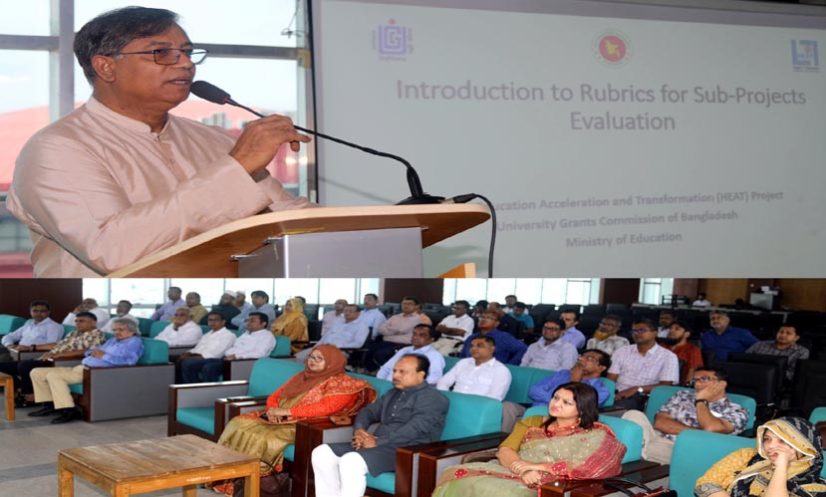
The University Grants Commission (UGC) has introduced major changes to the evaluation process for research project proposals under the second phase of the Higher Education Acceleration and Transformation (HEAT) project, aiming to ensure greater transparency, impartiality and accountability.
The changes cover every stage of the selection process, from proposal preparation and submission to evaluation. Under the new system, the identities of researchers and their institutions are being kept confidential and proposals are being assessed using unique codes.
The UGC has also introduced a lottery-based system to select final reviewers from a panel of potential experts. It believes the new measures will reduce the scope for personal influence, institutional pressure and lobbying in the selection process.
UGC Chairman Professor Dr Mamun Ahmed disclosed the details while addressing a workshop titled “Orientation on Sub-project Evaluation” at the Bangladesh Academy of Sciences in Dhaka on Friday (August 7, 2026).
The UGC chairman said some negative perceptions had emerged over the selection of sub-projects during the first phase of the HEAT project. Although those perceptions did not fully reflect reality, the UGC did not want any such concerns to persist among researchers and academics.
“That is why we have placed particular emphasis on ensuring transparency and impartiality in the evaluation process for the second phase,” he said.
“We want to identify genuine researchers. The quality, originality and potential impact of research, rather than personal identity, will be the key considerations in project selection,” Professor Mamun said.
He said a preliminary pool of potential reviewers had been prepared from three sources: experts recommended by applicants, researchers who expressed interest through Google Forms, and subject specialists identified through university websites.
A high-level committee subsequently assessed the researchers’ publications, research experience and expertise before finalising the reviewer panel.
According to the UGC chairman, each research proposal has been assigned a unique code. Although six to eight potential reviewers have been shortlisted for each project, two reviewers are being selected from the pool through a lottery.
Importantly, reviewers will not know which research proposal they will be assigned until the designated evaluation period begins.
“Through this system, we want to make the evaluation process as free as possible from external influence, personal communication and bias,” Professor Mamun said.
He stressed that increasing research funding alone would not be enough to bring about positive changes in the country’s research culture. The process of determining eligibility for funding and evaluating research proposals must also be made credible.
A transparent and competitive evaluation system, he said, would be crucial for winning researchers’ confidence and creating an internationally competitive research environment.
Professor Mamun also said 180 research projects that received funding last year were being regularly monitored. If irregularities, misuse of funds or failure to achieve stated objectives are detected, funding may be discontinued and necessary action taken against those responsible.
He expressed hope that proper, effective and accountable use of research funds under the HEAT and ICSTEEP projects would strengthen Bangladesh’s research capacity.
Such measures, he added, could also help dispel negative perceptions surrounding research management at universities and foster a stronger, trust-based research culture.
UGC members Professor Dr Masuma Habib, Professor Dr Md Aslam Hossain and Professor Dr Niaz Ahmed Chowdhury, along with HEAT Project Director Dr Asaduzzaman and officials from the UGC and HEAT project, attended the workshop.