


 Play store

A proposed $180 million project, supported by the Asian Development Bank (ADB), is moving through the government approval process to strengthen education, research and technological capacity at Bangladesh’s agricultural universities, according to the University Grants Commission (UGC).
The five-year project, titled the Strengthening Agricultural Tertiary Education Project (SATEP), aims to improve the quality of agricultural higher education, strengthen climate-smart agricultural education and research, and build stronger links between universities and the agriculture industry.
Under the proposed project, Bangladesh Agricultural University (BAU) will be developed as a centre of excellence in agricultural research and a regional hub for research and knowledge in South Asia. Other agricultural universities in the country will also receive support to enhance their academic, research and technological capabilities.
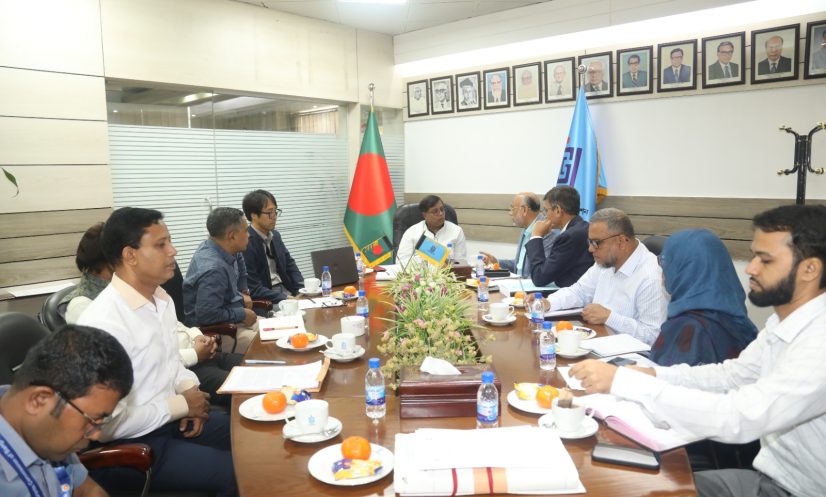
The details were discussed at a consultation meeting between UGC Chairman Professor Dr Mamun Ahmed and an ADB delegation at the UGC headquarters on Wednesday.
The preliminary cost of the project has been estimated at $180 million, of which the ADB is expected to provide $105 million and the Korea Exim Bank/Economic Development Cooperation Fund (KEXIM/EDCF) $55 million. The remaining funds will be provided by the Bangladesh government.
The project is planned for implementation from 2027 to 2032. The initiative will place particular emphasis on improving the quality of agricultural higher education and strengthening climate-smart education and research to address the growing impacts of climate change.
It also aims to align agricultural education more closely with industry and labour market demands while strengthening modern and climate-resilient agricultural research and development.
The proposed project includes plans to develop technology-intensive agricultural universities, upgrade research infrastructure, modernise curricula and academic structures, expand the use of information technology, and provide professional training for teachers and researchers.

A modern instrumentation centre focusing on climate change and agriculture research is also planned at Bangladesh Agricultural University. The facility will support the collection, analysis and research of advanced data on climate change, agricultural production and environmental issues.
The project also plans to expand the use of advanced technologies in agricultural education and research, including remote sensing, GPS, GIS, drones, digital twins, weather analytics, big data analytics, biotechnology and robotics.
Another major objective is to connect university research and innovation more closely with the agriculture sector and the market.
The initiative will seek to promote the commercialisation of research-based knowledge and technologies, strengthen partnerships between universities and agricultural industries, and improve collaboration among researchers, industries and entrepreneurs.
Support is also planned for young agricultural entrepreneurs through pre-startup, startup and incubation programmes.
ADB Senior Social Sector Economist and Mission Leader Ryotaro Hayashi said Bangladesh Agricultural University ranked second among Bangladeshi universities in international rankings.
He said the proposed project would further strengthen BAU’s education and research capacity while extending necessary support to other agricultural universities across the country.
The project will also seek to expand BAU’s collaboration with higher education and research institutions in South Asia and other parts of the world, he added.
Strengthening coordination among research, innovation, industry and universities, promoting technology development and building a startup ecosystem are among the project’s key objectives, Hayashi said.
UGC Chairman Professor Dr Mamun Ahmed said the proposed ADB-supported project could play an important role in developing Bangladesh’s agriculture, higher education and technology-based human resources.
He said the UGC was already working to expand the use of modern technologies in agriculture and improve students’ technological skills.
The chairman stressed the need to reduce disparities in capacity among agricultural universities and expand access to education and research facilities of international standards.
“The project can strengthen the education, research and innovation capacities of agricultural universities while promoting greater collaboration among them,” he said.
Dr Mamun also said higher education should not focus solely on preparing young people for government or conventional jobs but should also help develop skilled entrepreneurs.
He said agricultural universities needed a stronger environment for startups, innovation and entrepreneurship.
Agriculture remains one of the foundations of Bangladesh’s economy and food security, he said, adding that the country needed greater investment in agricultural technology and research amid climate change, population growth, shrinking arable land and rising demand for food and nutrition.
BAU Vice-Chancellor Professor Dr AK Fazlul Haque Bhuiyan sought the cooperation of the UGC, the Planning Ministry and other stakeholders in implementing the project.
He said the initiative would help equip students with modern skills to meet labour market demands while also playing an important role in developing agriculture-based entrepreneurs.
The meeting was attended by UGC Planning and Development Division Director Mohammad Maksudur Rahman Bhuiyan, BAU project focal point Professor Dr Mohammad Shamsul Alam Bhuiyan, UGC Additional Director Suraiya Farhana, and other officials from the UGC, BAU and ADB.