Play store

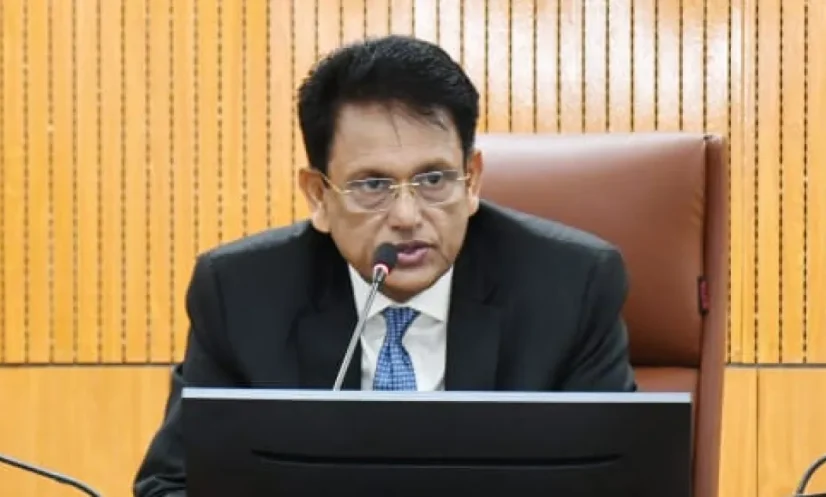
Education and Primary and Mass Education Minister Dr. ANM Ehsanul Hoque Milon today said the government will place the highest priority on textile education, research, innovation, modern technology, infrastructure development and technical education to strengthen Bangladesh’s textile and apparel sector, a key driver of the national economy.
Speaking as the chief guest at the orientation programme for newly admitted students at Bangladesh University of Textiles (BUTEX) in Dhaka, the minister said producing skilled textile engineers and researchers is essential for enhancing Bangladesh’s competitiveness in the global market.
“There is no alternative to developing highly skilled textile professionals and researchers if Bangladesh is to secure a leading position in the global textile and apparel industry,” he said.
Dr. Milon expressed confidence that BUTEX students would play a leading role in the country’s future development.
He noted that around 20 BUTEX graduates have been recommended for various Bangladesh Civil Service (BCS) cadres this year, including administration, foreign affairs and police services.
He also highlighted the achievements of BUTEX alumni, who are demonstrating leadership both at home and abroad.
Referring to Bangladesh’s position as the world’s second-largest exporter of ready-made garments, the minister said the country’s apparel industry has earned global recognition.
“It is a matter of national pride to see ‘Made in Bangladesh’ labels on garments of international brands across the world,” he said.
“However, Bangladesh must also develop internationally recognised domestic brands, which will require stronger innovation and research capabilities.”
Addressing the students, Dr. Milon said they would become the driving force behind future innovations in the textile sector.
Emphasising the importance of science-based education, he said establishing modern research facilities, including artificial intelligence (AI)-driven laboratories, has become a necessity for advancing textile engineering education and research.
“The government will allocate increased funding to ensure high-quality research at textile universities,” he added.
The minister said PM Tarique Rahman is placing special emphasis on education, particularly technical and engineering education, as part of the country’s long-term development strategy.
He noted that Bangladesh’s large population should be viewed as a valuable national resource and transformed into a skilled workforce capable of meeting future economic challenges.
“While many developed countries are experiencing population decline, Bangladesh’s population can become a major strength if properly trained and developed,” he said.
Dr. Milon also assured that the government would expand infrastructure facilities at BUTEX if necessary, including constructing new academic buildings. Although the university currently enrolls around 650 students, he said there is scope to increase student intake in the coming years.
Recalling the past reliance of Bangladesh’s textile industry on foreign professionals, particularly from India and Sri Lanka, the minister said Bangladeshi graduates have demonstrated that they possess the talent and capabilities needed to lead the country’s textile sector.
“Our objective is to develop domestic engineers and skilled professionals who can successfully manage and expand Bangladesh’s textile and apparel industries,” he said.
Highlighting broader educational reforms, Dr. Milon said the government is working to develop students into skilled and modern citizens from the primary level onward. Initiatives such as mid-day meal programmes, school uniforms and sports-based joyful learning are being introduced in primary education.
He added that technical education is being strengthened from the sixth grade, while a revised national curriculum is scheduled to be introduced in 2027, followed by a new national curriculum in 2028.
The minister also stressed the government’s commitment to eliminating session delays in educational institutions to reduce time losses for students.
To expand opportunities for diploma engineers pursuing higher education, the government is planning to establish two specialised public colleges, he said, noting that existing opportunities remain limited and private university education is often prohibitively expensive.
The event was attended by the Vice-Chancellor of Bangladesh University of Textiles, faculty members, students and university officials.