Play store

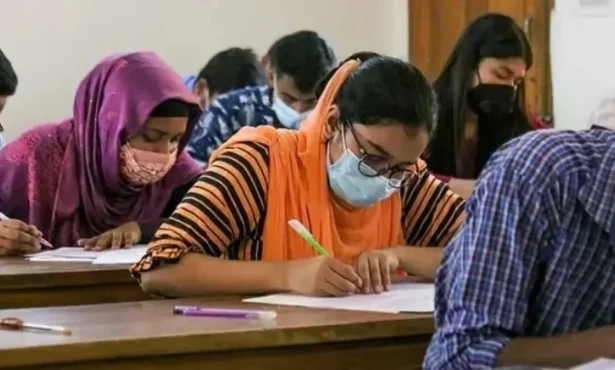
Increasing the number of university graduates alone would not solve the country’s unemployment problem unless they possess the skills and competencies needed by employers, he said.
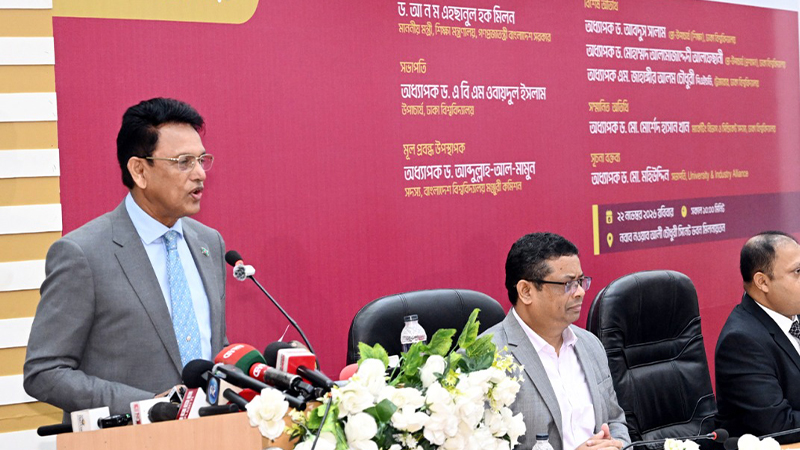
The minister made the remarks as the chief guest at a seminar titled ‘Industry-Academia Collaboration: Government Policy and the Position of Dhaka University’, jointly organised by the University of Dhaka and the University and Industry Alliance at the Nawab Nawab Ali Chowdhury Senate Bhaban on Sunday.
He called for stronger links between universities and industries, market-oriented curricula, and increased investment in research and innovation to improve graduates’ employability.
The relationship between universities and industries should not remain confined to internship opportunities for students, Milon said. Teachers should also visit industrial establishments to understand their practical requirements, skills gaps and working environments.
Research activities and academic curricula should be designed based on such practical experience, ensuring that both students and teachers remain directly connected with the industrial sector, he added.
The minister also emphasised that partnerships between universities and industries should be based on mutual benefits, with both sides identifying what they could contribute and gain from the collaboration.
Addressing concerns over the impact of artificial intelligence (AI) on employment, Milon said technological changes should not be viewed solely as a threat to jobs.
Similar concerns emerged in the 1980s with the introduction of computers and microprocessors, but technological advancements eventually created new employment opportunities and opened up new areas of work, he noted.
The country must prepare to adapt to changes brought about by AI, particularly by developing the capacity to translate knowledge into commercially viable products and services, he said.
Highlighting the unemployment situation, the minister said a large number of students graduate from higher education institutions every year, but adequate employment opportunities are not being created for them.
He called for a clear five-year plan outlining how many employment-ready graduates could be produced by the country’s higher education institutions, including the National University.
Reliable data and research would be essential for preparing such a plan, he said, adding that the lack of adequate information often hampers research and policymaking.
Milon also raised questions about budget management at public universities, saying the government had no shortage of willingness to allocate funds for higher education. The Prime Minister had also assured the necessary financial support, he added.
However, increased allocations would not produce the desired results unless universities could spend the funds effectively.
Simply investing in infrastructure would not improve the quality of education, he said, stressing the need for greater spending on academic quality, research, skills development for teachers and students, and innovation.
Universities must identify their own priorities, determine why allocated funds remain unspent and address the administrative or institutional obstacles preventing their effective use, the minister said.
They should not simply shift responsibility to the government but strengthen their own institutional capacity and accountability.
Referring to the University of Dhaka, he said the country’s leading higher education institution had a greater responsibility to improve productivity, research standards and graduates’ employability.
He also cautioned against opening new academic departments without considering labour market requirements. New departments and subjects should be introduced based on the demand for skilled manpower in the national economy and industrial sector, rather than the personal interests of teachers or students or political considerations.
The University Grants Commission (UGC) also has an important responsibility in ensuring that such decisions are taken in a considered manner, he added.
The minister further highlighted the shortage of teachers across educational institutions, from primary schools to universities. Lengthy recruitment procedures and administrative complications were preventing institutions from appointing the teachers they needed, he said, calling for better coordination among the relevant authorities.
He also expressed concern over delays in students’ academic progression, noting that examinations, publication of results and admission procedures at secondary and higher secondary levels often take unnecessarily long.
Similar delays in university examinations and results, as well as administrative complications in admission processes, should be addressed to prevent students’ academic lives from being prolonged unnecessarily, he said.
Milon also stressed that university autonomy must go hand in hand with accountability. Universities should make proper use of their authority and demonstrate tangible contributions to improving education quality, research and employment opportunities.
The seminar was chaired by Dhaka University Vice-Chancellor Professor Dr ABM Obaidul Islam.
Pro-Vice-Chancellor (Academic) Professor Dr Abdus Salam, Pro-Vice-Chancellor (Administration) Professor Dr Mohammad Almozaddeddi Alfechani and Treasurer Professor Dr M Jahangir Alam Chowdhury attended as special guests.
UGC member Professor Dr Abdullah Al Mamun presented the keynote paper, while Professor Dr Md Mohiuddin, president of the University and Industry Alliance and a professor at the university’s Institute of Business Administration (IBA), delivered the welcome address.
Representatives from more than 100 industrial organisations attended the seminar, along with Dhaka University deans, provosts, department chairpersons, institute directors, teachers, students, administrative officials and heads of various organisations.