Play store

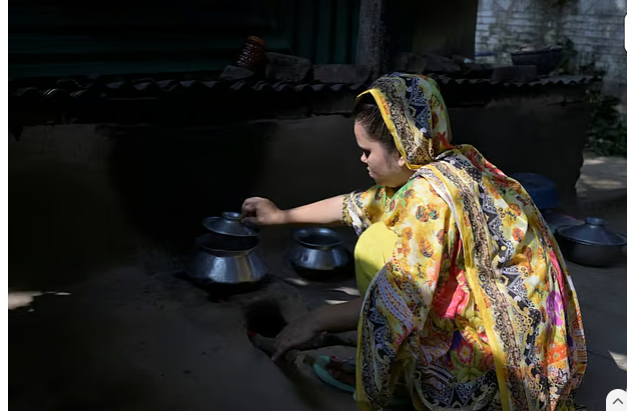
GAZIPUR: Shilpi Khatun wakes up before dawn every day. Unable to afford cooking gas, she prepares meals using firewood on a traditional clay stove before rushing to work at a readymade garment (RMG) factory in the industrial area of Gazipur, on the outskirts of Dhaka.
The 27-year-old is the sole breadwinner of her family. Her husband is unemployed, and she also bears the responsibility of supporting her parents and parents-in-law. Despite working in the garment sector for five years, she has been unable to overcome financial hardship. Rising prices of essential commodities have made her life increasingly difficult.
Shilpi was collecting leafy vegetables from outside her home to prepare lunch. Rice and those greens would have to suffice for her meal that day. Describing her struggles, she said, “Everything is expensive now. House rent has doubled, and food prices have gone up. All my money runs out before the end of the month.”
Shilpi’s struggle is not unique. Thousands of garment workers across Bangladesh are facing similar hardships. While the cost of living has risen, their incomes have not increased at the same pace. Against this backdrop, garment workers staged protests last week demanding that the minimum monthly wage be raised from Tk12,500 to Tk30,000.
Pressure mounts for higher wages
The protests demanding higher wages turned violent at one point last week. Several hundred garment factories were shut down following demonstrations by workers and clashes with police. Police used tear gas and sound grenades to disperse the protesters.
However, workers are set to receive higher wages. On November 4, the government-formed Minimum Wage Board decided that the new wage structure would take effect in December. Workers are expected to receive their increased salaries from January. However, the extent of the wage hike has yet to be decided.
Bangladesh’s garment workers receive relatively low wages, keeping production costs down. Capitalising on this advantage, Bangladesh has become the world’s second-largest garment exporter. International brands such as H&M, Zara, Gap, Primark and Walmart source clothing from the country.
More than 80 per cent of Bangladesh’s total export earnings come from the garment sector, which employs over four million people.
However, garment industry owners believe a substantial wage increase would raise production costs. They fear this could erode Bangladesh’s cost advantage over competitors such as India and Vietnam. Factories are already under pressure from high energy prices. A significant wage hike could further reduce their profit margins.
Industry owners say workers already receive an annual salary increment of 9 per cent, in addition to their basic wages, along with two festival bonuses. They argue that these benefits also contribute to an increase in workers’ overall earnings.
Cutting back on food and healthcare
For workers, however, the biggest concern is managing everyday household expenses. Unable to keep pace with rising living costs, many are being forced to cut spending on food, healthcare and their children’s education.
Shilpi Khatun said there are days when her family has to survive on nothing but puffed rice. She lives with her husband in a small tin-roofed house. Despite suffering from various health problems for the past three years, she has been unable to afford a doctor’s visit.
When she started working at the factory five years ago, her salary was Tk9,000. She now earns Tk13,500 a month. With overtime, her monthly income rises to around Tk16,000. Even that is not enough, as the money runs out before she receives her next month’s salary.
The cost of living in Bangladesh has been rising since 2022. During this period, average inflation has remained close to 9 per cent. Initially, rising food prices were the main driver of inflation, but prices of non-food items subsequently increased as well. This has put additional pressure on low-income earners.
Shilpi is not alone. Roksana Parvin, a 29-year-old sewing worker at a factory in Ashulia, is also struggling to support her family and raise her two daughters.
“Before buying anything, I have to think twice, even when it comes to food. I know my daughters deserve better meals, but I cannot afford them,” Roksana said.
Her family mainly survives on rice and vegetables. Meat and fish have become luxury items for them. To reduce expenses, she has even had to withdraw one of her daughters from school. Source: Reuters.