


 Play store

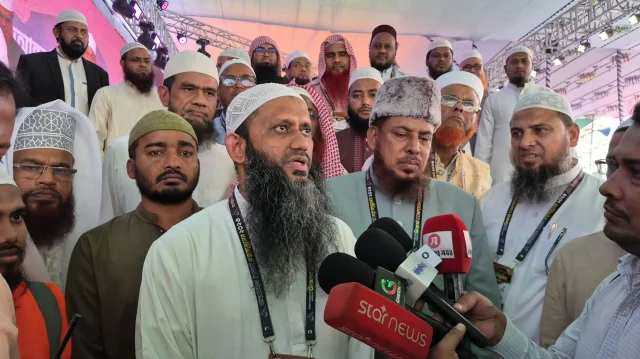
The government is bringing 256,000 imams, muezzins and khadems across Bangladesh under a government honorarium programme in the current fiscal year, State Minister for Religious Affairs Mohammad Shamim Kaiser Lincoln has said.
Around 210,000 beneficiaries have already been registered under the programme, while the government is working to complete the registration of the remaining recipients by December.
The state minister said those whose information had not yet been included in the list would also receive the honorarium with arrears dating back to July, the beginning of the current fiscal year.
He made the remarks while speaking to journalists after inaugurating a two-day International Islamic Grand Conference 2026, organised by Bangladesh Jamiat-e-Ahle Hadith at Baipayl in Ashulia, Savar, on Thursday (November 26).
Referring to the government’s 31-point commitments, Shamim Kaiser said the initiative reflected the government’s commitment to recognising the contributions of religious service providers irrespective of their faith.
He said the programme would gradually be expanded over the next four fiscal years to bring religious workers from mosques, temples and other religious institutions across the country under the initiative.
The programme is expected to cover not only imams, muezzins and khadems but also priests, sebayets, pastors, assistant pastors and other religious officials.
Responding to a question about religious institutions and social development, the state minister highlighted several government initiatives, including the Family Card programme to empower women, Farmer Cards, improved healthcare services, education reform, plantation of 250 million trees and employment generation.
He stressed that financial empowerment alone was not enough and that people also needed guidance to distinguish between right and wrong. Religious leaders, he said, could play an important role in this regard.
On madrasa education, the state minister said the government was working to improve coordination and recognition among madrasa education boards, following the model of Al-Haiatul Ulya Lil-Jamiatil Qawmia Bangladesh.
He added that the Education Ministry was also working to expand opportunities for madrasa students to enter government jobs, including through the Bangladesh Civil Service (BCS) examinations.
The state minister said the Religious Affairs Ministry would provide necessary recommendations if the Education Ministry sought its assistance.
Saudi Arabia’s Religious Affairs Ministry Secretary Sheikh Dr Awad bin Sabti Al-Anazi, Algerian Ambassador Dr Abdul Wahab Saidani and All India Jamiat Ahl-e-Hadith President Sheikh Asghar Ali Alafi Madani, among others, attended the conference.