


 Play store

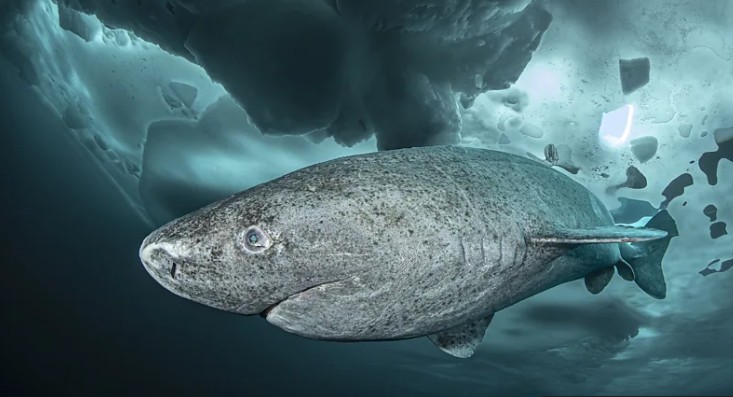
For centuries, it glided silently through the freezing waters of the North Atlantic, surviving wars, revolutions, climate shifts and the rise and fall of empires. It may have begun its life when Abraham Lincoln was still alive, when Queen Victoria ruled Britain and when cars had not yet appeared on the world’s roads. Yet, despite living for more than 150 years, this extraordinary creature was still considered relatively young.
The unexpected discovery of a dead Greenland shark on Ireland’s western coast in April this year has offered scientists an unprecedented opportunity to unlock the mysteries of one of Earth’s most remarkable animals. The shark, believed to be more than 150 years old, became the first Greenland shark ever recorded stranded in Ireland, opening a rare window into a species that has fascinated marine biologists for decades.
For the researchers gathered on the windswept coast of County Sligo, the moment was unforgettable.
“We were all just in awe,” recalled marine biologist Emilie De Loose of the Irish Whale and Dolphin Group. “It’s mind-boggling to think how long that animal lived and what it might have seen.”
Unlike most sharks, the Greenland shark is no ordinary predator. It is the longest-living vertebrate known to science, capable of surviving for nearly 400 years. Some estimates even suggest certain individuals may live for as long as 500 years, meaning a few swimming today could have been alive during William Shakespeare’s lifetime.
Ironically, the stranded shark had barely reached adulthood by Greenland shark standards. Scientists estimate these sharks do not become sexually mature until they are around 150 years old, making every adult incredibly valuable for the survival of the species. The death of a mature shark therefore represents not just the loss of an individual but also the loss of decades of future reproduction.
“It took him 150 years just to reach the stage where he could reproduce,” De Loose said. “He may never have had that chance.”
The discovery quickly turned into a major scientific operation. Weighing more than 200 kilograms and measuring around three metres in length, the enormous animal was carefully protected with seaweed to keep scavengers away before a crane lifted it onto a truck for transport to a veterinary laboratory.
There, scientists from several research institutions carried out a detailed post-mortem examination.
For Jasmine Stavenow Jerremalm, a marine ecology researcher at University College Cork, examining the shark was both exciting and humbling.
“There is something very intimate about working with dead animals because you really get to know the species,” she said. “Dead animals can tell us a lot about the living ones.”
Researchers approached the necropsy with exceptional caution. Since Greenland sharks can survive for centuries, scientists could not rule out the possibility that they might carry ancient bacteria or viruses unknown to modern science.
Every organ was measured, weighed and sampled. One of the most striking discoveries was the shark’s enormous liver, weighing around 50 kilograms. Equally impressive was its massive 34-kilogram heart, almost 100 times heavier than an average human heart.
Surprisingly, although previous studies have shown Greenland shark hearts display signs of ageing such as scarring, they continue functioning efficiently for centuries. Scientists believe the species has evolved extraordinary biological mechanisms that protect it from age-related heart failure, offering valuable clues for understanding healthy ageing in humans.
Its eyes presented another scientific puzzle. For decades, Greenland sharks were widely believed to have poor eyesight because many carry parasites attached to their eyes. However, recent research has overturned that assumption.
Scientists now say the sharks possess highly specialised retinas adapted to the dim light of the deep Arctic Ocean. Even in individuals well over a century old, the delicate cells responsible for vision remain remarkably healthy.
Lily Fogg, an evolutionary biologist at the University of Basel, describes their visual system as resembling a sophisticated low-light camera designed to function in perpetual darkness.
Even more remarkable is that these tissues appear largely untouched by ageing. While human eyesight gradually deteriorates with age, Greenland sharks seem to possess biological mechanisms that preserve vision for well over a century. Researchers believe enhanced DNA repair systems may play an important role in maintaining healthy cells throughout their extraordinarily long lives.
To determine the shark’s exact age, scientists removed the lenses from its eyes for radiocarbon dating, currently considered the most reliable ageing method for this species. Additional muscle samples will also be analysed using experimental techniques involving telomeres, the protective caps at the ends of chromosomes that are closely linked to ageing.
Despite decades of research, Greenland sharks remain among the least understood large marine animals. Scientists still do not know where they mate, where females give birth or even how many offspring they produce during pregnancy. Astonishingly, only one pregnant Greenland shark has ever been documented.
This lack of basic knowledge makes conservation particularly challenging. Without knowing where the sharks breed or spend critical stages of their lives, it becomes difficult to identify and protect the habitats essential for their survival. Researchers also struggle to estimate global population numbers, leaving conservationists uncertain about how vulnerable the species may be to accidental capture in fishing operations or changing ocean conditions.
The shark’s anatomy also revealed how perfectly adapted it is to life in the Arctic. Moving slowly through icy waters, Greenland sharks are both scavengers and opportunistic hunters. Their powerful jaws and uniquely shaped teeth allow them to tear flesh from whale carcasses resting on the seabed while also capturing live prey such as seals.
Researchers found its digestive tract almost empty, although evidence suggested it had eaten recently. Given the shark’s extremely slow metabolism, going long periods without food would not have posed a problem.
Yet one mystery remains unanswered. The shark showed no obvious injuries from fishing gear or collisions. Apart from a twisted testicle and an unusually coloured spleen, its organs appeared remarkably healthy.
Exactly why it died remains unknown. Laboratory analyses of tissue samples may eventually provide answers, but for now the animal’s final journey remains as mysterious as much of its life.
Perhaps that mystery is fitting. A creature that quietly survived through centuries of human history still refuses to reveal all its secrets. Yet even in death, the Greenland shark continues contributing to science, offering valuable insights into longevity, disease resistance and healthy ageing that may one day benefit not only marine conservation but also human medicine.
Its life reminds us that some of nature’s greatest wonders are hidden far beneath the ocean’s surface, where time moves more slowly than anywhere else on Earth. Source: BBC