


 Play store

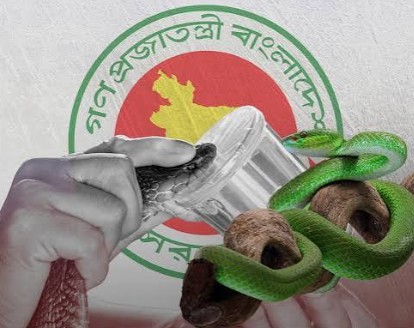
Dhaka: Bangladesh is moving towards developing its own antivenom suited to indigenous snake species, with the government undertaking a Tk43.99 crore project to transform the Venom Research Centre Bangladesh (VRC,B) at Chittagong Medical College into a fully-fledged National Venom Research Centre.
The initiative comes amid growing concerns over the country’s heavy dependence on imported antivenom, which has limited effectiveness against the venom of several poisonous snake species found in Bangladesh.
According to the Development Project Proposal (DPP), the three-year project, titled “Strengthening of Venom Research Centre, Bangladesh (VRC,B)”, will be implemented from July 2026 to June 2029 under the Health Services Division of the Ministry of Health and Family Welfare. The Directorate General of Health Services (DGHS) will implement the project, with the entire estimated cost of Tk43.99 crore to be borne by the government.
The project aims to establish a well-equipped, technology-driven national research facility capable of conducting internationally standardised snake husbandry, venom extraction, analysis and toxicological research.
It will also develop laboratory facilities for research into safe, effective and affordable antivenom, formulate clinical guidelines for managing snakebites and envenoming, train healthcare professionals and establish a disease-based information database to support efforts to reduce snakebite-related deaths.
The urgency of the initiative is underlined by the scale of the problem. A nationwide survey conducted by the DGHS in 2022 estimated that Bangladesh experiences around 400,000 snakebite incidents annually, resulting in approximately 7,500 deaths.
Most victims are economically active people, generally aged between 30 and 40, meaning that snakebite deaths often deprive families of their primary earning members and push them into financial hardship.
The World Health Organization (WHO) classifies snakebite envenoming as a neglected tropical disease and has set a global target of reducing snakebite-related deaths by 50 per cent by 2030.
A major concern highlighted in the project proposal is the limited suitability of imported antivenom for Bangladesh’s snake population. The antivenom currently used in the country is imported from India and is primarily manufactured using venom from that country’s four major venomous snake species, commonly known as the ‘Big Four’.
As a result, its effectiveness against several venomous snake species found in Bangladesh is estimated at only 40 to 60 per cent, according to the DPP. This has strengthened the case for developing antivenom using venom collected from indigenous snake species and taking into account geographical variations in venom composition.
Talking to media, VRC,B Principal Investigator Professor Dr Aniruddha Ghose said the centre was established at Chittagong Medical College in the 2017-18 fiscal year under a project of the DGHS’s Non-Communicable Disease Control (NCDC) programme to facilitate the development of indigenous antivenom.
However, the centre faced an uncertain future after the NCDC programme was discontinued and its operational plans were closed in 2024.
“The newly approved development project to strengthen the VRC,B will pave the way for developing antivenom against venomous snakes native to Bangladesh,” Prof Ghose said, adding that project activities would begin soon following the appointment of a project director.
The existing centre has a 3,000-square-foot facility housing a serpentarium, mouse breeding room, snake clinic, quarantine room and laboratory.
It currently has more than 370 snake specimens collected from almost all geographical regions of Bangladesh. These include cobras (Naja kaouthia and Naja naja), king cobra (Ophiophagus hannah), several species of kraits (Bungarus caeruleus, B. walli, B. niger, B. fasciatus and B. lividus), and vipers (Trimeresurus albolabris, T. erythrurus and Daboia russelii).
The centre has also collected 1,504.78 grams of dried venom from 11 species of captive snakes following standard scientific procedures.
It has made significant progress towards developing antivenom against Russell’s viper venom, although the initiative remains incomplete because of funding constraints.
According to the project proposal, Chittagong Medical College has been selected as a strategic location because of the geographical and ecological diversity of the Chattogram region, particularly the Chattogram Hill Tracts districts of Bandarban, Rangamati and Khagrachhari.
The region’s coastal areas, forests and rural settlements also face considerable snakebite risks. Its proximity to India and Myanmar and the presence of diverse venomous snake species make it suitable for identifying medically important snakes, collecting venom and studying variations in venom composition across geographical areas.
The project envisages collaboration with Chittagong Medical College, Chittagong University, Bangladesh Institute of Tropical and Infectious Diseases (BITID), Chattogram Veterinary and Animal Sciences University (CVASU), the protein laboratory of Rajshahi University and other relevant research and healthcare institutions.
The proposed partnerships will facilitate coordinated research, veterinary support, laboratory services, professional training and the exchange of scientific knowledge and technology. Collaboration with national and international research institutions is also expected to strengthen the centre’s research capacity and technical expertise.
Prof Ghose said the centre, once fully developed, would provide dedicated research facilities for herpetologists, zoologists and scientists working on venom and proteins, an area in which Bangladesh currently lacks specialised infrastructure.
Its major activities will include collecting different types of snake venom, developing antibodies and evaluating their effectiveness. The collected venom will also serve as the primary raw material for research and development of antivenom suited to Bangladesh’s requirements.
“The establishment of the centre could eventually help reduce or eliminate the need for imports of antivenom,” he said.
The initiative is expected to strengthen the country’s capacity to address snakebite envenoming through locally relevant research, improved treatment guidelines and the development of more effective antivenom, in line with the WHO’s global strategy to halve snakebite-related deaths by 2030.