


 Play store

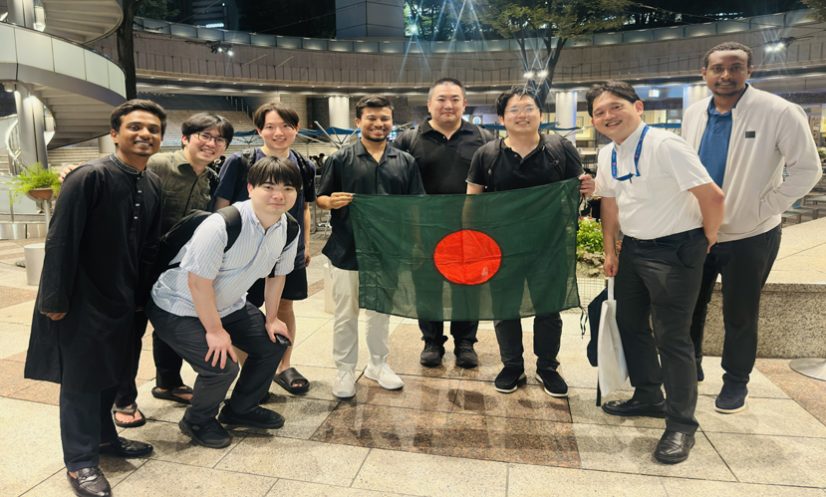
From observing neurosurgical procedures to presenting a clinical case before senior doctors and assisting in an emergency brain surgery—four weeks at one of Japan’s leading university hospitals gave Bangladeshi medical student Rakibul Hossain Rafi an experience that could shape his future career in neurosurgery.
Rafi, who recently completed his final professional MBBS examination at Uttara Adhunik Medical College, secured a four-week neurosurgery observership at the Department of Neurosurgery of Keio University Hospital in Tokyo after applying to several Japanese universities in search of international clinical exposure.
During the observership, he attended neurosurgical operations, ward rounds, departmental conferences, case discussions and other academic activities. His experience went beyond observation when he was given the opportunity to present a clinical case to members of the department.
The most significant moment came during the final week, when Rafi was allowed to assist the medical team during an emergency craniotomy for a patient with an acute subdural haematoma.
For Rafi, the opportunity was much more than simply being present in an operating theatre. He believes it reflected the professional trust he had built through regular attendance, preparation, active participation, asking questions and showing genuine interest in clinical cases throughout his placement.
Rafi’s journey to Japan began soon after completing his final professional examination. Keen to gain clinical experience in an international setting, he explored opportunities at several Japanese universities. After receiving positive responses, he eventually chose Keio University Hospital for the observership.
On his first day in Japan, he was introduced to members of the neurosurgery department, taken on a tour of the hospital and given the opportunity to attend a departmental conference.
The experience was not without challenges. As many clinical discussions were conducted in Japanese, Rafi initially faced a language barrier. However, with support from doctors, residents and colleagues, along with translation technology, he gradually adapted to the new environment.
Over the following weeks, he observed the management of a wide range of complex neurosurgical conditions, including brain tumours, cerebral aneurysms, moyamoya-related cases and other rare neurological disorders.
He also observed procedures involving interventional radiology and angiography, as well as cases involving both adult and paediatric patients.
In addition, he took part in a hands-on cadaver workshop, which gave him an opportunity to strengthen his understanding of surgical anatomy.
The third week brought another important milestone. Rafi was invited to present a clinical case at a regular departmental case conference. Preparing for the presentation required him to review the patient’s clinical history, analyse neuroimaging, consider the diagnosis and understand the proposed treatment plan.
Following his presentation, he took part in questions and discussions with senior doctors. The experience gave him a deeper understanding of the clinical reasoning that goes into managing a real patient, including how doctors interpret imaging findings, weigh treatment options and make decisions as a team.
The highlight of the four-week placement came in the final week.
Rafi was given the opportunity to assist during an emergency craniotomy performed on a patient suffering from an acute subdural haematoma.
He regards the experience as one of the most memorable moments of his medical training.
Rather than viewing the opportunity simply as an achievement, Rafi sees it as the outcome of the professional relationship he developed with the department through his consistent participation and preparation.
Rafi says his most important lessons in Japan were not limited to advanced technology or complex surgical procedures. He was particularly impressed by the emphasis on teamwork, mutual respect, effective communication, patient-centred care and meticulous preparation before surgery.
One of his key takeaways was that an MRI or CT scan is not merely an image to be interpreted.
“Behind every MRI or CT scan is a person and a family,” he believes, stressing that technical expertise must be accompanied by empathy, responsibility and sound clinical judgement.
His academic and research discussions with Japanese doctors have also strengthened his interest in pursuing research alongside clinical practice.
After returning to Bangladesh, he hopes to continue developing his knowledge in research and medical education while building a career in neurosurgery.
An experience to inspire others
Rafi’s four-week experience is not only a personal milestone but also an example of how young Bangladeshi medical students can seek opportunities beyond the country’s borders.
His journey, he believes, demonstrates that international opportunities do not always begin with certainty. Sometimes they begin with an application, an email and the willingness to keep trying.
For a young medical student from Bangladesh, adapting to an international academic environment, participating in clinical discussions, presenting a case before senior specialists and eventually assisting in an emergency neurosurgical procedure has made his Japanese placement an especially memorable chapter in his training. But Rafi does not regard the experience as an end in itself. Instead, he sees it as an important beginning.
His ambition is to become a skilled neurosurgeon combining strong surgical expertise with an interest in research, compassion for patients and a commitment to teamwork.
He also hopes to bring the knowledge and experience he gains through international exposure back to Bangladesh and contribute to the country’s medical sector.
From a medical college in Bangladesh to the neurosurgical operating theatres of Tokyo, Rafi’s four-week journey is therefore more than a story of overseas clinical exposure. It is the story of a young medical student determined to learn beyond conventional boundaries, pursue his ambitions and turn an opportunity into the foundation for a longer journey in medicine.