


 Play store

Bangladesh is set to make a landmark commitment to expanding quality eye care services as it prepares to co-host the 2026 Global Summit for Eye Health, with Prime Minister Tarique Rahman expected to participate alongside world leaders at the global event.
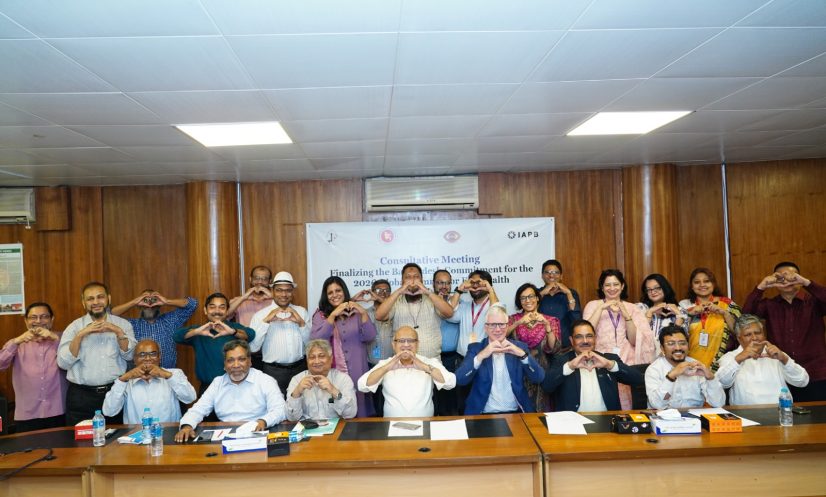
Government officials, ophthalmologists, development partners and eye health organisations on Tuesday met at the National Institute of Ophthalmology and Hospital (NIO&H) to finalise Bangladesh’s draft national commitment for the summit, which aims to accelerate global efforts to eliminate avoidable blindness and visual impairment.
The consultation brought together International Agency for the Prevention of Blindness (IAPB) Chief Executive Peter Holland, IAPB Southeast Asia Regional Head Yuddha Dhoj Sapkota, Acting Director of NIO&H Prof Dr ASMM Quadir, Ophthalmological Society of Bangladesh President Dr Md Tauhidur Rahman, Secretary General Prof Md Zinnu Rain, representatives from the World Health Organization (WHO), the INGO Forum in Eye Health, government agencies, professional bodies and leading eye care institutions. The discussion was facilitated by Orbis International Bangladesh Country Director Dr Munir Ahmed on behalf of the INGO Forum.
Speaking at the meeting, Peter Holland described investment in eye care as one of the most cost-effective public health investments a country can make.
“Eye care is one of the world’s best buys,” he said, noting that an investment of US$129 million in Bangladesh’s eye care sector between 2026 and 2030 could generate an estimated US$2.3 billion in annual economic benefits in the years that follow through improved productivity, education and workforce participation.
Highlighting the global burden of vision impairment, Holland said nearly one billion people in low- and middle-income countries continue to live with avoidable sight loss.
Improving eye health, he said, is fundamental to achieving the Sustainable Development Goals, as better vision enhances educational outcomes, employment opportunities, economic productivity and overall quality of life.
Holland, who is on a two-day visit to Bangladesh, formally invited the government to become a co-host of the 2026 Global Summit for Eye Health, scheduled to be held on November 2, 2026, in Antigua and Barbuda.
He told participants that during a meeting with Prime Minister Tarique Rahman on Monday, the Prime Minister agreed that Bangladesh would co-host the summit alongside Antigua and Barbuda and personally participate in the global gathering.
IAPB Southeast Asia Regional Head Yuddha Dhoj Sapkota said the summit would provide countries with an opportunity to announce ambitious national commitments backed by concrete actions, dedicated financing and measurable targets aimed at reducing avoidable blindness while strengthening national eye care systems.
Presenting Bangladesh’s draft national commitment, prepared jointly by government agencies and development partners, Dr Munir Ahmed outlined a roadmap for building a people-centred eye care system that ensures equitable access to services for refractive errors, presbyopia, cataracts, diabetic retinopathy, glaucoma and childhood eye diseases.
He proposed that Bangladesh commit to extending essential eye care services to 20 million people by 2030, significantly expanding nationwide access to quality and affordable eye care.
Representatives from WHO, UNDP, The Fred Hollows Foundation, Helen Keller International, Sightsavers, CBM Global, Ispahani Islamia Eye Institute and Hospital, Dr K Zaman BNSB Eye Hospital, Prof Matin BNSB Eye Hospital, Dip Eye Care and Essilor Bangladesh also participated in the consultation.
Speakers said eye health remains a major public health challenge in Bangladesh, with an estimated 637,500 to 855,000 people living with avoidable vision loss, while nearly six million people suffer from broader forms of visual impairment.
They stressed that the vast majority of vision impairment can be prevented or treated through timely diagnosis, access to affordable spectacles, cataract surgery, diabetic eye care and stronger primary eye care services. Integrating eye care into the country’s universal health coverage programme, they said, would not only improve health outcomes but also contribute significantly to Bangladesh’s social and economic development.
The meeting concluded with stakeholders reaffirming their commitment to finalising Bangladesh’s national pledge ahead of the 2026 Global Summit for Eye Health, underscoring a shared vision of ensuring that quality, affordable and accessible eye care reaches every citizen.