


 Play store

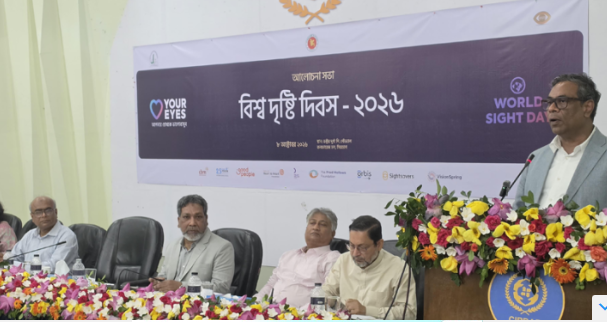
The government will invest $130 million over the next five years to improve eye health services and expand access to eye care across Bangladesh, Health and Family Welfare State Minister Dr MA Muhit has said.
He made the announcement while addressing a discussion marking World Sight Day 2026 at the CIRDAP conference room in Dhaka on Thursday.
The event was jointly organised by the INGO Forum and the National Institute of Ophthalmology and Hospital (NIO&H).
Dr Muhit said the planned investment would help bring eye care services to people in every district and remote area of the country.
The funding will be used to train eye-care professionals, expand eye-care infrastructure and facilities, and ensure access to necessary treatment, he said.
As part of the initiative, the government plans to provide 1 million free cataract surgeries and distribute 10 million pairs of spectacles across the country.
The programme will also bring around 20 million people under primary eye-care services, the state minister said.
He said schoolchildren would be an important part of the programme, with measures being taken to conduct vision screening, provide spectacles where necessary and ensure access to other essential eye-care services.
“Ensuring quality and affordable eye-care services at people’s doorstep is one of the government’s priorities,” Dr Muhit said, adding that the scope of eye-health services would be expanded to reach a larger section of the population.
The state minister stressed that expanding eye care to rural and remote communities would be particularly important for ensuring that people are able to access essential services without having to travel long distances.
The discussion was chaired by Dr Syed Mahbub-ul Qadir, director of the National Institute of Ophthalmology and Hospital.
Dr Munir Ahmed, country chair of the Bangladesh chapter of the International Agency for the Prevention of Blindness (IAPB) and country director of Orbis International, Professor Md Jinnu Rain (Newton), secretary general of the Ophthalmological Society of Bangladesh (OSB), and Dr Md Touhidur Rahman, president of the OSB, also attended the programme.
Dr Afsana Habib Shiuly, programme head of Helen Keller International, moderated the discussion session.
The World Sight Day event brought together government officials, eye-care professionals and development-sector representatives to discuss expanding access to eye health services and addressing preventable vision impairment in Bangladesh.