


 Play store

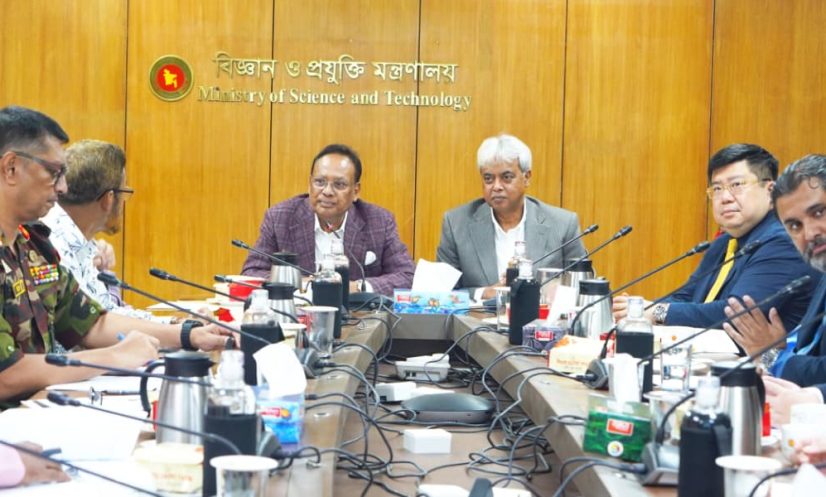
DHAKA: Science and Technology Minister Fakir Mahbub Anam has urged scientists and researchers to move beyond theoretical discussions and develop practical, research-based solutions to combat dengue as infections continue to pose a serious public health challenge in Bangladesh.
He stressed the need for immediate, visible and effective action, particularly in densely populated Dhaka, where dengue patients are increasing in different areas and hospitals.
The minister made the remarks as the chief guest at a meeting at the Ministry of Science and Technology’s conference room at the Bangladesh Secretariat on Sunday. The meeting discussed a proposal to explore scientific cooperation on dengue and mosquito control through the application of Wolbachia-based technology.
Fakir Mahbub Anam said dengue had become a serious problem under the country’s current circumstances and called for urgent action rather than prolonged discussions.
He said the prime minister had issued specific directives to tackle dengue and expressed hope that a sustainable solution could be developed through practical pilot projects involving scientists and relevant officials.
The minister urged all concerned to move beyond meetings, seminars and podcasts and work directly in the field to address the crisis.
He assured the participants of his full support for implementing the proposed project, saying he was ready to engage with relevant stakeholders to ensure the necessary cooperation. He also called on scientists to translate their research into practical and effective measures to resolve the public health emergency quickly.
Science and Technology Secretary Md Anwar Hossain emphasised the need for greater cooperation and coordination in research on dengue and mosquito control.
He said collective efforts were essential to address both current and future challenges, adding that joint initiatives were necessary to identify the most effective and appropriate solutions. Such initiatives should be cost-effective and commercially viable, while taking into account Bangladesh’s climate, geographical conditions and social welfare needs, he said.
The meeting was informed that a pilot project on dengue and mosquito control would begin shortly with grants from the Temasek Foundation and the Asian Development Bank (ADB).
Researchers and experts working in relevant fields in Bangladesh will also be involved in the project. Participants expressed hope that integrating local technologies, knowledge and innovations would make the initiative more effective.
Singapore’s Chargé d’Affaires in Bangladesh, Philip Ong, addressed the meeting, along with Professor Zhiyong Xi, chair of the Department of Microbiology, Genetics and Immunology at Michigan State University in the United States.
David Quek Yong Kee, chief executive officer of SymbioCI SEA, attended the meeting with his team.
Representatives from Dhaka North and South city corporations, the ministries of health and local government, the Institute of Epidemiology, Disease Control and Research (IEDCR), and researchers also took part in discussions on introducing the technology.
Among other participants were Bangladesh Atomic Energy Regulatory Authority Chairman Mahmudul Hasan, Bangladesh Atomic Energy Commission Chairman Dr M Moinul Islam, Bangladesh Council of Scientific and Industrial Research Chairman Dr Samina Ahmed, Professor M Firoz Zaman of Dhaka University and Professor Kabirul Bashar of Jahangirnagar University.