


 Play store

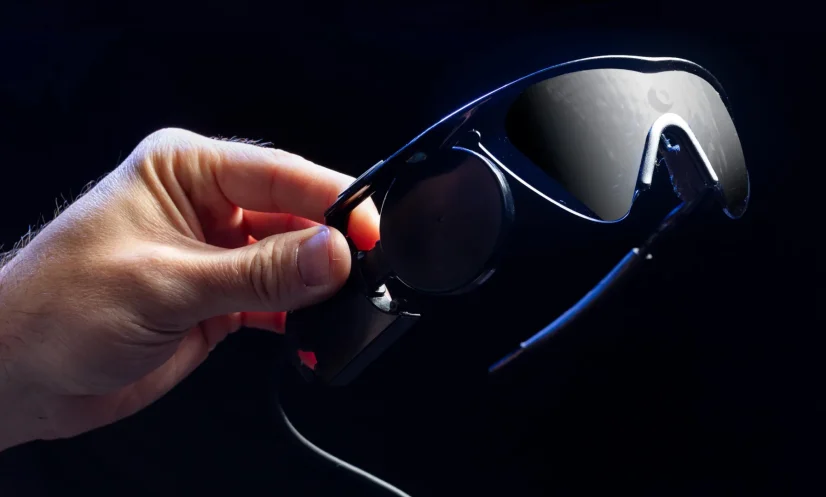
Artificial intelligence could help improve brain implants designed to restore partial vision to blind people by making electrical stimulation of the brain more precise and predictable, according to a new study.
Researchers from three institutions, including the University of California, Santa Barbara (UCSB), have demonstrated that a deep learning system can improve how experimental visual prostheses stimulate the brain and predict the visual sensations produced.
The findings, published online in the journal Neuron, mark progress towards developing more effective visual prostheses, often described as bionic eyes.
The research team used an AI system to design electrical stimulation patterns for electrodes implanted temporarily in the visual cortex, the region at the back of the brain responsible for processing visual information.
By analysing the brain’s responses to different electrical signals, the system helped researchers gain greater control over neural activity and more accurately predict what a person might perceive.
The technology could eventually allow visual implants to adapt to individual brain responses rather than relying on fixed stimulation settings.
“Building a model in the abstract is one thing. Seeing it shape an experiment with a person is something else entirely,” said Michael Beyeler, an associate professor of computer science and psychological and brain sciences at UCSB.
How brain implants could restore vision
Scientists have been developing technologies to restore some degree of sight to blind people for decades, but existing experimental approaches have produced limited results.
Some devices stimulate the retina, the light-sensitive tissue at the back of the eye, while others attempt to activate different parts of the visual pathway.
Visual cortical prostheses take a different approach by sending electrical signals directly to the brain’s visual cortex, bypassing the eyes and optic nerves.
This could offer a potential option for people whose vision loss results from damage to their eyes or optic nerves but whose visual cortex remains capable of responding to stimulation. Potential candidates include people who have lost their sight following strokes, neurodegenerative diseases or traumatic brain injuries.
The technology may be particularly valuable for people who previously had normal vision but lost it later in life because of illness or accidents.
AI tested with a blind participant
A major step in the research came in 2024, when Beyeler’s team travelled to Spain to test whether its computer models could improve an experimental brain implant.
At Hospital IMED Elche, researchers worked with a 27-year-old man who had become blind following a traumatic brain injury.
The participant had received an implant containing 96 electrodes arranged in an array in his visual cortex. The device was designed to remain in place for six months before being removed.
When the electrodes delivered electrical signals, the participant experienced visual sensations known as phosphenes. These can appear as flashes, spots or shapes of light, sometimes resembling stars or fireworks.
However, producing consistent and predictable visual sensations remains a major challenge. The same electrical stimulation does not always generate an identical response, making it difficult to create specific visual patterns.
To address this limitation, the researchers trained a deep neural network to predict how the participant’s visual cortex would respond to different electrical stimulation settings.
The AI model also considered the brain’s resting activity immediately before stimulation, allowing it to account for changes in the participant’s neural state.
Using these predictions, the system identified combinations of electrical signals most likely to produce targeted patterns of brain activity.
More accurate stimulation with less electricity
Tests showed that stimulation patterns selected by the AI system produced intended neural activity more accurately than comparison methods while requiring less electrical current.
The results suggest that machine learning could help overcome a major obstacle in developing visual cortical prostheses: ensuring that electrical signals consistently produce predictable visual experiences.
Researchers say the study is a proof of concept rather than a demonstration of restored functional vision. The technology does not yet enable users to see normally or recognise complex objects.
Nevertheless, the findings provide a foundation for developing more sophisticated brain implants that could eventually help some blind people regain limited visual abilities.