


 Play store

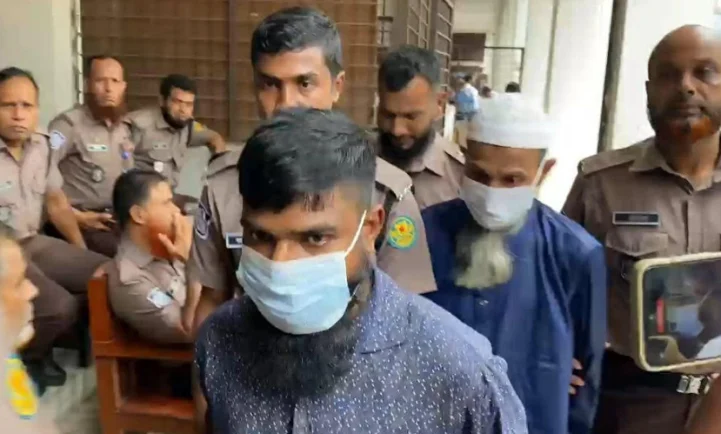
Dhaka: A Dhaka court has sentenced Md. Hridoy Bepari, also known as Md. Hridoy Mia, the personal driver of housewife Afroza Sultana, to death for brutally murdering her in the capital’s Madhya Badda area.
Additional Metropolitan Sessions Judge-3 of Dhaka, Mohammad Moin Uddin Chowdhury, pronounced the verdict on Wednesday (July 29).
Additional Public Prosecutor Md. Zahirul Islam (Kaiyum) confirmed the matter, saying the prosecution was satisfied with the verdict and that the victim’s family had received justice.
According to the case documents, Afroza Sultana, a working woman, was found with her throat slit inside her second-floor apartment in Madhya Badda on March 13, 2022. The following day, her brother Md. Al Manzil filed a murder case with Badda Police Station.
DB Gulshan Division Sub-Inspector Md. Ripon Uddin investigated the case. The investigation found, based on CCTV footage, the accused’s confession and scientific evidence, that Hridoy had fallen heavily into debt due to his addiction to online gambling. Seeking to repay his debts and steal gold jewellery, he allegedly killed Afroza Sultana with a sharp knife while she was alone at home that afternoon.
Based on information provided by the accused, investigators recovered a bloodstained knife measuring nearly nine inches in length, which was allegedly used in the murder and buried underground. They also recovered 22.04 grams of stolen gold jewellery, bloodstained tissue, a vanity bag and Tk 600 in cash.
Forensic evidence from the autopsy doctor and DNA test results conducted by the CID’s Crime Scene Unit also established the accused’s involvement. Hridoy later gave a confessional statement before a court under Section 164 of the Code of Criminal Procedure.
After the charge was framed, the trial was completed within just 30 working days following the testimony and cross-examination of 12 witnesses.
In its verdict, the court observed that an innocent woman had been deliberately and brutally murdered by a trusted employee who took advantage of the trust placed in him. The court described the crime as one of the “rarest of the rare” offences.