Play store

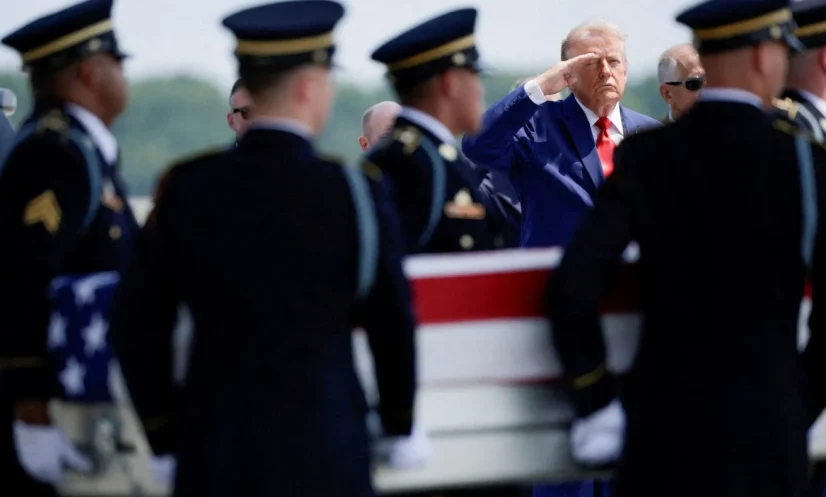
The National Iranian American Council (NIAC), a civic engagement organisation based in Washington, DC, filed a lawsuit against US President Donald Trump on Thursday, asking a federal judge to declare the US war on Iran unconstitutional, given that Trump did not seek congressional authority and has no timeline to end it.
The complaint for declaratory relief was filed by prominent constitutional lawyers Alan Morrison and Bruce Fein in the US District Court for the District of Columbia.
“We’ll take it as far as we can, whether the court wants to hear us or not,” Morrison told reporters assembled for the announcement at the National Press Club.
“Yes, the US Supreme Court has been reluctant to opine on the war power issue in 236 years… but I think this is really an unprecedented time, given the fact that both House and Senate voted against the war,” he added.
“The dynamic [is] different [and] makes the court more likely to take this case.”
When both chambers of Congress voted in favour of a War Powers resolution in June to rein in Trump’s ability to continue attacks on Iran, the White House responded that “there are no present hostilities from which to remove US Armed Forces”, because “the hostilities that began on February 28, 2026, have terminated with the ceasefire ordered by the President on April 7, 2026”.
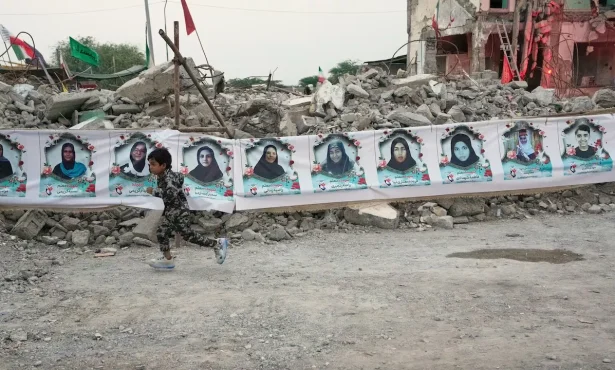
The ceasefire agreed in April, however, has barely held, with the US carrying out multi-day bombings across Iran’s southern coast – including a strike on a wedding – earlier this month.
“Donald Trump, I think, has exposed the areas in our system in which we thought there were guardrails, but they’re just gentlemen’s agreements,” Jamal Abdi, NIAC’s president, told reporters on Thursday.
“It’s a moment to not just end this catastrophe, but to set a precedent for the future, so that presidents can’t take our country into a war without any authorisation, and I hope that others are also compelled to settle this question because it is a matter of life and death.”
Constitutional questions
The US Constitution’s “Declare War Clause”, which NIAC accuses Trump of violating, maintains that only Congress has the power to declare war.
However, this has largely become a formality, given the US regularly carries out military operations – many of which include extrajudicial killings – in multiple sovereign countries at once. The 2001 Authorisation for the Use of Military Force (AUMF), which lawmakers approved soon after the 11 September 2001 attacks, opened the door to far-reaching military operations that may never see boots on the ground.
The executive branch has also historically had broad authority over foreign policy.
“The courts are the place to have a constitutional question answered,” Fein said on Thursday.
“The president says he has the authority, and everybody else says he doesn’t have the authority, and that’s why we’re in court to try to settle that question.”
The Trump administration, in a messaging blitz led by Vice President JD Vance, has insisted in recent weeks that reporters avoid the term “war” and instead refer to occasional hostilities or skirmishes.
“If you’ve been bombing another country for seven months now, that’s a war. If you oppose a blockade, that’s a war. And when you’re killing all these people and spending $43 billion, that’s a war,” Morrison said.
Family members injured and killed
NIAC’s 16-page lawsuit, filed by its advocacy arm, NIAC Action, lists eight Iranian Americans who have been directly and adversely impacted by Trump’s bombings.
Among them is Kowsar Gowhari, who attended Thursday’s press conference and said she lost four family members in Iran, including a 70-year-old cousin and a two-month-old baby. Source: MEE.