Play store

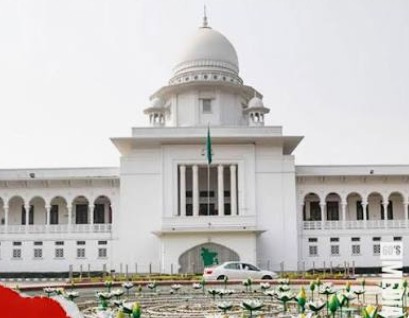
DHAKA: A special High Court bench has disposed of 38 death reference cases involving brutal attacks, sexual violence and murders of women and children in just over five months, setting an example for expediting the country’s long-pending death sentence cases.
The swift disposal has drawn praise from Supreme Court lawyers and legal experts, who have called for the formation of more specialised High Court benches to reduce the backlog of more than 1,300 death reference cases awaiting disposal.
The special bench, comprising Justice Bhishmadev Chakrabortty and Justice KM Rasheduzzaman Raja, was constituted by Chief Justice Zubayer Rahman Chowdhury on June 10, 2026, to hear death reference cases and criminal appeals under the Women and Children Repression Prevention Act on a priority basis.
Between its formation and November 17, the bench delivered verdicts in 38 cases involving serious violence against women and children.
Supreme Court lawyer Barrister HM Sanjid Siddiqui identified delays in preparing paper books and an inadequate number of benches relative to the volume of pending cases as two major reasons behind the prolonged disposal of death references.
He said delays often leave convicted prisoners languishing in condemned cells for years, although some are eventually acquitted by the High Court. Speedy disposal of such cases could spare many accused people prolonged and unnecessary detention, he added.
A paper book contains all essential documents relating to a death reference case, from the first information report (FIR) and charge sheet to the trial court’s verdict. It also includes witness statements, confessional statements, forensic and post-mortem reports, documentary evidence and other relevant court records.
The paper books are printed at the Bangladesh Government Press (BG Press) for hearings before the High Court.
On the backlog of death reference cases in the higher judiciary, Attorney General Barrister Md Ruhul Quddus Kazal told media that although preparing paper books takes time, there should be no delay in disposing of cases once the necessary documents are ready and the cases are placed for hearing.
He said lawyers representing the convicts and the state must be equally proactive in ensuring speedy disposal, while judges also need to play a more active role.
The Attorney General cited the special High Court bench that delivered verdicts in 38 death reference cases involving violence against women and children within a relatively short period as an example of effective case management.
Referring to what he described as a tendency among some trial court judges to impose death sentences indiscriminately, he said such verdicts unnecessarily increase the number of death reference cases before the High Court and add to the backlog.
He cited the Nusrat murder case in Feni, in which a tribunal judge sentenced 16 people to death. The High Court later described the verdict as a “mindless sentence” and removed the judge from judicial duties involving criminal cases.
Emphasising the need for sentencing guidelines in criminal cases, the Attorney General said such guidelines were essential to prevent arbitrary and disproportionate death sentences in murder cases.
Bangladesh does not have formal sentencing guidelines, he said, adding that their introduction would help reduce disparities in judicial decisions and ease the unnecessary burden of death reference cases on the higher judiciary.
On October 24, Chief Justice Zubayer Rahman Chowdhury constituted 57 High Court benches. According to Supreme Court Public Relations Officer Md Shafiqul Islam, five High Court benches are currently hearing death reference cases.
One of them is the special bench of Justice Bhishmadev Chakrabortty and Justice KM Rasheduzzaman Raja, which is handling death references and appeals under the Women and Children Repression Prevention Act. It had delivered verdicts in 38 cases by November 17.
Among the notable rulings, the bench on August 24 upheld the death sentences of two convicts in the Nusrat murder case in Sonagazi, Feni, commuted the sentences of four others to life imprisonment and acquitted the remaining 10 of their death sentences.
On August 31, it upheld the death sentence of Hitu Sheikh in the rape and murder case of Achia in Magura.
In its latest verdict on November 17, the bench upheld the death sentence of Sohel Rana for the rape and brutal murder of child Ramisa in the capital’s Pallabi area, while acquitting his wife, Swapna Khatun.