


 Play store

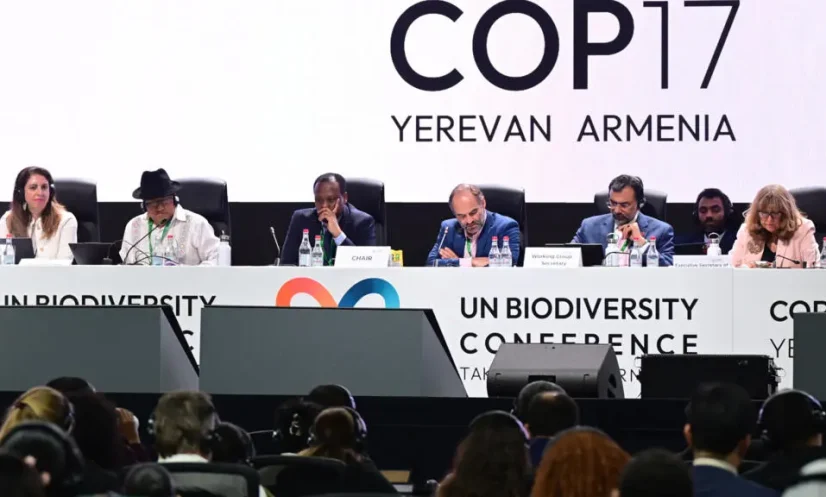
Nearly 200 countries have reached a series of hard-fought agreements at the UN biodiversity summit in Armenia, reaffirming their commitment to get global efforts to halt and reverse nature loss by 2030 back on track.
The COP17 summit, held in the Armenian capital Yerevan, concluded early Saturday after two weeks of intense negotiations marked by disagreements over financing, harmful subsidies and the role of science in shaping global biodiversity policy.
Delegates approved two key texts after negotiations ran into overtime, although the final versions of the agreements were not immediately available.
COP17 President Hambardzum Matevosyan brought the summit to a close after the agreements were adopted, while delegates welcomed the progress despite concerns that the outcome fell short of the scale of the global biodiversity crisis.
The summit was aimed at reviving a landmark global commitment to halt and reverse the destruction of nature by 2030. The goal includes protecting 30 per cent of the world’s land and oceans, tackling pollution and invasive species, and increasing funding for conservation.
The United Nations had warned ahead of the meeting that global progress remained insufficient to achieve these targets.
French Ecological Transition Minister Monique Barbut said the outcome was not fully commensurate with the scale of the crisis facing the natural world.
She said the failure to make greater progress represented missed opportunities to accelerate action against biodiversity loss, warning that nature could not wait for the slow pace of international negotiations.
One of the most contentious issues at the summit was how to address subsidies and other financial incentives that encourage activities harmful to nature, including fossil fuel use, intensive agriculture and overfishing.
Environmental groups described the final outcome as a step forward, although they said the language on harmful subsidies remained weak.
Another major dispute centred on conservation finance, with developing countries pressing for greater financial support while public budgets in many countries remain under pressure.
The European Union also called for wealthier emerging economies, including China, to contribute voluntarily to global biodiversity financing.
However, key questions surrounding the Cali Fund, a UN mechanism designed to attract corporate contributions for biodiversity protection, remained unresolved. Environmental campaigners warned that delaying decisions could prevent the fund from becoming operational quickly.
The summit was also marked by an unusual dispute over science, with several countries accused of obstructing efforts to approve important scientific reports.
A group of countries, represented by Swiss negotiator Gabriela Blatter, stressed that while every nation had the right to protect its national interests, scientific evidence should not become a matter of political negotiation.
The COP17 meeting ultimately reaffirmed the need for faster and stronger action to protect ecosystems, plants and animals that are essential to life and human well-being.
Ecuador was selected to host the next UN biodiversity summit in 2028 after defeating Panama in a secret ballot.
While the agreements reached in Yerevan have helped keep global biodiversity commitments on track, the summit ended with a clear warning from governments and environmental groups that much stronger action will be needed to meet the 2030 goals.