


 Play store

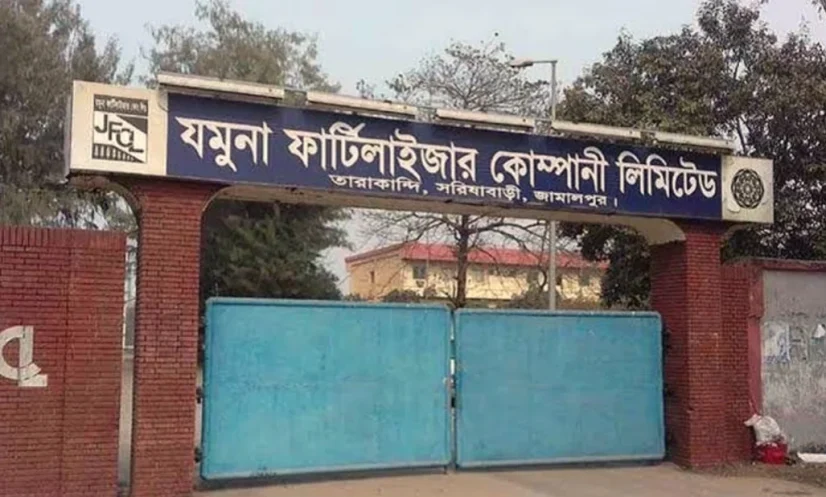
The Jamuna Fertiliser Factory in Sarishabari, Jamalpur, has resumed urea production after remaining shut for nearly eight months due to gas shortages and mechanical problems.
Production restarted at around 3:10am on Tuesday after the factory received sufficient gas pressure, said Fazlul Haque, head of the production department.
According to factory authorities, production had been suspended since February 12 due to a gas shortage. Before that, the factory remained closed for nearly 23 months from January 2024 to November 2025 because of inadequate gas supply and various mechanical problems.
Gas supply to the factory resumed on September 20, but production could not restart because the pressure was below the required level. Haque said around 46 million cubic feet per day (mmcfd) of gas pressure is normally needed for urea production, although operations can continue at 42–43 mmcfd.
Titas Gas Transmission and Distribution Company had earlier been supplying gas at only 27–28 mmcfd, preventing the factory from resuming production despite preparations.
The reopening has brought relief to workers and local businesses dependent on the factory. Shopkeepers, transport workers and others whose livelihoods are directly or indirectly linked to the factory have welcomed the restart.
Morshed Alam Talukder, general secretary of the factory’s workers’ and employees’ union, said many workers had been facing severe financial hardship during the prolonged shutdown.
The factory has a daily production capacity of 1,700 tonnes. However, due to low gas pressure and mechanical problems in recent years, it generally produced around 1,200–1,400 tonnes a day.
Fazlul Haque, also head of the Ammonia and Utility Department, said all units were currently operational and production could reach 1,200–1,400 tonnes a day if operations continue normally.
The factory’s fertiliser is distributed through 1,900 dealers listed with the Bangladesh Chemical Industries Corporation (BCIC) across 21 districts, including Jamalpur, Sherpur, Mymensingh and Tangail.
Factory authorities said that with a steady gas supply, the plant can produce fertiliser worth around Tk2 billion a month and generate approximately Tk600 million in profit.
Even while production remained suspended, the factory spent around Tk60 million a month on gas to keep machinery and other facilities operational.
With production now restored, factory authorities and stakeholders hope to maintain a regular gas supply, which would help strengthen the country’s fertiliser supply while reviving economic activity in areas dependent on the plant.