


 Play store

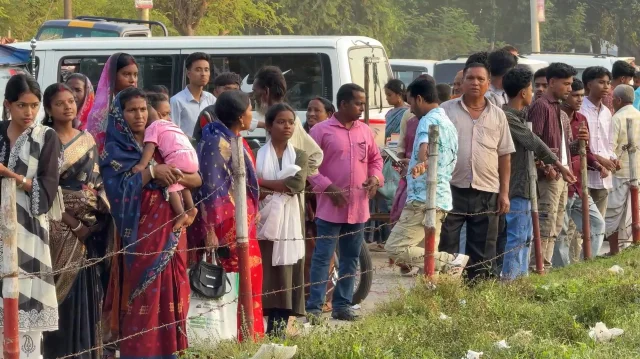
Crowds of people have gathered along the Hili border between Bangladesh and India to catch a glimpse of their relatives living on the other side, as the Durga Puja festival brings families separated by the international boundary closer.
The border area has become a meeting point for people from both countries who come to see their loved ones, exchange greetings and share moments of happiness despite the physical barrier separating them.
However, the barbed-wire fence and strict border surveillance prevent them from meeting freely.
Many have to stand on opposite sides of the border, communicating through gestures and brief conversations while trying to catch a glimpse of family members they have not seen for a long time.
For many visitors, the gathering is an emotional occasion, as relatives separated by the Bangladesh-India border rarely get opportunities to meet in person without travelling through official immigration checkpoints.
The Hili border, located in Dinajpur district of Bangladesh and adjacent to India’s West Bengal, has witnessed similar gatherings during religious festivals in previous years.
Families separated by the 1947 Partition and subsequent border arrangements have maintained emotional ties across the boundary.
Meanwhile, cross-border passenger movement through the Hili immigration checkpoint has increased during this year’s Durga Puja celebrations. Daily passenger traffic has risen from around 350–400 a week earlier to approximately 600–700, with 1,185 passengers crossing on October 18, according to immigration officials.
Additional computer desks and security measures have been introduced to manage the increased flow of travellers.
Although visitors without the necessary travel documents cannot cross the border to meet their relatives, the gathering reflects the enduring family bonds that persist despite geographical and political divisions.