Play store

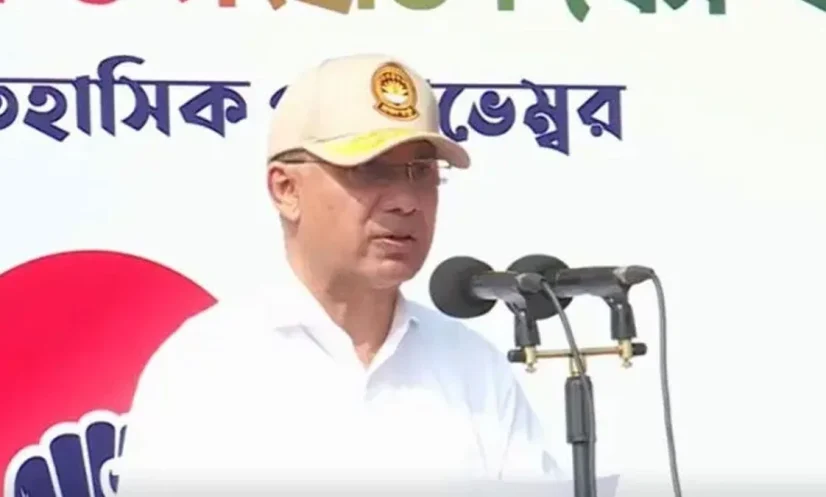
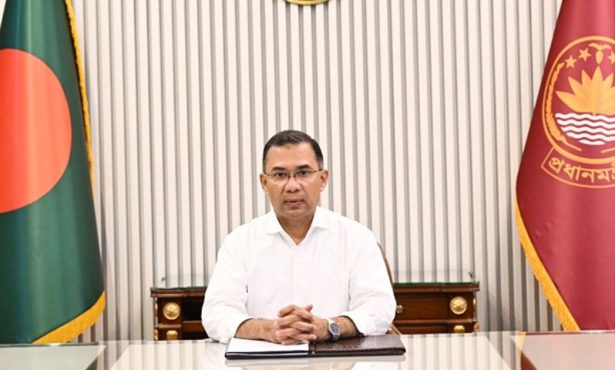
DHAKA: Prime Minister Tarique Rahman has said Bangladesh has repeatedly bounced back with the spirit of the united revolution of November 7 whenever the country faced conspiracies or its democracy came under threat.
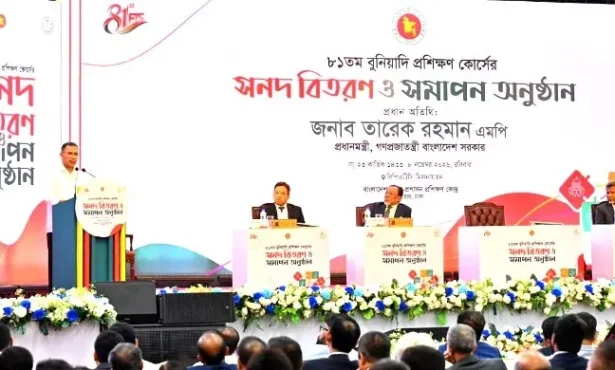
He made the remarks while addressing a programme organised at the Army Stadium in Banani, Dhaka, on Saturday to mark National Revolution and Solidarity Day.
Tarique first congratulated the young generation for presenting an impressive, history-based display centred on November 7. He also extended greetings to all on the occasion of Nazrul Year.
He said November 7 was a significant and glorious day for patriotic, freedom-loving and democracy-loving people.
On this day in 1975, patriotic soldiers and civilians had jointly foiled all conspiracies against Bangladesh’s independence and sovereignty, he said.
November 7 was a day when the country’s friends and foes were identified, the prime minister said, adding that conspiracies against Bangladesh had reached their peak in the first week of November 1975.
As part of those conspiracies, then army chief Lieutenant General Ziaur Rahman was placed under house arrest along with his family in the early hours of November 2.
While conspiracies against the country’s interests were being hatched by keeping the architect of the country’s independence declaration under detention, soldiers and civilians united to foil those plots, he said.
That is why November 7 remains a beacon of national unity for patriotic, nationalist and pro-democracy people, Tarique added.
He said those who wanted to turn Bangladesh into a subservient state, deprive people of their democratic and political rights, establish one-party rule and undermine the glory of the armed forces were defeated through the historic revolution of patriotic soldiers and civilians on November 7, 1975.
However, conspiracies by the defeated forces did not stop after November 7, he said.
Through further conspiracies, they united under the banner of the Grand Alliance and once again turned the country into a subservient state, he alleged.
He also accused them of undermining the honour and dignity of the armed forces through the planned massacre of army personnel at the BDR headquarters in Pilkhana, and establishing fascist rule by stripping people of their democratic and political rights.
The defeated forces of November 7 were once again defeated in 2024 through a bloody mass uprising led by students and people, at the cost of thousands of lives, he said.
The prime minister said the country was now free from fascism. He paid deep tribute to those killed and injured during the prolonged anti-fascist movement and the 2024 mass uprising.
“While the 1971 war was fought to achieve independence, 2024 was about protecting the independence of the country and its people,” he said.
He said people from all walks of life had taken to the streets on August 5, 2024, to protect the country’s and people’s freedom, just as soldiers and civilians had united on November 7, 1975, to thwart conspiracies against the country’s independence and sovereignty.
Time had proved that November 7, 1975, was the day that determined Bangladesh’s future course, he said. Whenever the country deviated from that path, the sovereignty of the country and its people came under threat, he added.
### November 7 is the Magna Carta of independent Bangladesh’s history
The prime minister said that irrespective of political affiliation, religion or ethnicity, every citizen of Bangladesh—Muslim, Hindu, Buddhist, Christian or from an ethnic minority community—had one proud identity: “We are Bangladeshis.”
This identity had united the nation, he said, adding that November 7 had laid the foundation for establishing the identity of “We are Bangladeshis”.
Therefore, as long as Bangladesh exists, the importance and significance of the united revolution of soldiers and civilians on November 7 will remain relevant, he said.
“The heroes of November 7 were patriotic soldiers and civilians,” he added.
Tarique said Shaheed President Ziaur Rahman had stood up for the country’s sovereignty on November 7, just as he had fought on the battlefield in 1971 after declaring independence.
“Standing on this stage on the historic November 7, I pay my deepest respect to the person who declared Bangladesh’s independence,” he said.
The prime minister said a nation’s history was not merely a recollection of the past; rather, accurate history shaped a nation’s identity, self-respect and aspirations for a prosperous future.
He said thousands of children and young people had presented Bangladesh’s historical context surrounding November 7 through an objective display at the stadium.
“I believe Bangladesh will never lose its way if this history-conscious generation remains inspired and united by the spirit of November 7,” he said.
Tarique said national unity could not be strengthened in a country whose young generation was not inspired by nationalism.
From the 1971 Liberation War and the November 7, 1975 revolution against forces seeking to make the country subservient to the anti-autocracy movement of 1990 and the anti-fascist mass uprising of 2024, young people had proved that they would never compromise when it came to Bangladesh’s interests, he said.
“Bangladesh comes first,” he added.
He said the main pledge of this year’s November 7 should be to ensure that no one could again deprive the country and its people of their rights or turn Bangladesh into a subservient state.
Achieving this goal required national unity, he said, adding that the spirit of the November 7 revolution of soldiers and civilians must be embraced to preserve that unity amid Bangladesh’s socioeconomic, geographical and political realities.
The prime minister said achieving independence was a historic source of pride, but every generation had a responsibility to uphold that pride and make independence meaningful.
The younger generation, in particular, must work towards building a safe, prosperous, humane and dignified Bangladesh by embracing the ideals of independence, he said.
He added that the government’s responsibility was to create an appropriate environment for young people to realise their full potential, while the current government was committed to building a prosperous future.
Citing history, Tarique reiterated that Bangladesh had always bounced back with the spirit of the united revolution of November 7 whenever conspiracies were hatched against the country or democracy came under threat.
He concluded by calling on patriotic and pro-democracy people to reaffirm their commitment to the slogan: “Neither Delhi nor Pindi, nor any other country—Bangladesh comes first.”