


 Play store

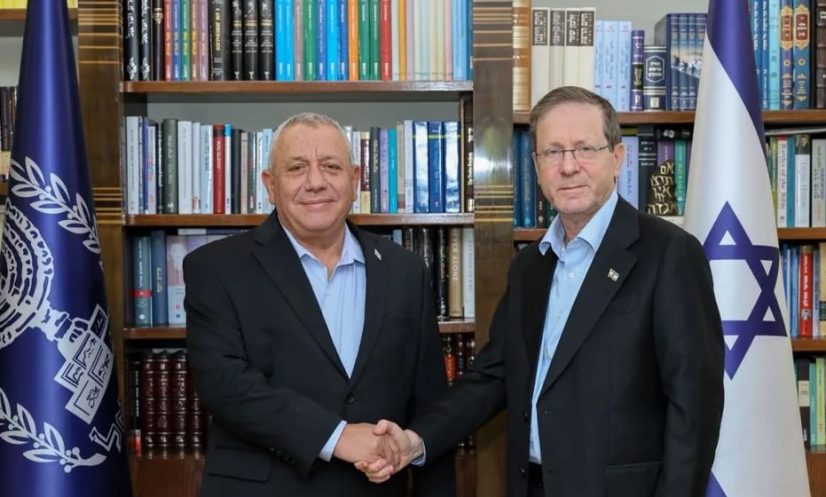
Israeli Prime Minister Benjamin Netanyahu has suffered a setback after his main political rival, Gadi Eisenkot, was chosen to form the country’s next government, bringing him a step closer to replacing Israel’s longest-serving leader.
Eisenkot, a retired military chief who leads the centrist Yashar party, will have up to six weeks to negotiate a coalition following the 27 October election. However, political divisions within the opposition could complicate his efforts.
President Isaac Herzog will formally hand Eisenkot the mandate on Sunday, following two days of consultations with parties elected to the Knesset, according to a statement from the president’s office.
Eisenkot received recommendations from 67 lawmakers in the incoming Knesset, including 19 from the two Arab parties, while Netanyahu secured the backing of 46. United Torah Judaism, a traditional Netanyahu ally, declined to recommend him.
However, receiving the mandate does not automatically remove Netanyahu from office. Eisenkot still needs to secure the support required to form a functioning government.
He is seeking to establish what he calls a “national emergency government” and install a minority administration as soon as possible. The proposed coalition would include four Jewish opposition parties, which together hold 48 seats: Yashar, led by Eisenkot; Together, headed by former prime ministers Naftali Bennett and Yair Lapid; Avigdor Liberman’s Yisrael Beiteinu; and the left-wing Democrats, led by Yair Golan.
Eisenkot has outlined four conditions for joining the government: recognition of Israel as a Jewish, democratic, liberal and egalitarian state; commitment to the values of the Declaration of Independence; universal military, national or civilian service; and recognition of Hamas as a terrorist organisation.
The last condition effectively rules out the Arab parties from joining the Cabinet, although they could support the government from outside.
Under Israeli law, a simple majority is required to establish a government, while removing an existing administration requires the support of at least 61 lawmakers in favour of an alternative government. The Knesset has 120 seats.
One of Eisenkot’s biggest obstacles is Liberman, who has ruled out any government dependent on Arab parties. He argues that a minority administration would be short-lived and could ultimately strengthen Netanyahu.
Instead, Liberman has proposed forming a coalition with the two ultra-Orthodox parties, Shas and United Torah Judaism, while excluding the Arab parties. He has also suggested that three or four Likud lawmakers could defect after such a coalition is established.
The proposal, however, conflicts with a key opposition campaign pledge to end blanket exemptions from compulsory military service for ultra-Orthodox men. The ultra-Orthodox parties want legislation protecting those exemptions, while Eisenkot, Liberman and other opposition leaders have pledged to introduce universal service.
Meanwhile, Netanyahu is challenging the election results and has alleged that Arab parties influenced the vote through bribery and foreign funding, without publicly presenting evidence for the claims.
In a video statement on Saturday, Netanyahu warned that Israel would “simply not survive” if a minority government came to power with support from Arab parties. He instead called for a national unity government involving his entire political bloc, including far-right and ultra-Orthodox parties.
Eisenkot dismissed Netanyahu’s remarks as a “pathetic spin”. His Yashar party said Likud would be welcome to join a broad unity government if it abandoned its alliance with far-right parties and agreed to serve under Eisenkot’s leadership.
Eisenkot’s first major test will come on Tuesday, when the new Knesset is sworn in. Opposition parties plan to replace Netanyahu’s parliamentary speaker, potentially allowing them to initiate measures, including the formation of a state commission of inquiry into the security failures surrounding Hamas’s 7 October 2023 attack.
Beginning Sunday, Eisenkot will have 28 days to negotiate with other parties over Cabinet positions, budgets and policies. He may receive an additional 14 days if needed.
If he fails to form a government, the mandate will pass to Netanyahu for another four weeks.
Eisenkot said on Friday that he intended to form a government as quickly as possible, describing the situation as a national emergency. He argued that a caretaker prime minister who had lost his parliamentary majority should no longer oversee the country’s security and law enforcement agencies.
Source : CNN