


 Play store

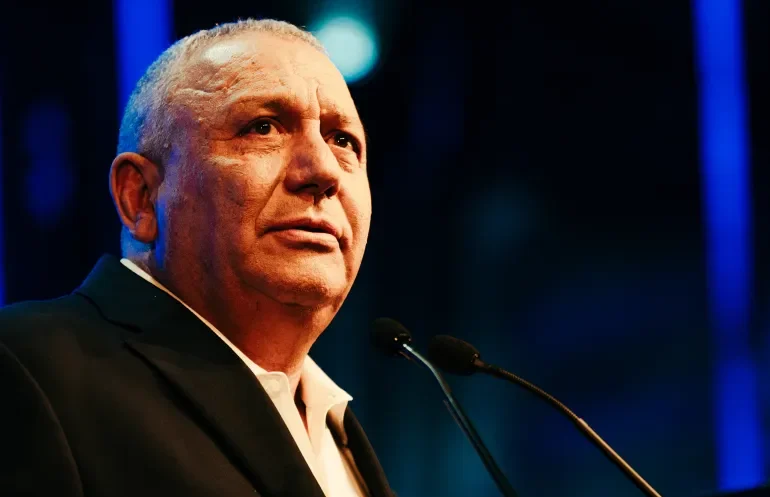
Gadi Eisenkot’s bid to replace Benjamin Netanyahu could reshape Israeli politics, but deep divisions at home and the country’s deteriorating international image will make change difficult.
Israeli opposition leader Gadi Eisenkot has been tasked by President Isaac Herzog with forming the next government, opening a potential new chapter in the country’s politics after years of Benjamin Netanyahu’s leadership.
The former Israeli military chief has 28 days, with a possible 14-day extension, to build a governing coalition. However, securing parliamentary support remains a major challenge, as his opposition bloc is divided over cooperation with Arab parties and ultra-Orthodox factions.
Eisenkot’s rise reflects growing political demand for an alternative to Netanyahu, whose government has faced mounting criticism over the Gaza war, regional military confrontations and Israel’s declining international standing.
The coalition arithmetic is complicated. Eisenkot has the backing of 67 lawmakers in the 120-member Knesset, but his own four-party Jewish opposition bloc holds only 48 seats. Support from Arab-led parties could help him reach a majority, while cooperation with ultra-Orthodox parties could create disagreements over compulsory military service.
His potential leadership also comes at a difficult time internationally. Israel’s military campaigns in Gaza and its confrontation with Iran have strained relations with parts of the international community, while criticism of Israeli policy has grown in the United States. Washington’s military relationship with Israel has also become a political issue, following President Donald Trump’s announcement concerning the future of US military aid.
For Palestinians, however, a change of prime minister may not translate into a major policy shift. Eisenkot has opposed Palestinian statehood after the October 7 attacks and supports the complete disarmament of Hamas. His military record is also controversial: he is associated with the Dahiya Doctrine, which advocates disproportionate force against areas linked to armed groups.
UN investigations have raised serious concerns about the application of such military tactics and their impact on civilians.
Eisenkot’s political platform nevertheless promises an investigation into the October 7 security failures, stronger democratic institutions, universal national service and improved relations with international partners.
The broader question is whether replacing Netanyahu would change Israel’s policies or simply its political leadership.
For Washington, Arab governments and European allies, a new administration could create opportunities to rebuild diplomatic trust. But meaningful change would depend on its approach to Gaza, Palestinian rights, settlements, regional security and the possibility of a political settlement with the Palestinians.
For now, Eisenkot represents a possible change in leadership, not necessarily a new direction in Israeli policy. His coalition negotiations and eventual decisions on the Palestinian question will determine whether this political transition becomes a genuine turning point or merely a change of faces in Jerusalem.