Play store

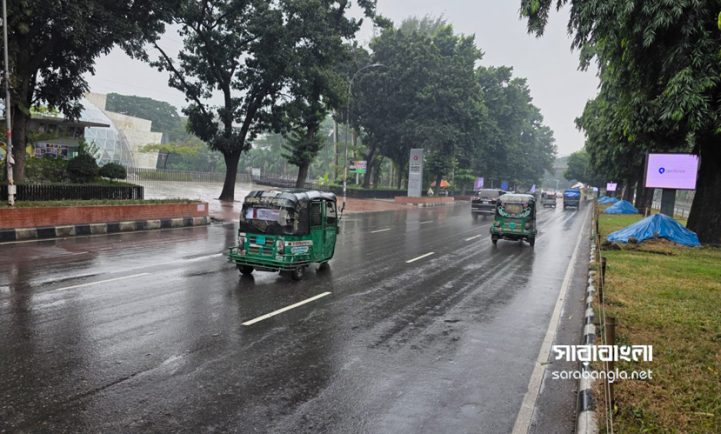
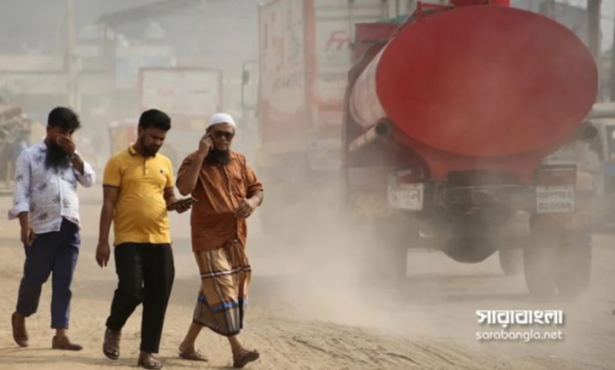
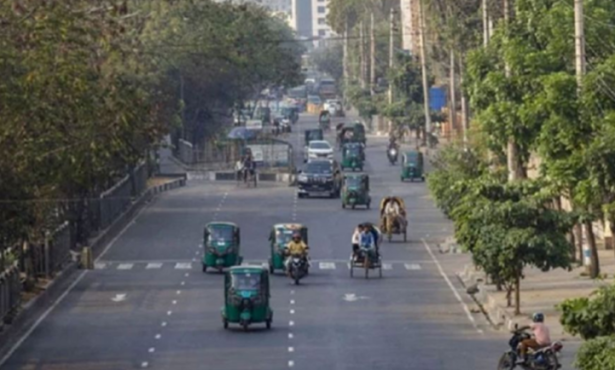
DHAKA: Despite several consecutive days of rainfall, there has been little improvement in the capital’s air quality, with the air remaining ‘unhealthy for sensitive groups’ today (Saturday).
According to the latest data from Swiss air quality monitoring organisation IQAir, the Bangladeshi capital continues to rank among the world’s most polluted cities. Experts have advised children, elderly people and those suffering from respiratory illnesses to exercise extra caution when going outdoors.
IQAir’s live air quality index (AQI) showed that Dhaka recorded a score of 144 around 8:30am on Saturday (November 21), ranking 10th among the world’s most polluted cities.
Air quality generally improves after rainfall as rain washes dust particles out of the atmosphere. However, the persistence of poor air quality despite several days of rain has raised concerns among environmentalists.
Pakistan’s Lahore topped the list of the most polluted cities, with an AQI score of 263. India’s capital New Delhi ranked second with a score of 229, followed by Afghanistan’s capital Kabul at 194, Iraq’s Baghdad at 189 and the Democratic Republic of Congo’s capital Kinshasa at 176.
Air quality in these cities ranged from ‘unhealthy’ to ‘very unhealthy’.
According to IQAir’s classification, an AQI score of 0–50 indicates ‘good’ air quality, while a score of 51–100 is considered ‘moderate’.
A score between 101 and 150 is classified as ‘unhealthy for sensitive groups’, the category in which Dhaka currently falls. Scores of 151–200 indicate ‘unhealthy’ air quality, 201–300 ‘very unhealthy’ and above 300 ‘hazardous’.