Play store


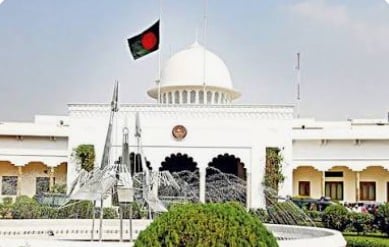
The resignation of President Mohammed Shahabuddin has done more than create a constitutional vacancy. It has reopened one of the most important debates in Bangladesh’s democratic journey: what kind of President does the country need after the July uprising, and what should that office represent in a changing political landscape?
The answer cannot simply be another individual occupying Bangabhaban. The country now has an opportunity to rethink both the office and the expectations attached to it.
President Shahabuddin’s departure, officially attributed to health reasons, comes after months of political controversy and sustained public debate over his role in one of the most turbulent periods of Bangladesh’s history.
During his tenure, he witnessed the collapse of one government, the formation of an interim administration, and the return of an elected government. Few Presidents have presided over such dramatic constitutional transitions.
Yet his exit also underlines an uncomfortable reality. In Bangladesh’s parliamentary system, the Presidency remains one of the nation’s highest offices but among its least influential.
Constitutionally, almost every major decision requires the advice of the Prime Minister. Beyond a handful of narrowly defined constitutional powers, the President functions largely as the ceremonial head of state rather than an independent constitutional guardian.
This arrangement may satisfy the letter of the Constitution, but recent political developments have exposed its limitations.
The July movement was never only about changing a government. It was also about preventing the excessive concentration of power that many believed had weakened democratic institutions over the years.
Among the reform proposals discussed after the uprising was a better balance between the executive and other constitutional offices, including the Presidency. That conversation appears to have lost momentum. It should not.
The election of a new President presents an opportunity to revisit broader institutional reforms rather than merely filling a vacant office. Whether through constitutional amendments or stronger conventions, Bangladesh must continue exploring ways to reinforce institutional checks and balances while preserving parliamentary democracy. Equally important is the question of who should occupy the office.
The Presidency should not become a reward for political loyalty or bureaucratic seniority alone. Neither should it be viewed merely as an honorary retirement position. The office requires someone capable of commanding public confidence across political divides, particularly during moments of constitutional uncertainty.
Bangladesh’s political history offers valuable lessons. Some Presidents with deep political experience have demonstrated an ability to engage competing political forces during times of crisis, even within constitutional limitations. Others, despite distinguished careers in the civil service or judiciary, found themselves constrained by limited political capital and public legitimacy when national crises emerged.
This does not suggest that only politicians can become effective Presidents. Rather, it highlights the importance of selecting an individual whose integrity, judgement and public credibility extend well beyond partisan affiliations.
The next President must be someone respected not simply by the governing party but by the broader political spectrum and society at large. Such legitimacy cannot eliminate political conflict, but it can help strengthen public confidence in constitutional institutions. There is another dimension that deserves equal attention.
The public debate has largely centred on personalities rather than institutions. Names dominate headlines while questions about the Presidency’s future role receive comparatively little attention. This risks repeating a familiar cycle in which structural weaknesses remain untouched despite changes in leadership.
Bangladesh’s democratic development requires stronger institutions, not stronger personalities. Regardless of who becomes President, meaningful governance ultimately depends on transparent institutions, accountable executive authority, an independent judiciary and credible constitutional oversight.
The generation that emerged from the July movement expects more than symbolic change. It seeks a political system where authority is balanced, institutions function independently and constitutional offices command genuine public trust.
The next President cannot fulfil those aspirations alone. But the manner of the appointment and the reforms accompanying it can send a powerful signal about the direction Bangladesh intends to take.
The Presidency should once again become a symbol of constitutional integrity rather than constitutional limitation. If the country settles only for a new occupant of Bangabhaban without addressing the larger institutional questions, it will have missed a rare opportunity.
Bangladesh now stands at a constitutional crossroads. Choosing the next President is important. Choosing what the Presidency should represent in the future may prove even more significant.
The views expressed in this article are the author’s own and do not necessarily reflect Sarabangla English Edition’s editorial stance.