Play store


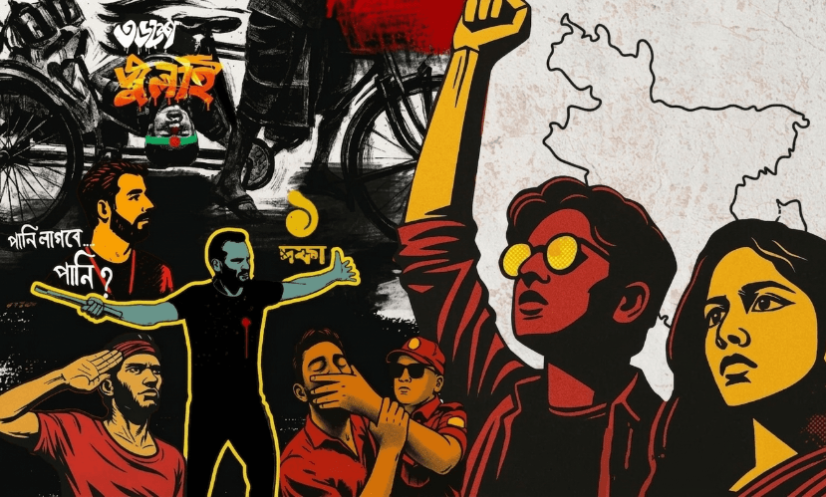
History does not always obey the calendar. Calendars count days, months and years, but they cannot measure the moments when a nation awakens. They record time as a sequence of dates, yet they fail to capture those extraordinary moments when history transcends chronology and enters collective memory.
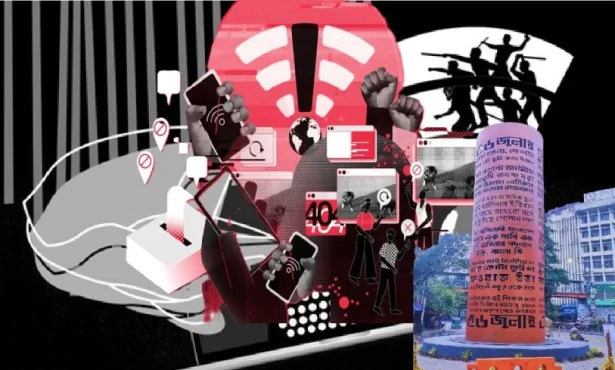
For many Bangladeshis, “36 July” has become such a moment. It is not an actual date but a powerful metaphor, symbolising the culmination of a long struggle for democracy, justice and human dignity. It represents the point at which an ordinary month ceased to be measured by the calendar and instead came to be measured by sacrifice, courage and hope.
No such moment is born overnight. Behind this symbolic “36 July” lay nearly two decades of political confrontation, public frustration and silent resistance. It was a period during which elections were held but public confidence steadily eroded, institutions existed but their credibility was frequently questioned, and many citizens felt increasingly reluctant to express dissent openly. Countless people lost jobs, faced legal harassment, endured exile or abandoned hope for a better future at home. Much of that suffering will never appear in official records, but history is often preserved not only in archives but also in the memories of ordinary people.
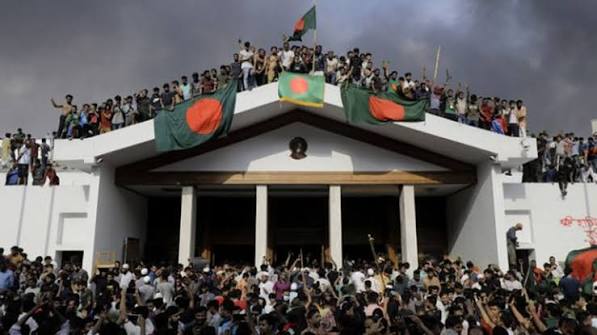
Yet history repeatedly teaches us that even the longest darkness cannot extinguish the human desire for freedom. As the July movement gathered momentum, what began as a series of protests gradually evolved into something much larger. It was no longer merely opposition to a government; it became a rejection of fear itself. The streets filled not simply with demonstrators demanding reforms, but with citizens reclaiming their dignity.
People began to rediscover the deeper meaning of freedom. Independence was no longer viewed solely as the existence of a sovereign state. It also meant the right to speak freely, to question authority, to vote without fear and to live with dignity under the protection of the rule of law.
History offers many reminders that no system built on fear lasts forever. The fall of the Bastille during the French Revolution remains one of history’s most enduring symbols. The fortress was not merely a prison; it represented absolute authority. Once the people overcame their fear of it, the collapse of the old order became inevitable.

Throughout the movement, that historical lesson remained deeply relevant. Political power may appear invincible for years, but once it begins to fear its own citizens, its decline often becomes only a matter of time.
Like many mass movements across the world, the July uprising followed a familiar pattern. At first, it seemed impossible. As momentum grew, it was described as dangerous. After victory, many regarded it as inevitable. History repeatedly reminds us that public movements often appear unrealistic until the very moment they succeed.
One of the defining characteristics of the movement was the remarkable role played by Bangladesh’s youth. Many of those standing at the frontlines were only seventeen, eighteen or twenty years old. Yet they confronted some of the country’s most difficult political questions with extraordinary determination. Fear undoubtedly existed, but their belief in a better future proved stronger than their fear.
Perhaps the movement’s greatest strength was that it dissolved generational boundaries. Older participants shared historical experience, while younger protesters brought energy, creativity and remarkable courage. They challenged established ideas, questioned conventional strategies and often persuaded their seniors to rethink old assumptions. At other times, experience provided patience when youthful enthusiasm sought immediate action. Together they became partners rather than leaders and followers.
Every successful democratic movement depends not only on courage but also on trust. That trust became especially important during the most difficult days, when uncertainty dominated everyday life. Reports of arrests, violence and intimidation spread rapidly. Every telephone call carried the possibility of bad news. Yet each morning people returned to the streets. Some carried national flags, others photographs of those who had died, while many came with nothing except determination.
The greatest strength of the movement was never its slogans. It was the moral conviction shared by ordinary citizens. As events accelerated, another remarkable phenomenon emerged. The calendar itself became part of the movement’s llanguage.

When July ended without political resolution, many people refused to acknowledge the arrival of August. Social media, conversations and public demonstrations began referring instead to “32 July”, “33 July”, “34 July” and eventually “36 July”.
What may have begun as a symbolic expression quickly evolved into a powerful psychological statement. The official calendar could declare that August had arrived, but in the calendar of the movement, July would continue until victory.
This collective act demonstrated something profound. Political power often attempts to control time by prolonging uncertainty and exhausting public resistance. The protesters responded by creating their own sense of historical time, one that belonged not to the authorities but to the people themselves.
At the same time, the movement gradually simplified its message. As often happens in history, multiple demands eventually gave way to a single overriding objective. Long lists of grievances were replaced by one unifying call that resonated across the country. Such moments mark the transformation of protest into a national movement. Yet throughout this period, an important lesson remained clear.
Victory was never the achievement of any single individual. It belonged to countless people whose names will never appear in history books: students, workers, professionals, parents, teachers and ordinary citizens who chose courage over silence. Some sacrificed careers, others their freedom, and many paid with their lives or permanent injuries. They transformed a political movement into a moral awakening.
The symbolic meaning of “36 July” therefore extends far beyond the events of a single day. It represents the victory of hope over fear. It reminds us that democratic change is rarely achieved through the actions of one leader or one organisation alone. Rather, it emerges through the collective determination of citizens who refuse to surrender their fundamental rights.

Every democratic victory, however, also brings a new responsibility. Removing authoritarianism is difficult. Building democratic institutions is even more difficult.
History offers many examples of nations that celebrated liberation only to discover that safeguarding democracy requires constant vigilance. Governments must remember that political power is entrusted by the people, not owned by them. Opposition parties must recognise that democracy depends on respecting political pluralism rather than eliminating rivals. Independent courts, credible elections, professional public institutions, a free press and accountability under the rule of law are not optional ideals but the very foundations of democratic governance.
Bangladesh’s future will ultimately depend not on the memory of victory alone but on the institutions built after victory. The young generation that filled the streets deserves more than remembrance. They deserve a country where no government believes it can suppress votes, silence criticism or deny fundamental rights without consequence. They deserve a Bangladesh where political transitions occur through elections rather than confrontation, where disagreement is accepted as a democratic necessity rather than treated as hostility, and where talented young people dream of building their future at home instead of seeking opportunities abroad.
The sacrifices made during the movement should never become mere ceremonial remembrance. The true tribute to those who lost their lives is not simply to honour them in speeches or monuments but to preserve the democratic values for which they struggled. One day, a child may ask an older member of the family, “There is no 36 July on the calendar. Why do people still speak about it?” The answer may be simple. Calendars are created by people. History is created by courage.
That is why “36 July” endures, not as an additional day in the calendar, but as a lasting reminder that the courage of ordinary citizens can redefine a nation’s destiny. It stands as a symbol that freedom is never a gift bestowed by those in power. It is a right secured, protected and renewed by the people themselves. And as long as Bangladesh remains committed to democracy, justice and the rule of law, the spirit of that unfinished July will continue to inspire future generations.
The views expressed in this article are the author’s own and do not necessarily reflect Sarabangla English Edition’s editorial stance.