


 Play store

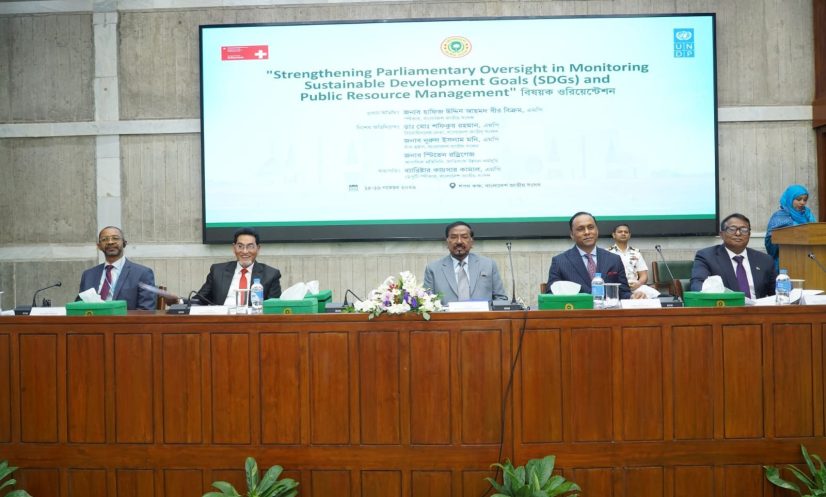
DHAKA: The Bangladesh Parliament Secretariat, with support from the United Nations Development Programme (UNDP) and the Government of Switzerland, has launched a two-day orientation programme for members of parliament to strengthen parliamentary oversight of the Sustainable Development Goals (SDGs), public resource management and development projects.
The programme aims to equip lawmakers with practical knowledge and skills to monitor national development progress, scrutinise public expenditure and ensure that development projects deliver tangible benefits to people.
Organised under UNDP’s Strengthening Institutions, Policies and Services (SIPS) project, the orientation was attended by senior officials of the Parliament Secretariat and members of parliament.
Speaking as the chief guest at the opening session, Speaker Hafiz Uddin Ahmad Bir Bikram, MP, said the success of development projects depended not only on fund allocation but also on ensuring quality work within the stipulated time and budget.
“It is not only the allocation of funds that matters; completing quality work within the stipulated time and budget, and ensuring that people benefit from it, are equally important,” he said.
Deputy Speaker Barrister Kaysar Kamal, MP, who chaired the session, said achieving the SDGs by 2030 would be possible through collective commitment, accountability and transparency.
“Achieving the SDGs by 2030 will not be difficult if we take it up as a challenge and approach it with goodwill, accountability and transparency. We need to advance the whole country towards sustainability, for a better future for our children,” he said.
UNDP Bangladesh Resident Representative Stephen Rodriques said the SDGs represented a commitment made by Bangladesh to its own people rather than merely to the United Nations.
“This is not a commitment that Bangladesh made to the United Nations. It is a commitment that Bangladesh made to the people of Bangladesh. Every taka that Parliament approves represents an investment by the people of Bangladesh in their own future,” he said.
He added that Parliament had a crucial role in ensuring that public investments reached the people they were intended to serve.
Chief Whip Nurul Islam Moni, MP, said achieving development goals was closely linked to the proper utilisation of public funds.
“When allocated funds are used well, they translate into real development for people. This discussion is timely, and it will help Members acquire the skills needed to ensure that,” he said.
Earlier, Parliament Secretariat Secretary Barrister Golam Sorwar Bhuiyan welcomed the participants and stressed the importance of providing lawmakers with the information and institutional support necessary to discharge their parliamentary responsibilities effectively.
The first day of the programme focuses on Bangladesh’s and global progress towards the SDGs, national development priorities and parliamentary mechanisms for monitoring implementation.
The second day will cover public procurement regulations, transparency in procurement processes, project management and the effective use of public resources.
The SDG sessions include discussions on the global SDG progress snapshot, Bangladesh’s achievements and priorities towards 2030, and findings from the 2025 Voluntary National Review. Participants will also examine parliamentary oversight mechanisms, including committee activities, budget scrutiny and debates.
The sessions are being facilitated by Owais Parray, Country Economic Advisor at UNDP Bangladesh; Dr Monzur Hossain, Member (Secretary) of the General Economics Division; and Professor Dr S M Abdul-Awal, Principal Coordinator (SDG Affairs) at the Prime Minister’s Office.
The sessions on public procurement and project management will be led by Abu Sayed Md Kamruzzaman, Chief Executive Officer (Secretary) of the Bangladesh Public Procurement Authority.
Through practical orientation and discussions with experts, the programme seeks to strengthen lawmakers’ ability to use reliable evidence in parliamentary questions, debates and committee activities, ensuring that development benefits reach people across all regions and sections of society.