


 Play store

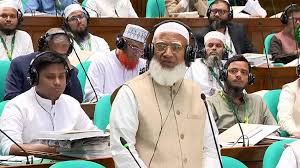
Leader of the Opposition and Jamaat-e-Islami Ameer Shafiqur Rahman on Monday called on the government to take visible and effective steps to recover billions of taka allegedly laundered abroad and bring those responsible to justice, arguing that reclaiming even a fraction of the siphoned-off wealth could eliminate the country’s budget deficit.
Participating in the general discussion on the proposed FY2026-27 national budget in Parliament, Shafiqur said the budget lacked a clear roadmap for recovering public assets that had been illegally transferred overseas over the past one and a half decades.
“Tk 28 lakh crore was laundered abroad over the last 15 and a half years. Yet this budget contains neither any guideline nor any proposal on how that money will be brought back,” he told the House.
“If we can recover just one-ninth of the laundered money during the 2026-27 fiscal year through proper initiatives, there will be no budget deficit,” he said.
Describing the siphoned-off funds as the property of the people, the opposition leader said recovering the assets should be one of the government’s highest priorities.
“The money belongs to the people and must be returned to them. The assets must be recovered, and those responsible must also be brought back to face punishment,” he said.
He argued that ensuring accountability would send a strong message against corruption and financial crimes.
“If those involved are punished, no one will dare extend their black hand to plunder public assets in the future,” he added.
Warning against complacency, Shafiqur said failure to act decisively would encourage the emergence of even larger financial criminals in the years ahead.
“We want to see visible and effective steps in this regard,” he said.
The opposition leader urged the government to use every available legal mechanism to recover the assets, including entering into memorandums of understanding (MoUs) and strengthening cooperation with the countries where the money is believed to have been transferred.
“The pace must be like that of a deer, not a tortoise, because the sooner the assets are recovered, the more the state and the deprived people will benefit,” he said.
Turning to the proposed national budget, Shafiqur said he was less concerned about its overall size than whether it genuinely addressed the country’s needs.
“I would not describe it as a large, small or medium-sized budget. The nation needs a budget that truly meets its requirements,” he said.
Although he expressed concern over the ambitious revenue collection target, he said the government could surpass the target if it ensured honesty, transparency and demonstrated the necessary political will.
Addressing the country’s tax system, the opposition leader alleged that taxpayers effectively bear three separate financial burdens.
“One goes to the state treasury, another ends up in the pockets of some dishonest people involved in the system, and the third goes to extortionists,” he said.
He argued that tax compliance would improve significantly if taxpayers were confident that only legitimate taxes were being collected.
“If taxpayers are assured that they will pay only one tax, the one deposited to the government, they will willingly pay even higher taxes,” he said.
Shafiqur also stressed the importance of rebuilding trust between the government and the business community, saying businesses should receive government support during economic hardship in return for their tax contributions.
“If confidence is created among businesspeople that paying taxes is not a one-way tunnel but a two-way relationship, where they pay taxes in good times and receive support in difficult times, they will be encouraged to pay taxes in the same way businesses do in developed countries,” he said.
He urged the government to focus on strengthening governance, improving transparency and restoring public confidence in state institutions, saying these measures would ultimately help boost revenue collection, attract investment and promote sustainable economic growth.