


 Play store

A new global survey by the Pew Research Center (PRC) suggests that China has become more favorably viewed than the United States across much of the world. The findings, reported by the BBC, indicate that positive perceptions of China have reached record highs in many countries, while views of the United States have continued to decline.
The nonpartisan U.S.-based think tank conducted the survey between February and May, interviewing more than 42,000 people across 36 countries. Respondents were asked whether they held very favorable, somewhat favorable, somewhat unfavorable, or very unfavorable views of the world’s major powers.
According to the survey, people in 25 of the 36 countries expressed a more positive view of China than of the United States. Pew researcher Jonathan Schulman noted that this is the first time since the organization began tracking global attitudes toward major powers in 2002 that China has outperformed the U.S. in so many countries.
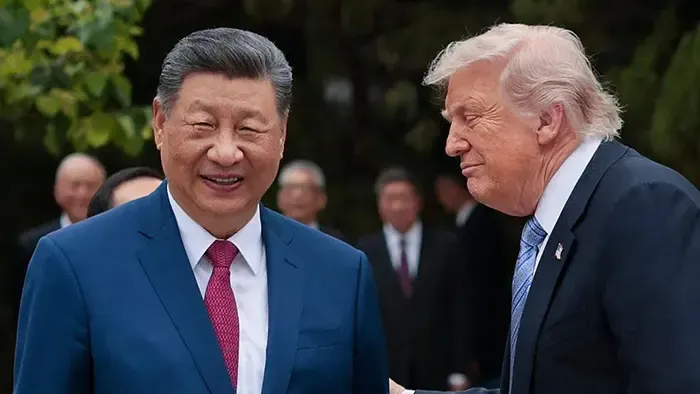
While respondents expressed limited confidence in both U.S. President Donald Trump and Chinese President Xi Jinping, Xi generally received higher trust ratings than Trump in many of the countries surveyed. Pakistan recorded the highest confidence in Xi at 83%, while Japan registered the lowest at 7%. Trump’s highest confidence rating came from the Philippines at 68%, while the lowest was recorded in the West Bank/East Jerusalem at just 4%.
Despite China’s gains in popularity, most respondents still believe that the U.S. government places greater value on personal freedoms than the Chinese government does. However, many also perceive China as less likely than the United States to interfere in the internal affairs of other countries. On average, 75% of respondents in selected middle-income countries said the U.S. interferes significantly in other nations’ domestic affairs, compared with 45% who said the same about China.
Countries where support shifted noticeably toward China include Spain, Indonesia, Italy, Greece, and Canada. Meanwhile, only six countries continued to favor the United States over China: Poland, the Philippines, South Korea, India, Japan, and Israel—most of them longstanding U.S. allies.
The survey also found that positive views of China have reached record highs in countries such as Italy, Spain, Colombia, Mexico, Indonesia, Malaysia, Nigeria, and Turkey. Nearly 90% of respondents in Pakistan viewed China favorably, compared with only 11% in Japan.
The findings align with other recent international opinion surveys. Gallup reported that China surpassed the United States in global approval ratings last year, marking the widest advantage for China in two decades. However, the Asia Society’s annual global public opinion survey suggests that China’s international image has only partially recovered from the damage it suffered during the COVID-19 pandemic.
Chong Ja Ian, a non-resident scholar at Carnegie China, said the results are not surprising. He argued that growing concerns over the unpredictability of U.S. foreign policy—including the use of coercive measures and the resulting economic consequences—have affected America’s global standing. The Pew survey began shortly after President Trump renewed calls for Greenland to become part of the United States and after remarks about detaining Venezuelan President Nicolás Maduro. During the survey period, the United States also became involved in conflict with Iran, while Beijing continued efforts to strengthen its image across the developing world.