


 Play store

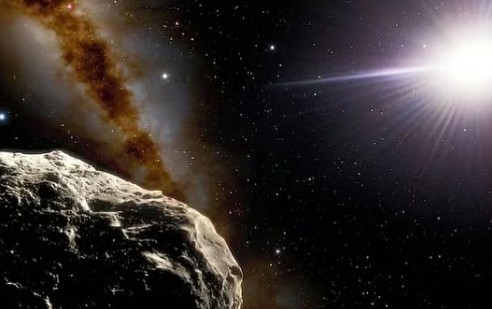
Chinese scientists have proposed that detonating a nuclear device beneath the surface of a large asteroid could be the most effective way to prevent a catastrophic collision with Earth, particularly when there is little time to respond.
The findings, published in the journal Space: Science & Technology, suggest that burying a nuclear explosive deep inside a threatening asteroid would be significantly more effective than detonating it on or above the surface.
Large asteroids have long been regarded as one of the greatest natural threats to human civilisation. Past asteroid impacts are believed to have triggered dramatic environmental changes on Earth, including the mass extinction of numerous plant and animal species.
In recent years, astronomers have identified many near-Earth asteroids ranging from 10 metres to several hundred metres in diameter. However, scientists believe a substantial number of potentially hazardous asteroids remain undiscovered, meaning warnings of an impending impact could come only days or weeks in advance.
While existing planetary defence strategies, including NASA’s Double Asteroid Redirection Test (DART) mission, have demonstrated that an asteroid’s trajectory can be altered by striking it with a spacecraft, researchers say such methods may not be sufficient to deflect very large asteroids within a short timeframe.
Scientists from the China Academy of Launch Vehicle Technology argue that a nuclear explosion remains the fastest and most effective option for either destroying a large asteroid or rapidly changing its orbit in an emergency.
According to the study, nuclear intervention could become the only practical defence strategy in extreme scenarios involving massive asteroids or situations where Earth receives very little advance warning before a potential impact.
To evaluate the concept, researchers developed computer simulations in which a spacecraft first drills into an asteroid using a penetrating device before placing a nuclear explosive deep inside the resulting cavity. They then analysed the effects of explosions of varying yields at different depths, while also considering factors such as launch vehicle performance and impact velocity.
The simulations found that a nuclear explosion with a yield roughly 200 times greater than the atomic bomb dropped on Hiroshima could completely shatter an asteroid about 100 metres in diameter.
The study also showed that detonating the device approximately 30 metres beneath the asteroid’s surface could alter its trajectory up to three times more effectively than an explosion near the surface.
In another scenario, researchers estimated that detonating a nuclear device about 20 metres beneath the surface of a one-kilometre-wide asteroid could increase its deflection velocity by more than 30 centimetres per second, potentially pushing it safely away from Earth’s path.
The researchers said their findings could provide valuable guidance for designing future planetary defence systems and improving emergency response strategies against potentially hazardous near-Earth asteroids.
They concluded that, although nuclear deflection would be considered only as a last resort, it may offer the most effective means of protecting Earth if a large asteroid were detected on a collision course with limited warning time. Source: The Independent