Play store

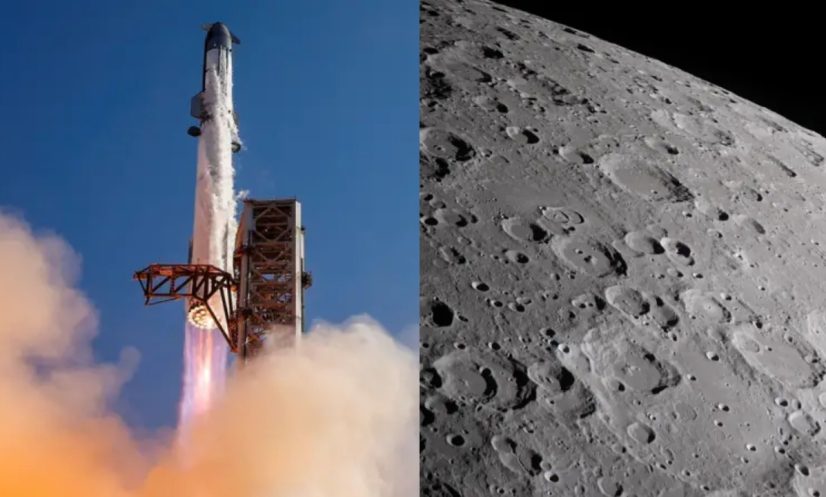
A discarded 4,000-kilogram upper stage of a SpaceX Falcon 9 rocket has crashed into the Moon after drifting through space for more than 18 months, scientists said on Wednesday.
The rocket stage, roughly the size of a school bus, struck the lunar surface at an estimated speed of 8,690 km/h (5,400 mph) near the Einstein Crater on the Moon’s far western limb.
The impact occurred on the Moon’s sunlit side, making it difficult to observe directly from Earth.
The booster was launched in January 2025 to carry a lunar mission before being left adrift in space.
Unable to return to Earth’s atmosphere, its trajectory was gradually altered by the Sun’s gravity and other orbital forces, ultimately sending it on a collision course with the Moon.
Although the impact poses no danger to Earth, researchers see it as a rare scientific opportunity.
By studying the newly formed crater and the plume of lunar dust, scientists hope to gain valuable insights into lunar geology and the effects of high-speed impacts.
The incident has also renewed concerns over the growing amount of space debris accompanying the increasing number of lunar missions.