


 Play store

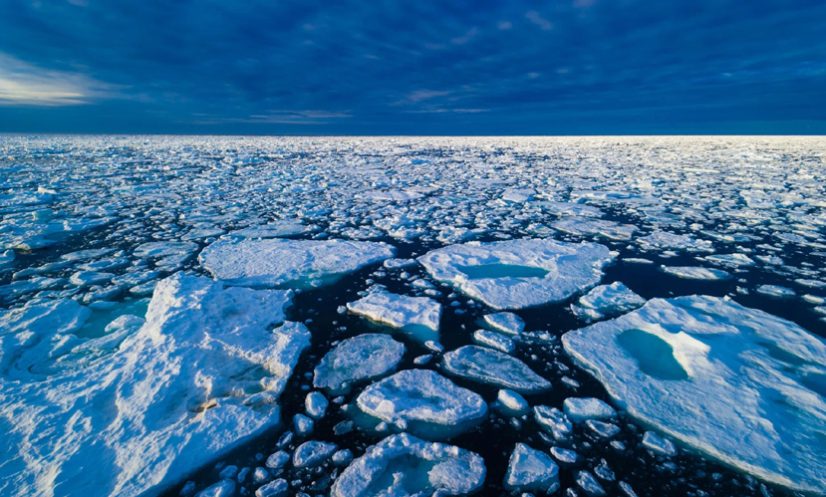
Arctic sea ice moves in ways that cannot always be explained by wind alone, and new research suggests repeated collisions between individual ice floes may be a key reason.
The findings, led by researchers at the University of California, Riverside, could help improve forecasts of sea-ice movement as the Arctic continues to warm.
The study, published in Physical Review Letters, was led by Bryan Shaddy, a former UC Riverside undergraduate now at the University of Southern California, along with UCR materials scientist Alex Greaney and mechanical engineering professor Bhargav Rallabandi.
Unlike a continuous sheet, Arctic sea ice consists of separate slabs called floes, ranging from several metres to several kilometres across. Winds push the floes across the ocean, but observations show that their movement often differs from predictions based solely on wind.
Sea ice also spreads across the ocean more slowly than simple wind-driven models suggest. Scientists have attributed the differences to factors including ocean eddies, unusual wind patterns and cracks in the ice.
The new study points to a simpler explanation: collisions between neighbouring floes.
“When you get a lot of ice floes together in the same place with some wind, they bump into each other and transfer energy to neighbours,” Rallabandi said. “We showed that’s the only ingredient you need to explain these observations.”
Model reproduces real-world ice movement
The researchers developed a computer model that treats ice floes somewhat like grains moving through a silo. Unlike grains, however, the floes float on water and are driven by turbulent winds.
The model accounts for ocean drag as well as repeated collisions between the ice pieces.
Researchers tested the model against observations from the Fram Strait, between Greenland and Norway’s Svalbard archipelago. The passage is a major route for Arctic sea ice moving toward the Atlantic Ocean.
Using measured wind and ice conditions, the model reproduced three features of real-world ice movement that have been difficult to explain: how quickly the ice spreads, the range of speeds at which individual floes travel, and how their movement changes over periods ranging from hours to days.
The researchers said the results show that floe-to-floe collisions can strongly influence the large-scale behaviour of Arctic sea ice.
A better understanding of these interactions could help scientists develop more accurate models of sea-ice movement and improve projections of how the Arctic may change as temperatures rise.