Play store


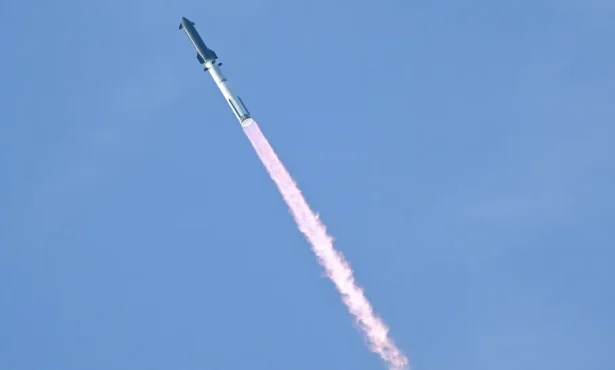
SpaceX is targeting Sept. 28 for the 14th test flight of its giant Starship rocket, with the company aiming to send the vehicle into orbit for the first time in a major test of its long-term plans for a fully reusable launch system.
Liftoff is scheduled during a 75-minute window opening at 8:15 a.m. EDT (1215 GMT), according to the company’s plan. The mission is expected to last about 10 hours, significantly longer than Starship’s previous roughly one-hour suborbital flights.
For Flight 14, Starship is expected to reach an altitude of about 170 miles (275 kilometres) and circle Earth roughly six times before performing a deorbit burn and splashing down.
The mission will also carry 26 operational Starlink Version 3 satellites for deployment in low Earth orbit. Previous Starship flights carried V3 Starlink test payloads, but those spacecraft were unable to remain in orbit because the missions followed suborbital trajectories.
Three of the V3 Starlink satellites on Flight 14 will carry cameras to observe Starship after deployment, including its heat-shield tiles. The data could provide important information on the condition of the spacecraft’s thermal protection system during flight.
The mission marks a significant step in SpaceX’s effort to develop Starship as a fully reusable launch vehicle. The system consists of the Super Heavy first-stage booster and the Ship upper stage, both designed to eventually return to the launch site for rapid reuse.
SpaceX has already demonstrated several key technologies. The company has successfully caught the Super Heavy booster three times at its Starbase facility in Texas and has conducted multiple in-space relights of Ship’s Raptor 3 engines.
However, the company has yet to attempt a return and catch of the Ship upper stage.
The latest Starship design, Version 3, made its debut on Flight 12 in May. Since then, SpaceX has continued testing landing and propulsion systems while avoiding the risk of bringing Ship back to the launch site for a catch.
Flight 14 will follow the same approach, with both Ship and Super Heavy expected to make controlled splashdowns at sea rather than attempting a return to Starbase.
A successful orbital mission would represent a major milestone for Starship, which SpaceX ultimately intends to use for a wide range of missions, including large-scale satellite deployment and future human spaceflight.