


 Play store

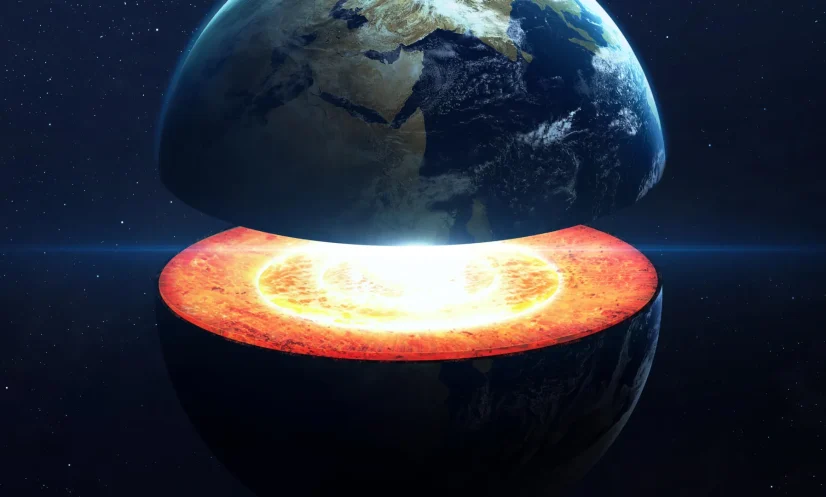
A rock discovered in Papua New Guinea has revealed an unexpected temperature pattern deep beneath Earth’s surface, challenging existing models of how tectonic plates heat up as they descend into the planet’s interior, according to an international research team led by the University of Göttingen.
The rock travelled more than 90 kilometres underground about four million years ago, reaching temperatures of around 800 degrees Celsius. Researchers found that it had already experienced temperatures of approximately 700 degrees Celsius at a depth of just 45 kilometres, suggesting an unusual distribution of heat along its journey.
The findings, published in Nature Geoscience, could help scientists better understand the behaviour of tectonic plates and the geological processes that contribute to earthquakes, volcanic activity and long-term climate regulation.
The process in which one tectonic plate sinks beneath another is known as subduction. These zones are important for recycling materials between Earth’s surface and interior, including carbon that plays a role in regulating the global climate over millions of years.
Researchers analysed a rock known as eclogite, which forms under extreme pressure. Inside it, they identified tiny crystals of coesite, a mineral that forms only under very high pressure and can preserve evidence of the conditions experienced deep underground.
By examining these crystals and other features of the rock, the team reconstructed its history and determined that it had descended at least 90 kilometres beneath the surface.
The temperature pattern was particularly surprising. At a depth of 45 kilometres, the rock had already reached about 700 degrees Celsius, only around 100 degrees below the temperature recorded farther down, despite travelling another 45 kilometres into Earth’s interior.
Although temperatures increased as the rock descended, the rate of warming was much lower than conventional models of subduction zones would predict.
“Finding this change from hot to cold subduction was unexpected as this contradicts our current thermal models of subduction zones,” said Dr Jan Schönig of the university’s Geoscience Center.
Scientists have previously found rocks showing evidence of unusually high temperatures, but the researchers said this discovery provides a particularly clear record of changing thermal conditions during a rock’s descent.
The team proposed several possible explanations. Friction and intense shearing between tectonic plates may generate more heat at shallower depths than previously estimated. Alternatively, the subduction zone may have been too young to develop the cooler temperature profile predicted by conventional models.
Both processes may have contributed to the unusual conditions.
The findings could help scientists refine models of subduction zones and improve their understanding of how tectonic activity influences earthquakes, volcanic eruptions and the movement of carbon between Earth’s surface and interior.
The research received funding from the German Research Foundation (DFG).