


 Play store

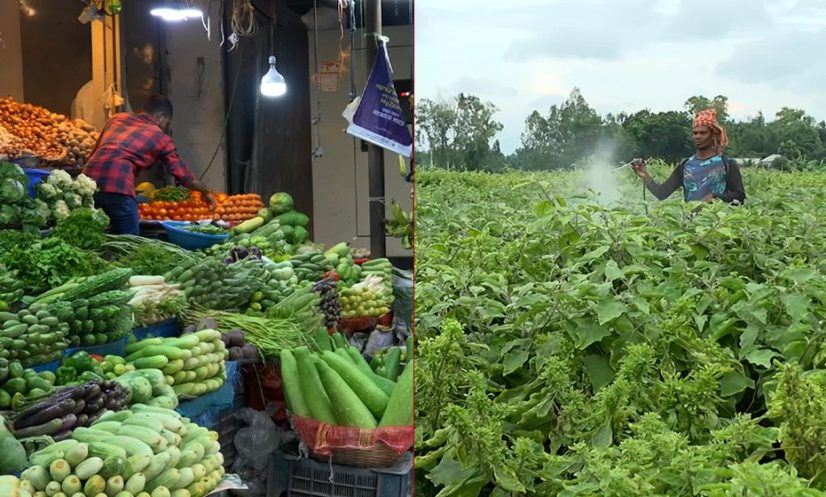
Vegetables grown in the fields make their way through farmers, wholesalers and markets before reaching consumers’ plates. But how safe are they throughout this journey? “How aware are consumers of the risks associated with contaminated vegetables?”
Recent studies have detected pesticide residues and heavy metals in various vegetables, raising concerns over food safety. Eggplant, cucumber and tomato have reportedly been among the vegetables with residue levels exceeding permissible limits.
For many farmers, pesticide dealers are the first point of contact when crops such as eggplant are attacked by pests or diseases. In the absence of regular advice from agricultural officials at the village level, farmers often rely on dealers to recommend pesticides.
Dealers, in turn, frequently recommend products based on advice from pesticide companies.
Of particular concern is the use of pesticides containing substances from the mancozeb and cartap groups. The report notes that some chemicals in these groups face restrictions or bans in several countries because of their potential health and environmental risks.
Once harvested, eggplants are taken to farmers’ homes for sorting before being sent in sacks to local wholesale markets. From there, traders take over the next stages of the supply chain.
A visit to Khilkhet market in Dhaka found vegetables being washed in stagnant, dirty water from a nearby ditch from early morning. Despite the visibly poor quality of the water, the practice appeared to cause little concern among many retailers.
For consumers, determining whether vegetables are contaminated is virtually impossible simply by looking at them. Some people believe that washing vegetables thoroughly or soaking them in water at home can remove harmful substances. However, washing cannot necessarily eliminate all pesticide residues or heavy metals.
Researchers say pesticide use becomes particularly risky when farmers apply excessive amounts or fail to observe the required waiting period between spraying and harvesting.
Prof Dr Habibur Rahman, a researcher at the Institute of Food Safety and Processing, said farmers are generally required to wait for a specific period after applying pesticides before harvesting crops. In many cases, however, produce may be sent to market only three days after spraying, despite recommendations to wait longer.
Such practices can increase consumers’ exposure to pesticide residues and create long-term health risks, he said.
Rahman stressed that the use of pesticides does not automatically make vegetables unsafe. The greater concern is excessive or improper use and failure to observe the required pre-harvest interval.
He called for regular monitoring throughout the entire supply chain—from farmers and pesticide sellers to wholesalers, retailers and markets—to reduce risks and ensure safer vegetables reach consumers’ plates.