Play store

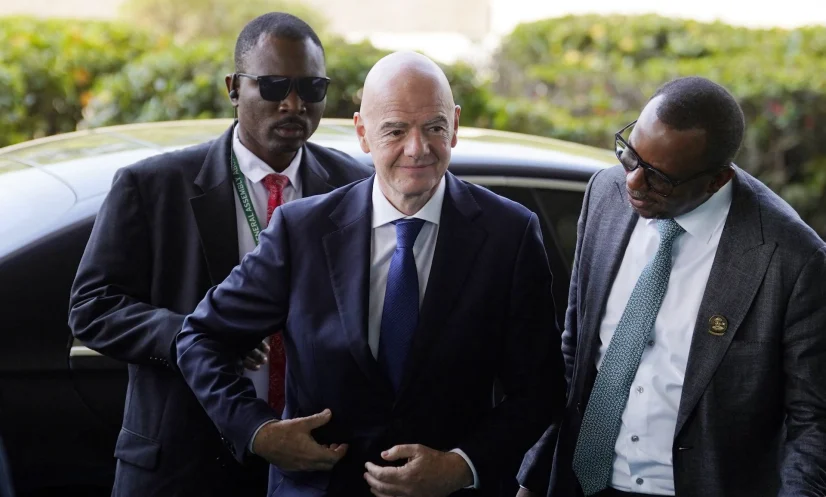
FIFA President Gianni Infantino’s proposed £15 billion World Cup commercial deal risked handing over nearly half of FIFA’s commercial rights for up to 96 years while potentially generating tens of millions of pounds in bonuses for executives, according to documents obtained by The Telegraph.
The documents reveal the scale of the abandoned $20 billion plan, developed through discussions between Infantino and Joshua Kushner, brother of Donald Trump’s son-in-law Jared Kushner.
Internal FIFA communications show that the governing body had considered retaining only 51 per cent of the commercial rights to its competitions, significantly less than the nearly 80 per cent it would have retained under an arrangement with Kushner’s Thrive Capital.
The proposed venture, known as FIFA Forward Enterprise (FFE) or “Project Box”, could have secured commercial rights to FIFA competitions for 96 years through a partnership with Thrive Capital.
The documents also reveal plans to reward the venture’s management with substantial financial incentives and potentially allow a partial stock market listing eight years after its launch.
The proposal emerged nearly four months ago and triggered a major backlash, creating the biggest crisis of Infantino’s decade-long presidency and briefly threatening his position.
Despite continuing efforts by opponents to remove him, Infantino has since strengthened his position and is widely regarded as the favourite for re-election to what is expected to be his final four-year term.
It remains unclear whether the latest disclosures will affect the presidential race.
According to the documents, FIFA prepared a risk assessment on July 17, two days before the 2026 World Cup final, outlining the proposed partnership with Thrive Capital.
One section stated that FIFA would establish a profit-making subsidiary and transfer all commercial rights to its competitions to the new entity for exploitation over the following 96 years.
A memorandum dated the next day said the contract would operate through rolling 12-year licensing periods, with a maximum total duration of 96 years.
The proposal provided for FIFA to retain 51 per cent ownership of the venture permanently and hold four of its seven board seats, including positions for the FIFA president and secretary general, ensuring overall control.
A term sheet and a backstop letter prepared by Thrive on July 17 also outlined a management incentive plan. Under the proposal, five per cent of the venture’s shares would be reserved as a bonus pool for selected individuals if the business increased in value.
A FIFA memorandum said the incentive pool was intended to ensure sufficient motivation for strong performance.
The documents further revealed that no competitive tender process had been conducted for FFE because of the specific and unique nature of the proposed investment.
The risk assessment also noted that FIFA’s finance department had not been directly involved in the transaction’s terms.
Responding to the disclosures, a FIFA spokesperson said the organisation had consistently maintained that the FIFA Forward Enterprise proposal would have required approval from FIFA’s member associations and the FIFA Council.