Play store


Artificial intelligence must never become the final holder of accountability, and responsibility for AI-driven decisions must remain with an identifiable person or institution, speakers said at the opening of the 17th Asia Pacific Regional Internet Governance Forum (APrIGF) 2026 in Nepal.
The forum opened on Monday, October 5, at the Royal Tulip Kathmandu in Gwarko, Lalitpur, under the theme “Safeguarding a Resilient Internet in Times of Crisis.” It is being held from October 4 to 7, with October 4 dedicated to pre-engagement and capacity building and October 5-7 to the main conference.
Addressing the opening ceremony, Nepal’s Chief Justice Dr Manoj Kumar Sharma said, “If the internet can withstand disruption, justice can also withstand disruption.”
He said the internet is not merely a communication tool during a crisis but critical infrastructure for access to justice, public services, disaster response, civil rights and democratic participation.
“Accountability must always rest with an identifiable person or institution, never with a machine,” Sharma said while discussing artificial intelligence.
He also called for advance assessment of risks arising from internet disruptions and effective strategies to address them. He stressed that resilient internet and digital infrastructure are essential to protect people, their rights and institutions as access to public services increasingly depends on reliable and secure digital systems.
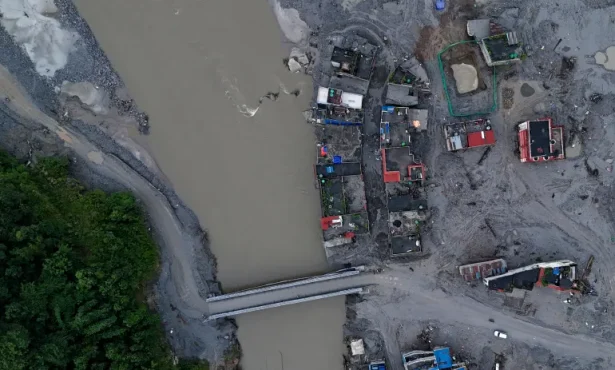
Referring to the loss of court records during last year’s unrest in Nepal and the isolation of an entire district during this year’s floods, Sharma said that if the justice system depends only on physical infrastructure, the rule of law becomes vulnerable.
Babu Ram Aryal, chair of the Host Steering Committee, said resilience cannot be created during a crisis and must be built beforehand.
The opening programme included a ceremonial lamp lighting, a welcome address by Rupesh Shrestha, managing director of Nepal Internet Exchange (NPIX), and remarks from regional and global internet governance leaders.
Amrita Choudhury, chair of the APrIGF Multistakeholder Steering Group, said cooperation, dialogue and diverse voices were essential to addressing emerging technology risks, digital inequality and online safety.
Jennifer Chung, chair of the UN Internet Governance Forum Multistakeholder Advisory Group, called for local and regional experiences to be connected with the global IGF process.
The opening plenary, titled “Safeguarding Resilient Internet in Times of Crisis”, was moderated by Dr Bhoj Raj Ghimire, co-convenor of the APrIGF Program Committee.
Speakers included Subhash Dhakal, joint secretary at Nepal’s Information Technology and Digital Governance Office; Nuwan Waidyanatha, senior research fellow at LIRNEasia; Rukamanee Maharjan, assistant professor at Tribhuvan University’s Faculty of Law; Tahani Iqbal, digital development specialist at the Asian Development Bank; and Ruzan Sarwar, public policy manager at Meta.
According to the organisers, 130 participants from the Asia-Pacific region and 150 from Nepal joined the forum on site. Participants are also taking part through 11 remote hubs and online platforms. The forum selected 38 fellows from 17 economies from 173 applications.
The forum, hosted by the Internet Governance Institute of Nepal with the Internet Society Nepal Chapter and Internet Exchange Nepal as co-hosts, features 29 sessions selected from 105 proposals.
The sessions cover submarine cable disruptions, internet shutdowns, disaster alerts, AI bias, children’s online safety, digital identity and electoral integrity.
A major session is focusing on AI bias, misinformation and inclusive digital futures. Speakers are examining how artificial intelligence can reproduce existing inequalities and expose women, LGBTQI+ people, persons with disabilities, ethnic and religious minorities, journalists, human rights defenders and other marginalised groups to greater risks of misinformation and algorithmic bias.
The discussions highlight the growing view that internet governance extends beyond network management to issues of human rights, public safety, democracy, responsible technology use and access to public services.