


 Play store

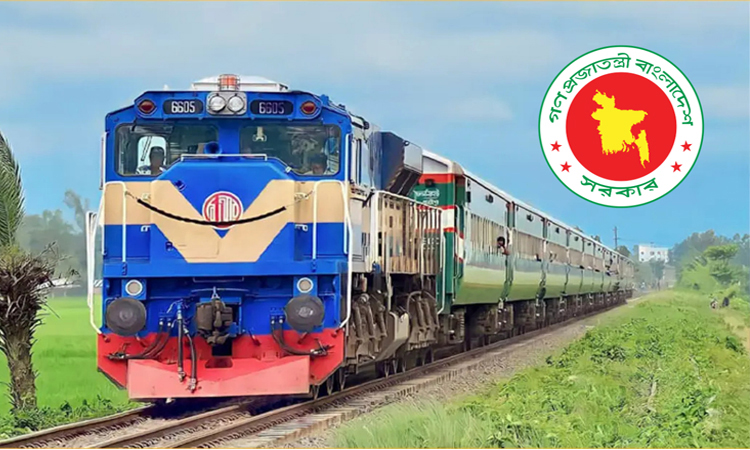
DHAKA: The government has undertaken a Tk 2,769.86 crore project to procure 30 new metre-gauge diesel-electric locomotives for Bangladesh Railway, aiming to ease an acute shortage of engines, replace ageing ones and expand the capacity to transport passengers and goods.
The project, titled ‘Expansion of Railway Capacity’, is expected to strengthen train operations across major metre-gauge routes and create greater opportunities for freight transportation alongside passenger services.
Of the total project cost, the government will provide Tk 811.38 crore, while the remaining Tk 1,958.48 crore will come as a loan from the Asian Infrastructure Investment Bank (AIIB), accounting for around 71 per cent of the financing.
The Executive Committee of the National Economic Council (ECNEC) approved the project at a meeting chaired by Prime Minister Tarique Rahman on October 7. It is scheduled to be implemented between July 1, 2026 and December 31, 2029.
Talking to BSS, Bangladesh Railway Director General Md Afzal Hossain said the shortage of locomotives was one of the biggest obstacles to expanding freight transportation.
“Many of our trains are still being operated with old locomotives. The addition of 30 new metre-gauge locomotives will significantly ease the shortage and improve our capacity to provide passenger and freight services,” he said.
According to Bangladesh Railway data, the organisation currently has 292 locomotives, including 164 metre-gauge and 128 broad-gauge engines.
However, 115 of its metre-gauge locomotives have already exceeded their economic lifespan of 20 years, with 62 of them more than 40 years old.
Prolonged use has reduced their operational efficiency, while spare parts for the ageing engines have become increasingly difficult and expensive to source, railway officials said.
Frequent mechanical failures often require lengthy repairs, disrupting train schedules and limiting transportation capacity.
Each new locomotive is estimated to cost around Tk 69 crore. The supplier country or company has not yet been selected, and the procurement will be conducted through an open international tender.
Besides purchasing the locomotives, the project includes the procurement of spare parts, maintenance equipment, specialised tools and technical assistance.
Training will also be provided to railway engineers, supervisors and other employees involved in locomotive operation and maintenance.
Railway Secretary Md Fahimul Islam said the government wanted to develop the railway not merely as a passenger transportation service but also as a major contributor to the country’s freight movement and economic activities.
“Expanding railway capacity is essential to reduce pressure on roads and establish a comparatively cost-effective transportation system. Procuring new locomotives is an important part of that plan,” he said.
Currently, only around 3-4 per cent of Bangladesh’s domestic freight is transported by rail, despite its potential to carry large volumes of goods over long distances at relatively low costs.
Railway freight volumes have also declined in recent years. Bangladesh Railway transported 54.67 lakh tonnes of goods in fiscal 2020-21, 53.33 lakh tonnes in 2021-22 and 44.14 lakh tonnes in 2022-23.
Major commodities transported by rail include rice, wheat, fertiliser, petroleum products, stones, sand, industrial raw materials and containers.
The railway also has significant potential to transport imported goods from Chattogram Port to different parts of the country. However, locomotive and wagon shortages, inadequate freight train services and weaknesses in cargo loading and unloading facilities have prevented it from fully exploiting this potential.
Railway officials said the organisation needed around 70-80 additional locomotives, indicating that the procurement of 30 engines would address only part of the existing shortage.
State Minister for Railways Habibur Rashid said the government was taking a phased approach to procuring new locomotives to address the shortage, particularly on metre-gauge routes.
He said the project would reduce dependence on outdated engines, improve passenger and freight transportation and facilitate the development of a modern, technology-based railway system.
The government is also planning to expand freight services along major commercial corridors, including the Dhaka-Chattogram route, by making better use of double-track railway sections.
Other initiatives include procuring additional wagons, expanding regional and sub-regional rail connections, and developing inland container depots (ICDs) and logistics hubs.
According to Bangladesh Railway’s master plan, the government aims to convert metre-gauge lines into dual-gauge tracks by 2040.
However, the transition is expected to take considerable time, with metre-gauge trains likely to continue operating on some routes until 2055-60.
Against this backdrop, officials consider the procurement of new metre-gauge locomotives essential to maintaining operations across the existing network until the conversion is completed.
The new engines are expected to serve important railway areas across the country, including Dhaka, Narayanganj, Gazipur, Mymensingh, Sylhet, Chattogram, Cumilla, Noakhali, Brahmanbaria and Cox’s Bazar.
Officials said the new locomotives, alongside infrastructure development and increased wagon availability, would strengthen the railway’s role in passenger and freight transportation, reduce pressure on roads and support economic activities.