


 Play store

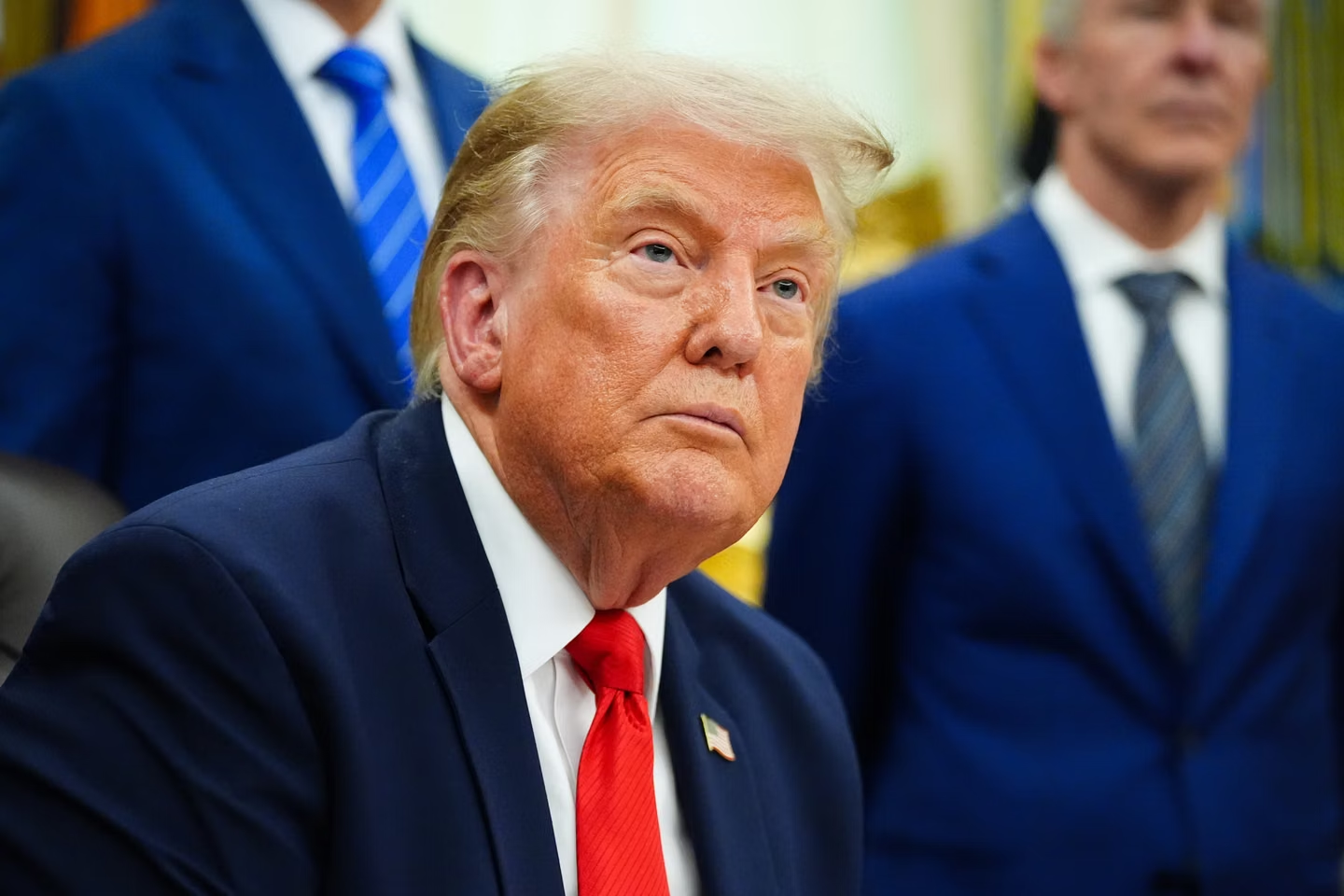
US President Donald Trump has warned that Iran would be “hit very hard” unless the strategically vital Strait of Hormuz is reopened “very soon,” while indicating that diplomatic efforts to resolve the crisis were making progress.
Speaking in an interview with Fox News during a visit to California on Tuesday, Trump said negotiations involving the United States, Iran and Oman were continuing, expressing optimism that an agreement could be reached.
“The strait is going to be open very soon, or they’re going to get hit very hard — and then the strait’s going to be open,” Trump said.
He added that Iran appeared eager to end the conflict that began on February 28, when the United States and Israel launched military strikes on Iran.
“We’re having very good discussions,” Trump said. “The only thing that matters is action. And they want to make a deal. We’ll see what happens.” “I have plenty of time,” he added.
The warning came as Axios, citing unnamed US and regional officials, reported that Washington, Tehran and Muscat were close to reaching an interim agreement aimed at restoring safe navigation through the Strait of Hormuz.
According to the report, the proposed arrangement would guarantee safe passage for commercial vessels through the strategic waterway for an initial 60-day period, with the possibility of extending the agreement.
Under the reported plan, inbound ships would use a northern shipping lane, while outbound vessels would travel through a southern lane within Oman’s territorial waters. The arrangement would not require the payment of transit tolls.
The White House is reportedly hoping to announce the agreement as early as Wednesday if negotiations are successfully concluded.
The Strait of Hormuz, located between Iran and Oman, is one of the world’s most critical maritime chokepoints. Roughly one-fifth of global oil and liquefied natural gas shipments pass through the narrow waterway, making any disruption a major concern for global energy markets and international trade.
Tensions in the region have repeatedly threatened shipping through the strait, with fears that any prolonged closure could trigger sharp increases in oil prices, disrupt supply chains and heighten geopolitical instability across the Middle East.
Although Trump signalled confidence in the ongoing negotiations, he made clear that military action remained an option if diplomatic efforts failed to secure the reopening of the waterway. Officials involved in the talks have yet to comment publicly on the reported framework for the proposed agreement.